tz
Threads by month
- ----- 2026 -----
- April
- March
- February
- January
- ----- 2025 -----
- December
- November
- October
- September
- August
- July
- June
- May
- April
- March
- February
- January
- ----- 2024 -----
- December
- November
- October
- September
- August
- July
- June
- May
- April
- March
- February
- January
- ----- 2023 -----
- December
- November
- October
- September
- August
- July
- June
- May
- April
- March
- February
- January
- ----- 2022 -----
- December
- November
- October
- September
- August
- July
- June
- May
- April
- March
- February
- January
- ----- 2021 -----
- December
- November
- October
- September
- August
- July
- June
- May
- April
- March
- February
- January
- ----- 2020 -----
- December
- November
- October
- September
- August
- July
- June
- May
- April
- March
- February
- January
- ----- 2019 -----
- December
- November
- October
- September
- August
- July
- June
- May
- April
- March
- February
- January
- ----- 2018 -----
- December
- November
- October
- September
- August
- July
- June
- May
- April
- March
- February
- January
- ----- 2017 -----
- December
- November
- October
- September
- August
- July
- June
- May
- April
- March
- February
- January
- ----- 2016 -----
- December
- November
- October
- September
- August
- July
- June
- May
- April
- March
- February
- January
- ----- 2015 -----
- December
- November
- October
- September
- August
- July
- June
- May
- April
- March
- February
- January
- ----- 2014 -----
- December
- November
- October
- September
- August
- July
- June
- May
- April
- March
- February
- January
- ----- 2013 -----
- December
- November
- October
- September
- August
- July
- June
- May
- April
- March
- February
- January
- ----- 2012 -----
- December
- November
- October
- September
- August
- July
- June
- May
- April
- March
- February
- January
- ----- 2011 -----
- December
- November
- October
- September
- August
- July
- June
- May
- April
- March
- February
- January
- ----- 2010 -----
- December
- November
- October
- September
- August
- July
- June
- May
- April
- March
- February
- January
- ----- 2009 -----
- December
- November
- October
- September
- August
- July
- June
- May
- April
- March
- February
- January
- ----- 2008 -----
- December
- November
- October
- September
- August
- July
- June
- May
- April
- March
- February
- January
- ----- 2007 -----
- December
- November
- October
- September
- August
- July
- June
- May
- April
- March
- February
- January
- ----- 2006 -----
- December
- November
- October
- September
- August
- July
- June
- May
- April
- March
- February
- January
- ----- 2005 -----
- December
- November
- October
- September
- August
- July
- June
- May
- April
- March
- February
- January
- ----- 2004 -----
- December
- November
- October
- September
- August
- July
- June
- May
- April
- March
- February
- January
- ----- 2003 -----
- December
- November
- October
- September
- August
- July
- June
- May
- April
- March
- February
- January
- ----- 2002 -----
- December
- November
- October
- September
- August
- July
- June
- May
- April
- March
- February
- January
- ----- 2001 -----
- December
- November
- October
- September
- August
- July
- June
- May
- April
- March
- February
- January
- ----- 2000 -----
- December
- November
- October
- September
- August
- July
- June
- May
- April
- March
- February
- January
- ----- 1999 -----
- December
- November
- October
- September
- August
- July
- June
- May
- April
- March
- February
- January
- ----- 1998 -----
- December
- November
- October
- September
- August
- July
- June
- May
- April
- March
- February
- January
- ----- 1997 -----
- December
- November
- October
- September
- August
- July
- June
- May
- April
- March
- February
- January
- ----- 1996 -----
- December
- November
- October
- September
- August
- July
- June
- May
- April
- March
- February
- January
- ----- 1995 -----
- December
- November
- October
- September
- August
- July
- June
- May
- April
- March
- February
- January
- ----- 1994 -----
- December
- November
- October
- September
- August
- July
- June
- May
- April
- March
- February
- January
- ----- 1993 -----
- December
- November
- October
- September
- August
- July
- June
- May
- April
- March
- February
- January
- ----- 1992 -----
- December
- November
- October
- September
- August
- July
- June
- May
- April
- March
- February
- January
- ----- 1991 -----
- December
- November
- October
- September
- August
- July
- June
- May
- April
- March
- February
- January
- ----- 1990 -----
- December
- November
- October
- September
- August
- July
- June
- May
- April
- March
- February
- January
- ----- 1989 -----
- December
- November
- October
- September
- August
- July
- June
- May
- April
- March
- February
- January
- ----- 1988 -----
- December
- November
- October
- September
- August
- July
- June
- May
- April
- March
- February
- January
- ----- 1987 -----
- December
- November
- October
- September
- August
- July
- June
- May
- April
- March
- February
- January
- ----- 1986 -----
- December
- November
January 2018
- 61 participants
- 37 discussions

Aug. 28, 2019
Below find proposed time zone package changes; the executive summary:
* Makefile Change LOCALTIME default from "Factory" to "GMT";
do not compile "factory" file
(but keep it in the distribution).
* Theory Remove reference to "Factory" zone.
* australasia Change end of DST in Samoa in 2011 from
2011-04-03 0:00 to 2011-04-03 1:00
(thanks to Raymond Hughes for a reference).
* localtime.c Initialize ttinfo structures filled by tzparse
(thanks to Ravindra for reporting a valgrind warning).
* zic.c Fix generation of POSIX strings for zones with
rules using "weekday<=n" forms of dates
(thanks to Lei Liu for finding the problem).
Also, limit output for non-POSIX-specificable zones
defined to follow the same rules every year.
(Note that no zones of either of the above types
appear in the distribution; these changes cater to
add-on zones).
If no problems are found, 2010n will appear on 2010-10-25.
--ado
diff -r -c old/Makefile new/Makefile
*** old/Makefile Mon Sep 27 09:24:25 2010
--- new/Makefile Tue Oct 12 12:36:50 2010
***************
*** 1,5 ****
# <pre>
! # @(#)Makefile 8.8
# This file is in the public domain, so clarified as of
# 2009-05-17 by Arthur David Olson.
--- 1,5 ----
# <pre>
! # @(#)Makefile 8.9
# This file is in the public domain, so clarified as of
# 2009-05-17 by Arthur David Olson.
***************
*** 12,18 ****
# make zonenames
# to get a list of the values you can use for LOCALTIME.
! LOCALTIME= Factory
# If you want something other than Eastern United States time as a template
# for handling POSIX-style time zone environment variables,
--- 12,18 ----
# make zonenames
# to get a list of the values you can use for LOCALTIME.
! LOCALTIME= GMT
# If you want something other than Eastern United States time as a template
# for handling POSIX-style time zone environment variables,
***************
*** 262,269 ****
DOCS= README Theory $(MANS) date.1 Makefile
PRIMARY_YDATA= africa antarctica asia australasia \
europe northamerica southamerica
! YDATA= $(PRIMARY_YDATA) pacificnew etcetera factory backward
! NDATA= systemv
SDATA= solar87 solar88 solar89
TDATA= $(YDATA) $(NDATA) $(SDATA)
TABDATA= iso3166.tab zone.tab
--- 262,269 ----
DOCS= README Theory $(MANS) date.1 Makefile
PRIMARY_YDATA= africa antarctica asia australasia \
europe northamerica southamerica
! YDATA= $(PRIMARY_YDATA) pacificnew etcetera backward
! NDATA= systemv factory
SDATA= solar87 solar88 solar89
TDATA= $(YDATA) $(NDATA) $(SDATA)
TABDATA= iso3166.tab zone.tab
diff -r -c old/Theory new/Theory
*** old/Theory Mon Sep 27 09:24:25 2010
--- new/Theory Tue Oct 12 12:36:50 2010
***************
*** 1,4 ****
! @(#)Theory 8.4
This file is in the public domain, so clarified as of
2009-05-17 by Arthur David Olson.
--- 1,4 ----
! @(#)Theory 8.5
This file is in the public domain, so clarified as of
2009-05-17 by Arthur David Olson.
***************
*** 287,294 ****
See the file `backward' for most of these older names
(e.g. `US/Eastern' instead of `America/New_York').
The other old-fashioned names still supported are
! `WET', `CET', `MET', `EET' (see the file `europe'),
! and `Factory' (see the file `factory').
----- Time zone abbreviations -----
--- 287,293 ----
See the file `backward' for most of these older names
(e.g. `US/Eastern' instead of `America/New_York').
The other old-fashioned names still supported are
! `WET', `CET', `MET', and `EET' (see the file `europe').
----- Time zone abbreviations -----
diff -r -c old/australasia new/australasia
*** old/australasia Mon Sep 27 09:24:27 2010
--- new/australasia Tue Oct 12 13:14:56 2010
***************
*** 1,5 ****
# <pre>
! # @(#)australasia 8.18
# This file is in the public domain, so clarified as of
# 2009-05-17 by Arthur David Olson.
--- 1,5 ----
# <pre>
! # @(#)australasia 8.19
# This file is in the public domain, so clarified as of
# 2009-05-17 by Arthur David Olson.
***************
*** 487,497 ****
# http://www.parliament.gov.ws/documents/acts/Daylight%20Saving%20Act%20%2020…
# </a>
Zone Pacific/Apia 12:33:04 - LMT 1879 Jul 5
-11:26:56 - LMT 1911
-11:30 - SAMT 1950 # Samoa Time
-11:00 - WST 2010 Sep 26
! -11:00 1:00 WSDT 2011 Apr 3
-11:00 - WST
# Solomon Is
--- 487,507 ----
# http://www.parliament.gov.ws/documents/acts/Daylight%20Saving%20Act%20%2020…
# </a>
+ # From Raymond Hughes (2010-10-07):
+ # Please see
+ # <a href="http://www.mcil.gov.ws">
+ # http://www.mcil.gov.ws
+ # </a>,
+ # the Ministry of Commerce, Industry and Labour (sideframe) "Last Sunday
+ # September 2010 (26/09/10) - adjust clocks forward from 12:00 midnight
+ # to 01:00am and First Sunday April 2011 (03/04/11) - adjust clocks
+ # backwards from 1:00am to 12:00am"
+
Zone Pacific/Apia 12:33:04 - LMT 1879 Jul 5
-11:26:56 - LMT 1911
-11:30 - SAMT 1950 # Samoa Time
-11:00 - WST 2010 Sep 26
! -11:00 1:00 WSDT 2011 Apr 3 1:00
-11:00 - WST
# Solomon Is
diff -r -c old/localtime.c new/localtime.c
*** old/localtime.c Mon Sep 27 09:24:26 2010
--- new/localtime.c Tue Oct 12 12:36:51 2010
***************
*** 5,11 ****
#ifndef lint
#ifndef NOID
! static char elsieid[] = "@(#)localtime.c 8.14";
#endif /* !defined NOID */
#endif /* !defined lint */
--- 5,11 ----
#ifndef lint
#ifndef NOID
! static char elsieid[] = "@(#)localtime.c 8.15";
#endif /* !defined NOID */
#endif /* !defined lint */
***************
*** 914,919 ****
--- 914,920 ----
register unsigned char * typep;
register char * cp;
register int load_result;
+ static struct ttinfo zttinfo;
INITIALIZE(dstname);
stdname = name;
***************
*** 986,991 ****
--- 987,993 ----
/*
** Two transitions per year, from EPOCH_YEAR forward.
*/
+ sp->ttis[0] = sp->ttis[1] = zttinfo;
sp->ttis[0].tt_gmtoff = -dstoffset;
sp->ttis[0].tt_isdst = 1;
sp->ttis[0].tt_abbrind = stdlen + 1;
***************
*** 1099,1106 ****
}
/*
** Finally, fill in ttis.
- ** ttisstd and ttisgmt need not be handled.
*/
sp->ttis[0].tt_gmtoff = -stdoffset;
sp->ttis[0].tt_isdst = FALSE;
sp->ttis[0].tt_abbrind = 0;
--- 1101,1108 ----
}
/*
** Finally, fill in ttis.
*/
+ sp->ttis[0] = sp->ttis[1] = zttinfo;
sp->ttis[0].tt_gmtoff = -stdoffset;
sp->ttis[0].tt_isdst = FALSE;
sp->ttis[0].tt_abbrind = 0;
***************
*** 1113,1118 ****
--- 1115,1121 ----
dstlen = 0;
sp->typecnt = 1; /* only standard time */
sp->timecnt = 0;
+ sp->ttis[0] = zttinfo;
sp->ttis[0].tt_gmtoff = -stdoffset;
sp->ttis[0].tt_isdst = 0;
sp->ttis[0].tt_abbrind = 0;
diff -r -c old/zic.c new/zic.c
*** old/zic.c Mon Sep 27 09:24:26 2010
--- new/zic.c Tue Oct 12 13:37:29 2010
***************
*** 3,9 ****
** 2006-07-17 by Arthur David Olson.
*/
! static char elsieid[] = "@(#)zic.c 8.22";
#include "private.h"
#include "locale.h"
--- 3,9 ----
** 2006-07-17 by Arthur David Olson.
*/
! static char elsieid[] = "@(#)zic.c 8.24";
#include "private.h"
#include "locale.h"
***************
*** 1881,1896 ****
register int week;
if (rp->r_dycode == DC_DOWGEQ) {
! week = 1 + rp->r_dayofmonth / DAYSPERWEEK;
! if ((week - 1) * DAYSPERWEEK + 1 != rp->r_dayofmonth)
return -1;
} else if (rp->r_dycode == DC_DOWLEQ) {
if (rp->r_dayofmonth == len_months[1][rp->r_month])
week = 5;
else {
! week = 1 + rp->r_dayofmonth / DAYSPERWEEK;
! if (week * DAYSPERWEEK - 1 != rp->r_dayofmonth)
return -1;
}
} else return -1; /* "cannot happen" */
(void) sprintf(result, "M%d.%d.%d",
--- 1881,1896 ----
register int week;
if (rp->r_dycode == DC_DOWGEQ) {
! if ((rp->r_dayofmonth % DAYSPERWEEK) != 1)
return -1;
+ week = 1 + rp->r_dayofmonth / DAYSPERWEEK;
} else if (rp->r_dycode == DC_DOWLEQ) {
if (rp->r_dayofmonth == len_months[1][rp->r_month])
week = 5;
else {
! if ((rp->r_dayofmonth % DAYSPERWEEK) != 0)
return -1;
+ week = rp->r_dayofmonth / DAYSPERWEEK;
}
} else return -1; /* "cannot happen" */
(void) sprintf(result, "M%d.%d.%d",
***************
*** 2018,2023 ****
--- 2018,2024 ----
register char * envvar;
register int max_abbr_len;
register int max_envvar_len;
+ register int prodstic; /* all rules are min to max */
max_abbr_len = 2 + max_format_len + max_abbrvar_len;
max_envvar_len = 2 * max_abbr_len + 5 * 9;
***************
*** 2032,2037 ****
--- 2033,2039 ----
timecnt = 0;
typecnt = 0;
charcnt = 0;
+ prodstic = zonecount == 1;
/*
** Thanks to Earl Chew
** for noting the need to unconditionally initialize startttisstd.
***************
*** 2053,2058 ****
--- 2055,2062 ----
updateminmax(rp->r_loyear);
if (rp->r_hiwasnum)
updateminmax(rp->r_hiyear);
+ if (rp->r_lowasnum || rp->r_hiwasnum)
+ prodstic = FALSE;
}
}
/*
***************
*** 2075,2080 ****
--- 2079,2094 ----
if (max_year <= INT_MAX - YEARSPERREPEAT)
max_year += YEARSPERREPEAT;
else max_year = INT_MAX;
+ /*
+ ** Regardless of any of the above,
+ ** for a "proDSTic" zone which specifies that its rules
+ ** always have and always will be in effect,
+ ** we only need one cycle to define the zone.
+ */
+ if (prodstic) {
+ min_year = 1900;
+ max_year = min_year + YEARSPERREPEAT;
+ }
}
/*
** For the benefit of older systems,
5
6

According to some news Brazilian state of Goiás may abolish DST:
"The Energy and Mines Commission of the House of Representatives
approved a Legislative Decree that suspends daylight saving time in Goiás."
http://www.infomoney.com.br/minhas-financas/consumo/noticia/7061178/comissa…
Also, ".... this year the federal government even considered not
implementing daylight saving time, but left the decision to 2018."
Alexander Krivenyshev
https://www.WorldTimeZone.com
5
5

[PATCH] Support building zic.exe and zdump.exe natively on Windows with Visual Studio nmake.
by Manuela Friedrich Oct. 28, 2018
by Manuela Friedrich Oct. 28, 2018
Oct. 28, 2018
Provide getopt() implementation for Windows as per ftp://ftp.es.ele.tue.nl/pub/users/jos/poster/getopt.c
In localtime.c use native localtime(), gmtime(), ctime() and mktime().
Also use int or __int64 respectively for ssize_t type and check for Windows drive letters in tzloadbody().
In private.h and zdump.c define strotimax depending on Visual Studio version.
It needs to be strtol for up to VS 2010 and stroll for higher versions.
In zdump.c need prototype for gmtime_r() to suffice return type requirements.
Also use __time64_t variables on Windows instead of time_t.
In main() variable declarations had to be moved to the top to avoid compile errors.
In zic.c dolink() need to have an extra mkdirs() call for Windows as we don't have link support here and the previous mkdirs() calls wouldn't have been called therefore.
Also itsdir() needs separate Windows part to check for directory flag as the namesslashdot Linux alternative alway returns directory on Windows.
Add nmake specific Makefile.nmake based on existing Makefile.
It uses different object, library and executable extensions, sets CC and CFLAGS for 64 and 32bit Windows build.
Target root has been added to build zdump and zic.
Version and version.h rules were changed to batch.
---
Makefile.nmake | 934 +++++++++++++++++++++++++++++++++++++++++++++++++++++++++
getopt.c | 110 +++++++
localtime.c | 23 ++
private.h | 4 +
zdump.c | 47 ++-
zic.c | 14 +
6 files changed, 1128 insertions(+), 4 deletions(-)
create mode 100644 Makefile.nmake
create mode 100644 getopt.c
diff --git a/Makefile.nmake b/Makefile.nmake
new file mode 100644
index 0000000..730523e
--- /dev/null
+++ b/Makefile.nmake
@@ -0,0 +1,934 @@
+# This file is in the public domain, so clarified as of
+# 2009-05-17 by Arthur David Olson.
+
+# This file supports building zic.exe and zdump.exe with Visual Studio nmake
+
+# Package name for the code distribution.
+PACKAGE= tzcode
+
+# Version number for the distribution, overridden in the 'tarballs' rule below.
+VERSION= unknown
+
+# Email address for bug reports.
+BUGEMAIL= tz(a)iana.org
+
+# Change the line below for your time zone (after finding the zone you want in
+# the time zone files, or adding it to a time zone file).
+# Alternately, if you discover you've got the wrong time zone, you can just
+# zic -l rightzone
+# to correct things.
+# Use the command
+# make zonenames
+# to get a list of the values you can use for LOCALTIME.
+
+LOCALTIME= GMT
+
+# If you want something other than Eastern United States time as a template
+# for handling POSIX-style time zone environment variables,
+# change the line below (after finding the zone you want in the
+# time zone files, or adding it to a time zone file).
+# (When a POSIX-style environment variable is handled, the rules in the
+# template file are used to determine "spring forward" and "fall back" days and
+# times; the environment variable itself specifies UT offsets of standard and
+# summer time.)
+# Alternately, if you discover you've got the wrong time zone, you can just
+# zic -p rightzone
+# to correct things.
+# Use the command
+# make zonenames
+# to get a list of the values you can use for POSIXRULES.
+# If you want POSIX compatibility, use "America/New_York".
+
+POSIXRULES= America/New_York
+
+# Also see TZDEFRULESTRING below, which takes effect only
+# if the time zone files cannot be accessed.
+
+
+# Installation locations.
+#
+# The defaults are suitable for Debian, except that if REDO is
+# posix_right or right_posix then files that Debian puts under
+# /usr/share/zoneinfo/posix and /usr/share/zoneinfo/right are instead
+# put under /usr/share/zoneinfo-posix and /usr/share/zoneinfo-leaps,
+# respectively. Problems with the Debian approach are discussed in
+# the commentary for the right_posix rule (below).
+
+# Destination directory, which can be used for staging.
+# 'make DESTDIR=/stage install' installs under /stage (e.g., to
+# /stage/etc/localtime instead of to /etc/localtime). Files under
+# /stage are not intended to work as-is, but can be copied by hand to
+# the root directory later. If DESTDIR is empty, 'make install' does
+# not stage, but installs directly into production locations.
+DESTDIR =
+
+# Everything is installed into subdirectories of TOPDIR, and used there.
+# TOPDIR should be empty (meaning the root directory),
+# or a directory name that does not end in "/".
+# TOPDIR should be empty or an absolute name unless you're just testing.
+TOPDIR =
+
+# The default local time zone is taken from the file TZDEFAULT.
+TZDEFAULT = $(TOPDIR)/etc/localtime
+
+# The subdirectory containing installed program and data files, and
+# likewise for installed files that can be shared among architectures.
+# These should be relative file names.
+USRDIR = usr
+USRSHAREDIR = $(USRDIR)/share
+
+# "Compiled" time zone information is placed in the "TZDIR" directory
+# (and subdirectories).
+# TZDIR_BASENAME should not contain "/" and should not be ".", ".." or empty.
+TZDIR_BASENAME= zoneinfo
+TZDIR = $(TOPDIR)\\$(USRSHAREDIR)\\$(TZDIR_BASENAME)
+
+# The "tzselect" and (if you do "make INSTALL") "date" commands go in:
+BINDIR = $(TOPDIR)/$(USRDIR)/bin
+
+# The "zdump" command goes in:
+ZDUMPDIR = $(BINDIR)
+
+# The "zic" command goes in:
+ZICDIR = $(TOPDIR)/$(USRDIR)/sbin
+
+# Manual pages go in subdirectories of. . .
+MANDIR = $(TOPDIR)/$(USRSHAREDIR)/man
+
+# Library functions are put in an archive in LIBDIR.
+LIBDIR = $(TOPDIR)/$(USRDIR)/lib
+
+
+# Types to try, as an alternative to time_t. int64_t should be first.
+TIME_T_ALTERNATIVES = int64_t int32_t uint32_t uint64_t
+
+# If you want only POSIX time, with time values interpreted as
+# seconds since the epoch (not counting leap seconds), use
+# REDO= posix_only
+# below. If you want only "right" time, with values interpreted
+# as seconds since the epoch (counting leap seconds), use
+# REDO= right_only
+# below. If you want both sets of data available, with leap seconds not
+# counted normally, use
+# REDO= posix_right
+# below. If you want both sets of data available, with leap seconds counted
+# normally, use
+# REDO= right_posix
+# below. POSIX mandates that leap seconds not be counted; for compatibility
+# with it, use "posix_only" or "posix_right". Use POSIX time on systems with
+# leap smearing; this can work better than unsmeared "right" time with
+# applications that are not leap second aware, and is closer to unsmeared
+# "right" time than unsmeared POSIX time is (e.g., 0.5 vs 1.0 s max error).
+
+REDO= posix_right
+
+# To install data in text form that has all the information of the binary data,
+# (optionally incorporating leap second information), use
+# TZDATA_TEXT= tzdata.zi leapseconds
+# To install text data without leap second information (e.g., because
+# REDO='posix_only'), use
+# TZDATA_TEXT= tzdata.zi
+# To avoid installing text data, use
+# TZDATA_TEXT=
+
+TZDATA_TEXT= leapseconds tzdata.zi
+
+# For backward-compatibility links for old zone names, use
+# BACKWARD= backward
+# If you also want the link US/Pacific-New, even though it is confusing
+# and is planned to be removed from the database eventually, use
+# BACKWARD= backward pacificnew
+# To omit these links, use
+# BACKWARD=
+
+BACKWARD= backward
+
+# If you want out-of-scope and often-wrong data from the file 'backzone', use
+# PACKRATDATA= backzone
+# To omit this data, use
+# PACKRATDATA=
+
+PACKRATDATA=
+
+# The name of a locale using the UTF-8 encoding, used during self-tests.
+# The tests are skipped if the name does not appear to work on this system.
+
+UTF8_LOCALE= en_US.utf8
+
+# Since "." may not be in PATH...
+
+YEARISTYPE= ./yearistype
+
+# Non-default libraries needed to link.
+LDLIBS=
+
+# Add the following to the end of the "CFLAGS=" line as needed to override
+# defaults specified in the source code. "-DFOO" is equivalent to "-DFOO=1".
+# -DBIG_BANG=-9999999LL if the Big Bang occurred at time -9999999 (see zic.c)
+# -DDEPRECATE_TWO_DIGIT_YEARS for optional runtime warnings about strftime
+# formats that generate only the last two digits of year numbers
+# -DEPOCH_LOCAL if the 'time' function returns local time not UT
+# -DEPOCH_OFFSET=N if the 'time' function returns a value N greater
+# than what POSIX specifies, assuming local time is UT.
+# For example, N is 252460800 on AmigaOS.
+# -DHAVE_DECL_ASCTIME_R=0 if <time.h> does not declare asctime_r
+# -DHAVE_DECL_ENVIRON if <unistd.h> declares 'environ'
+# -DHAVE_DIRECT_H if mkdir needs <direct.h> (MS-Windows)
+# -DHAVE_GENERIC=0 if _Generic does not work
+# -DHAVE_GETTEXT if 'gettext' works (e.g., GNU/Linux, FreeBSD, Solaris)
+# -DHAVE_INCOMPATIBLE_CTIME_R if your system's time.h declares
+# ctime_r and asctime_r incompatibly with the POSIX standard
+# (Solaris when _POSIX_PTHREAD_SEMANTICS is not defined).
+# -DHAVE_INTTYPES_H if you have a non-C99 compiler with <inttypes.h>
+# -DHAVE_LINK=0 if your system lacks a link function
+# -DHAVE_LOCALTIME_R=0 if your system lacks a localtime_r function
+# -DHAVE_LOCALTIME_RZ=0 if you do not want zdump to use localtime_rz
+# localtime_rz can make zdump significantly faster, but is nonstandard.
+# -DHAVE_POSIX_DECLS=0 if your system's include files do not declare
+# functions like 'link' or variables like 'tzname' required by POSIX
+# -DHAVE_SNPRINTF=0 if your system lacks the snprintf function
+# -DHAVE_STDBOOL_H if you have a non-C99 compiler with <stdbool.h>
+# -DHAVE_STDINT_H if you have a non-C99 compiler with <stdint.h>
+# -DHAVE_STRFTIME_L if <time.h> declares locale_t and strftime_l
+# -DHAVE_STRDUP=0 if your system lacks the strdup function
+# -DHAVE_SYMLINK=0 if your system lacks the symlink function
+# -DHAVE_SYS_STAT_H=0 if your compiler lacks a <sys/stat.h>
+# -DHAVE_SYS_WAIT_H=0 if your compiler lacks a <sys/wait.h>
+# -DHAVE_TZSET=0 if your system lacks a tzset function
+# -DHAVE_UNISTD_H=0 if your compiler lacks a <unistd.h>
+# -Dlocale_t=XXX if your system uses XXX instead of locale_t
+# -Dssize_t=long on hosts like MS-Windows that lack ssize_t
+# -DTHREAD_SAFE to make localtime.c thread-safe, as POSIX requires;
+# not needed by the main-program tz code, which is single-threaded.
+# Append other compiler flags as needed, e.g., -pthread on GNU/Linux.
+# -Dtime_tz=\"T\" to use T as the time_t type, rather than the system time_t
+# This is intended for internal use only; it mangles external names.
+# -DTZ_DOMAIN=\"foo\" to use "foo" for gettext domain name; default is "tz"
+# -DTZ_DOMAINDIR=\"/path\" to use "/path" for gettext directory;
+# the default is system-supplied, typically "/usr/lib/locale"
+# -DTZDEFRULESTRING=\",date/time,date/time\" to default to the specified
+# DST transitions if the time zone files cannot be accessed
+# -DUNINIT_TRAP if reading uninitialized storage can cause problems
+# other than simply getting garbage data
+# -DUSE_LTZ=0 to build zdump with the system time zone library
+# Also set TZDOBJS=zdump.o and CHECK_TIME_T_ALTERNATIVES= below.
+# -DZIC_MAX_ABBR_LEN_WO_WARN=3
+# (or some other number) to set the maximum time zone abbreviation length
+# that zic will accept without a warning (the default is 6)
+# $(GCC_DEBUG_FLAGS) if you are using recent GCC and want lots of checking
+# Select instrumentation via "make GCC_INSTRUMENT='whatever'".
+GCC_INSTRUMENT = \
+ -fsanitize=undefined -fsanitize-address-use-after-scope \
+ -fsanitize-undefined-trap-on-error -fstack-protector
+GCC_DEBUG_FLAGS = -DGCC_LINT -g3 -O3 -fno-common \
+ $(GCC_INSTRUMENT) \
+ -Wall -Wextra \
+ -Walloc-size-larger-than=100000 -Warray-bounds=2 \
+ -Wbad-function-cast -Wcast-align -Wdate-time \
+ -Wdeclaration-after-statement -Wdouble-promotion \
+ -Wformat=2 -Wformat-overflow=2 -Wformat-signedness -Wformat-truncation \
+ -Winit-self -Wjump-misses-init -Wlogical-op \
+ -Wmissing-declarations -Wmissing-prototypes -Wnested-externs \
+ -Wold-style-definition -Woverlength-strings -Wpointer-arith \
+ -Wshadow -Wshift-overflow=2 -Wstrict-prototypes -Wstringop-overflow=5 \
+ -Wsuggest-attribute=const -Wsuggest-attribute=format \
+ -Wsuggest-attribute=noreturn -Wsuggest-attribute=pure \
+ -Wtrampolines -Wundef -Wuninitialized -Wunused \
+ -Wvariadic-macros -Wvla -Wwrite-strings \
+ -Wno-address -Wno-format-nonliteral -Wno-sign-compare \
+ -Wno-type-limits -Wno-unused-parameter
+#
+# If your system has a "GMT offset" field in its "struct tm"s
+# (or if you decide to add such a field in your system's "time.h" file),
+# add the name to a define such as
+# -DTM_GMTOFF=tm_gmtoff
+# to the end of the "CFLAGS=" line. If not defined, the code attempts to
+# guess TM_GMTOFF from other macros; define NO_TM_GMTOFF to suppress this.
+# Similarly, if your system has a "zone abbreviation" field, define
+# -DTM_ZONE=tm_zone
+# and define NO_TM_ZONE to suppress any guessing. These two fields are not
+# required by POSIX, but are widely available on GNU/Linux and BSD systems.
+#
+# The next batch of options control support for external variables
+# exported by tzcode. In practice these variables are less useful
+# than TM_GMTOFF and TM_ZONE. However, most of them are standardized.
+# #
+# # To omit or support the external variable "tzname", add one of:
+# # -DHAVE_TZNAME=0
+# # -DHAVE_TZNAME=1
+# # to the "CFLAGS=" line. "tzname" is required by POSIX 1988 and later.
+# # If not defined, the code attempts to guess HAVE_TZNAME from other macros.
+# # Warning: unless time_tz is also defined, HAVE_TZNAME=1 can cause
+# # crashes when combined with some platforms' standard libraries,
+# # presumably due to memory allocation issues.
+# #
+# # To omit or support the external variables "timezone" and "daylight", add
+# # -DUSG_COMPAT=0
+# # -DUSG_COMPAT=1
+# # to the "CFLAGS=" line; "timezone" and "daylight" are inspired by
+# # Unix Systems Group code and are required by POSIX 2008 (with XSI) and later.
+# # If not defined, the code attempts to guess USG_COMPAT from other macros.
+# #
+# # To support the external variable "altzone", add
+# # -DALTZONE
+# # to the end of the "CFLAGS=" line; although "altzone" appeared in
+# # System V Release 3.1 it has not been standardized.
+#
+# If you want functions that were inspired by early versions of X3J11's work,
+# add
+# -DSTD_INSPIRED
+# to the end of the "CFLAGS=" line. This arranges for the functions
+# "tzsetwall", "offtime", "timelocal", "timegm", "timeoff",
+# "posix2time", and "time2posix" to be added to the time conversion library.
+# "tzsetwall" is like "tzset" except that it arranges for local wall clock
+# time (rather than the time specified in the TZ environment variable)
+# to be used.
+# "offtime" is like "gmtime" except that it accepts a second (long) argument
+# that gives an offset to add to the time_t when converting it.
+# "timelocal" is equivalent to "mktime".
+# "timegm" is like "timelocal" except that it turns a struct tm into
+# a time_t using UT (rather than local time as "timelocal" does).
+# "timeoff" is like "timegm" except that it accepts a second (long) argument
+# that gives an offset to use when converting to a time_t.
+# "posix2time" and "time2posix" are described in an included manual page.
+# X3J11's work does not describe any of these functions.
+# Sun has provided "tzsetwall", "timelocal", and "timegm" in SunOS 4.0.
+# These functions may well disappear in future releases of the time
+# conversion package.
+#
+# If you don't want functions that were inspired by NetBSD, add
+# -DNETBSD_INSPIRED=0
+# to the end of the "CFLAGS=" line. Otherwise, the functions
+# "localtime_rz", "mktime_z", "tzalloc", and "tzfree" are added to the
+# time library, and if STD_INSPIRED is also defined the functions
+# "posix2time_z" and "time2posix_z" are added as well.
+# The functions ending in "_z" (or "_rz") are like their unsuffixed
+# (or suffixed-by-"_r") counterparts, except with an extra first
+# argument of opaque type timezone_t that specifies the time zone.
+# "tzalloc" allocates a timezone_t value, and "tzfree" frees it.
+#
+# If you want to allocate state structures in localtime, add
+# -DALL_STATE
+# to the end of the "CFLAGS=" line. Storage is obtained by calling malloc.
+#
+# NIST-PCTS:151-2, Version 1.4, (1993-12-03) is a test suite put
+# out by the National Institute of Standards and Technology
+# which claims to test C and Posix conformance. If you want to pass PCTS, add
+# -DPCTS
+# to the end of the "CFLAGS=" line.
+#
+# If you want strict compliance with XPG4 as of 1994-04-09, add
+# -DXPG4_1994_04_09
+# to the end of the "CFLAGS=" line. This causes "strftime" to always return
+# 53 as a week number (rather than 52 or 53) for January days before
+# January's first Monday when a "%V" format is used and January 1
+# falls on a Friday, Saturday, or Sunday.
+
+!IF "$(CPU)" == "AMD64"
+CFLAGS=/Zi -DHAVE_SYS_WAIT_H=0 -DHAVE_UNISTD_H=0 -DHAVE_INTTYPES_H=0 -DHAVE_POSIX_DECLS=0 -DHAVE_LINK=0 -DHAVE_SYMLINK=0 -DTYPECHECK=1 -DHAVE_DECL_ASCTIME_R=0
+!ELSE
+CFLAGS=/Zi -DHAVE_SYS_WAIT_H=0 -DHAVE_UNISTD_H=0 -DHAVE_INTTYPES_H=0 -DHAVE_POSIX_DECLS=0 -DHAVE_LINK=0 -DHAVE_SYMLINK=0 -DSTD_INSPIRED -DTYPECHECK=1 -DHAVE_DECL_ASCTIME_R=0
+!ENDIF
+
+# Linker flags. Default to $(LFLAGS) for backwards compatibility
+# to release 2012h and earlier.
+
+LDFLAGS= $(LFLAGS)
+
+# For leap seconds, this Makefile uses LEAPSECONDS='-L leapseconds' in
+# submake command lines. The default is no leap seconds.
+
+LEAPSECONDS=
+
+# The zic command and its arguments.
+
+zic= ./zic.exe
+ZIC= $(zic) $(ZFLAGS)
+
+ZFLAGS=
+
+# How to use zic to install tz binary files.
+
+ZIC_INSTALL= $(ZIC) -d '$(DESTDIR)$(TZDIR)' $(LEAPSECONDS)
+
+# The name of a Posix-compliant 'awk' on your system.
+AWK= awk
+
+# The full path name of a Posix-compliant shell, preferably one that supports
+# the Korn shell's 'select' statement as an extension.
+# These days, Bash is the most popular.
+# It should be OK to set this to /bin/sh, on platforms where /bin/sh
+# lacks 'select' or doesn't completely conform to Posix, but /bin/bash
+# is typically nicer if it works.
+KSHELL= /bin/bash
+
+# The path where SGML DTDs are kept and the catalog file(s) to use when
+# validating. The default should work on both Debian and Red Hat.
+SGML_TOPDIR= /usr
+SGML_DTDDIR= $(SGML_TOPDIR)/share/xml/w3c-sgml-lib/schema/dtd
+SGML_SEARCH_PATH= $(SGML_DTDDIR)/REC-html401-19991224
+SGML_CATALOG_FILES= \
+ $(SGML_TOPDIR)/share/doc/w3-recs/html/www.w3.org/TR/1999/REC-html401-19991224/HTML4.cat:$(SGML_TOPDIR)/share/sgml/html/4.01/HTML4.cat
+
+# The name, arguments and environment of a program to validate your web pages.
+# See <http://openjade.sourceforge.net/doc/> for a validator, and
+# <https://validator.w3.org/source/> for a validation library.
+# Set VALIDATE=':' if you do not have such a program.
+VALIDATE = nsgmls
+VALIDATE_FLAGS = -s -B -wall -wno-unused-param
+VALIDATE_ENV = \
+ SGML_CATALOG_FILES='$(SGML_CATALOG_FILES)' \
+ SGML_SEARCH_PATH='$(SGML_SEARCH_PATH)' \
+ SP_CHARSET_FIXED=YES \
+ SP_ENCODING=UTF-8
+
+# This expensive test requires USE_LTZ.
+# To suppress it, define this macro to be empty.
+CHECK_TIME_T_ALTERNATIVES = check_time_t_alternatives
+
+# SAFE_CHAR is a regular expression that matches a safe character.
+# Some parts of this distribution are limited to safe characters;
+# others can use any UTF-8 character.
+# For now, the safe characters are a safe subset of ASCII.
+# The caller must set the shell variable 'sharp' to the character '#',
+# since Makefile macros cannot contain '#'.
+# TAB_CHAR is a single tab character, in single quotes.
+TAB_CHAR= ' '
+SAFE_CHARSET1= $(TAB_CHAR)' !\"'$$sharp'$$%&'\''()*+,./0123456789:;<=>?@'
+SAFE_CHARSET2= 'ABCDEFGHIJKLMNOPQRSTUVWXYZ[\\^_`'
+SAFE_CHARSET3= 'abcdefghijklmnopqrstuvwxyz{|}~'
+SAFE_CHARSET= $(SAFE_CHARSET1)$(SAFE_CHARSET2)$(SAFE_CHARSET3)
+SAFE_CHAR= '[]'$(SAFE_CHARSET)'-]'
+
+# OK_CHAR matches any character allowed in the distributed files.
+# This is the same as SAFE_CHAR, except that multibyte letters are
+# also allowed so that commentary can contain people's names and quote
+# non-English sources. For non-letters the sources are limited to
+# ASCII renderings for the convenience of maintainers whose text editors
+# mishandle UTF-8 by default (e.g., XEmacs 21.4.22).
+OK_CHAR= '[][:alpha:]'$(SAFE_CHARSET)'-]'
+
+# SAFE_LINE matches a line of safe characters.
+# SAFE_SHARP_LINE is similar, except any OK character can follow '#';
+# this is so that comments can contain non-ASCII characters.
+# OK_LINE matches a line of OK characters.
+SAFE_LINE= '^'$(SAFE_CHAR)'*$$'
+SAFE_SHARP_LINE='^'$(SAFE_CHAR)'*('$$sharp$(OK_CHAR)'*)?$$'
+OK_LINE= '^'$(OK_CHAR)'*$$'
+
+# Flags to give 'tar' when making a distribution.
+# Try to use flags appropriate for GNU tar.
+GNUTARFLAGS= --numeric-owner --owner=0 --group=0 --mode=go+u,go-w --sort=name
+TARFLAGS= `if tar $(GNUTARFLAGS) --version >/dev/null 2>&1; \
+ then echo $(GNUTARFLAGS); \
+ else :; \
+ fi`
+
+# Flags to give 'gzip' when making a distribution.
+GZIPFLAGS= -9n
+
+###############################################################################
+
+#MAKE= make
+
+cc= cl
+CC= $(cc) -DTZDIR=\"$(TZDIR)\"
+
+AR= lib
+
+# ':' on typical hosts; 'ranlib' on the ancient hosts that still need ranlib.
+RANLIB= :
+
+TZCOBJS= zic.obj getopt.obj
+TZDOBJS= zdump.obj localtime.obj asctime.obj getopt.obj strftime.obj
+DATEOBJS= date.obj localtime.obj strftime.obj asctime.obj
+LIBSRCS= localtime.c asctime.c difftime.c
+LIBOBJS= localtime.obj asctime.obj difftime.obj
+HEADERS= tzfile.h private.h
+NONLIBSRCS= zic.c zdump.c
+NEWUCBSRCS= date.c strftime.c
+SOURCES= $(HEADERS) $(LIBSRCS) $(NONLIBSRCS) $(NEWUCBSRCS) \
+ tzselect.ksh workman.sh
+MANS= newctime.3 newstrftime.3 newtzset.3 time2posix.3 \
+ tzfile.5 tzselect.8 zic.8 zdump.8
+MANTXTS= newctime.3.txt newstrftime.3.txt newtzset.3.txt \
+ time2posix.3.txt \
+ tzfile.5.txt tzselect.8.txt zic.8.txt zdump.8.txt \
+ date.1.txt
+COMMON= calendars CONTRIBUTING LICENSE Makefile \
+ NEWS README theory.html version
+WEB_PAGES= tz-art.html tz-how-to.html tz-link.html
+DOCS= $(MANS) date.1 $(MANTXTS) $(WEB_PAGES)
+PRIMARY_YDATA= africa antarctica asia australasia \
+ europe northamerica southamerica
+YDATA= $(PRIMARY_YDATA) etcetera
+NDATA= systemv factory
+TDATA_TO_CHECK= $(YDATA) $(NDATA) backward pacificnew
+TDATA= $(YDATA) $(NDATA) $(BACKWARD)
+ZONETABLES= zone1970.tab zone.tab
+TABDATA= iso3166.tab $(TZDATA_TEXT) $(ZONETABLES)
+LEAP_DEPS= leapseconds.awk leap-seconds.list
+TZDATA_ZI_DEPS= zishrink.awk version $(TDATA) $(PACKRATDATA)
+DATA= $(TDATA_TO_CHECK) backzone iso3166.tab leap-seconds.list \
+ leapseconds yearistype.sh $(ZONETABLES)
+AWK_SCRIPTS= checklinks.awk checktab.awk leapseconds.awk zishrink.awk
+MISC= $(AWK_SCRIPTS) zoneinfo2tdf.pl
+TZS_YEAR= 2050
+TZS= to$(TZS_YEAR).tzs
+TZS_NEW= to$(TZS_YEAR)new.tzs
+TZS_DEPS= $(PRIMARY_YDATA) asctime.c localtime.c \
+ private.h tzfile.h zdump.c zic.c
+ENCHILADA= $(COMMON) $(DOCS) $(SOURCES) $(DATA) $(MISC) $(TZS) tzdata.zi
+
+# Consult these files when deciding whether to rebuild the 'version' file.
+# This list is not the same as the output of 'git ls-files', since
+# .gitignore is not distributed.
+VERSION_DEPS= \
+ calendars CONTRIBUTING LICENSE Makefile NEWS README \
+ africa antarctica asctime.c asia australasia \
+ backward backzone \
+ checklinks.awk checktab.awk \
+ date.1 date.c difftime.c \
+ etcetera europe factory iso3166.tab \
+ leap-seconds.list leapseconds.awk localtime.c \
+ newctime.3 newstrftime.3 newtzset.3 northamerica \
+ pacificnew private.h \
+ southamerica strftime.c systemv theory.html \
+ time2posix.3 tz-art.html tz-how-to.html tz-link.html \
+ tzfile.5 tzfile.h tzselect.8 tzselect.ksh \
+ workman.sh yearistype.sh \
+ zdump.8 zdump.c zic.8 zic.c \
+ zone.tab zone1970.tab zoneinfo2tdf.pl
+
+# And for the benefit of csh users on systems that assume the user
+# shell should be used to handle commands in Makefiles. . .
+
+SHELL= /bin/sh
+
+root: zic.exe zdump.exe
+
+ALL: root date $(ENCHILADA)
+
+install: root $(DATA) $(REDO) $(MANS)
+ mkdir $(DESTDIR)$(ETCDIR) $(DESTDIR)$(TZDIR) \
+ $(DESTDIR)$(LIBDIR) \
+ $(DESTDIR)$(MANDIR)/man3 $(DESTDIR)$(MANDIR)/man5 \
+ $(DESTDIR)$(MANDIR)/man8
+ $(ZIC_INSTALL) -l $(LOCALTIME) -p $(POSIXRULES) \
+ -t '$(DESTDIR)$(TZDEFAULT)'
+ cp -f $(TABDATA) $(DESTDIR)$(TZDIR)/.
+ cp tzselect $(DESTDIR)$(BINDIR)/.
+ cp zdump.exe $(DESTDIR)$(ZDUMPDIR)/.
+ cp zic.exe $(DESTDIR)$(ZICDIR)/.
+ cp libtz.lib $(DESTDIR)$(LIBDIR)/.
+ $(RANLIB) $(DESTDIR)$(LIBDIR)/libtz.lib
+ cp -f newctime.3 newtzset.3 $(DESTDIR)$(MANDIR)/man3/.
+ cp -f tzfile.5 $(DESTDIR)$(MANDIR)/man5/.
+ cp -f tzselect.8 zdump.8 zic.8 $(DESTDIR)$(MANDIR)/man8/.
+
+INSTALL: ALL install date.1
+ mkdir -p $(DESTDIR)$(BINDIR) $(DESTDIR)$(MANDIR)/man1
+ cp date $(DESTDIR)$(BINDIR)/.
+ cp -f date.1 $(DESTDIR)$(MANDIR)/man1/.
+
+# for version get first token of git describe (e.g. 2018a from 2018a-5-g4a132ae) or $(VERSION)
+# if version file is already present, i.e. downloaded from ftp, skip recreating it
+version: $(VERSION_DEPS)
+!IF [git describe > nul 2>&1] == 0
+ if not exist version for /f "delims=-" %%a in ('git describe') do echo %%a > $@
+!ELSE
+ if not exist version echo $(VERSION) > $@
+!ENDIF
+
+# This file can be tailored by setting BACKWARD, PACKRATDATA, etc.
+tzdata.zi: $(TZDATA_ZI_DEPS)
+ version=`sed 1q version` && \
+ LC_ALL=C $(AWK) -v version="$$version" -f zishrink.awk \
+ $(TDATA) $(PACKRATDATA) >$@.out
+ mv $@.out $@
+
+version.h: version
+ echo static char const PKGVERSION[]="($(PACKAGE)) "; >$@
+ for /F %%H in ('type version') do echo static char const TZVERSION[]="%%H"; >> $@
+ echo static char const REPORT_BUGS_TO[]="$(BUGEMAIL)"; >>$@
+
+zdump.exe: $(TZDOBJS)
+ $(CC) $(CFLAGS) $(LDFLAGS) $(TZDOBJS) $(LDLIBS) /link /out:$@
+
+zic.exe: $(TZCOBJS)
+ $(CC) $(CFLAGS) $(LDFLAGS) $(TZCOBJS) $(LDLIBS) /link /out:$@
+
+yearistype: yearistype.sh
+ cp yearistype.sh yearistype
+ chmod +x yearistype
+
+leapseconds: $(LEAP_DEPS)
+ $(AWK) -f leapseconds.awk leap-seconds.list >$@.out
+ mv $@.out $@
+
+# Arguments to pass to submakes of install_data.
+# They can be overridden by later submake arguments.
+INSTALLARGS = \
+ BACKWARD='$(BACKWARD)' \
+ DESTDIR='$(DESTDIR)' \
+ LEAPSECONDS='$(LEAPSECONDS)' \
+ PACKRATDATA='$(PACKRATDATA)' \
+ TZDEFAULT='$(TZDEFAULT)' \
+ TZDIR='$(TZDIR)' \
+ YEARISTYPE='$(YEARISTYPE)' \
+ ZIC='$(ZIC)'
+
+# 'make install_data' installs one set of tz binary files.
+install_data: zic.exe leapseconds yearistype tzdata.zi
+ $(ZIC_INSTALL) tzdata.zi
+
+posix_only:
+ $(MAKE) $(INSTALLARGS) LEAPSECONDS= install_data
+
+right_only:
+ $(MAKE) $(INSTALLARGS) LEAPSECONDS='-L leapseconds' \
+ install_data
+
+# In earlier versions of this makefile, the other two directories were
+# subdirectories of $(TZDIR). However, this led to configuration errors.
+# For example, with posix_right under the earlier scheme,
+# TZ='right/Australia/Adelaide' got you localtime with leap seconds,
+# but gmtime without leap seconds, which led to problems with applications
+# like sendmail that subtract gmtime from localtime.
+# Therefore, the other two directories are now siblings of $(TZDIR).
+# You must replace all of $(TZDIR) to switch from not using leap seconds
+# to using them, or vice versa.
+right_posix: right_only
+ rm -fr '$(DESTDIR)$(TZDIR)-leaps'
+ ln -s '$(TZDIR_BASENAME)' '$(DESTDIR)$(TZDIR)-leaps' || \
+ $(MAKE) $(INSTALLARGS) TZDIR='$(TZDIR)-leaps' right_only
+ $(MAKE) $(INSTALLARGS) TZDIR='$(TZDIR)-posix' posix_only
+
+posix_right: posix_only
+ rm -fr '$(DESTDIR)$(TZDIR)-posix'
+ ln -s '$(TZDIR_BASENAME)' '$(DESTDIR)$(TZDIR)-posix' || \
+ $(MAKE) $(INSTALLARGS) TZDIR='$(TZDIR)-posix' posix_only
+ $(MAKE) $(INSTALLARGS) TZDIR='$(TZDIR)-leaps' right_only
+
+# This obsolescent rule is present for backwards compatibility with
+# tz releases 2014g through 2015g. It should go away eventually.
+posix_packrat:
+ $(MAKE) $(INSTALLARGS) PACKRATDATA=backzone posix_only
+
+zones: $(REDO)
+
+$(TZS_NEW): tzdata.zi zdump zic
+ mkdir -p tzs.dir
+ $(zic) -d tzs.dir tzdata.zi
+ $(AWK) '/^L/{print "Link\t" $$2 "\t" $$3}' \
+ tzdata.zi | LC_ALL=C sort >$@.out
+ wd=`pwd` && \
+ zones=`$(AWK) -v wd="$$wd" \
+ '/^Z/{print wd "/tzs.dir/" $$2}' tzdata.zi \
+ | LC_ALL=C sort` && \
+ ./zdump -i -c $(TZS_YEAR) $$zones >>$@.out
+ sed 's,^TZ=".*tzs\.dir/,TZ=",' $@.out >$@.sed.out
+ rm -fr tzs.dir $@.out
+ mv $@.sed.out $@
+
+# If $(TZS) does not already exist (e.g., old-format tarballs), create it.
+# If it exists but 'make check_tzs' fails, a maintainer should inspect the
+# failed output and fix the inconsistency, perhaps by running 'make force_tzs'.
+$(TZS):
+ $(MAKE) force_tzs
+
+force_tzs: $(TZS_NEW)
+ cp $(TZS_NEW) $(TZS)
+
+libtz.lib: $(LIBOBJS)
+ del $@
+ $(AR) $@ $(LIBOBJS)
+ $(RANLIB) $@
+
+date: $(DATEOBJS)
+ $(CC) -o $@ $(CFLAGS) $(LDFLAGS) $(DATEOBJS) $(LDLIBS)
+
+tzselect: tzselect.ksh version
+ VERSION=`cat version` && sed \
+ -e 's|#!/bin/bash|#!$(KSHELL)|g' \
+ -e 's|AWK=[^}]*|AWK=$(AWK)|g' \
+ -e 's|\(PKGVERSION\)=.*|\1='\''($(PACKAGE)) '\''|' \
+ -e 's|\(REPORT_BUGS_TO\)=.*|\1=$(BUGEMAIL)|' \
+ -e 's|TZDIR=[^}]*|TZDIR=$(TZDIR)|' \
+ -e 's|\(TZVERSION\)=.*|\1='"$$VERSION"'|' \
+ <$@.ksh >$@.out
+ chmod +x $@.out
+ mv $@.out $@
+
+check: check_character_set check_white_space check_links \
+ check_name_lengths check_sorted \
+ check_tables check_web check_zishrink check_tzs
+
+check_character_set: $(ENCHILADA)
+ test ! '$(UTF8_LOCALE)' || \
+ ! printf 'A\304\200B\n' | \
+ LC_ALL='$(UTF8_LOCALE)' grep -q '^A.B$$' >/dev/null 2>&1 || { \
+ LC_ALL='$(UTF8_LOCALE)' && export LC_ALL && \
+ sharp='#' && \
+ ! grep -Env $(SAFE_LINE) $(MANS) date.1 $(MANTXTS) \
+ $(MISC) $(SOURCES) $(WEB_PAGES) \
+ CONTRIBUTING LICENSE Makefile README \
+ version tzdata.zi && \
+ ! grep -Env $(SAFE_SHARP_LINE) $(TDATA_TO_CHECK) backzone \
+ leapseconds yearistype.sh zone.tab && \
+ ! grep -Env $(OK_LINE) $(ENCHILADA); \
+ }
+
+check_white_space: $(ENCHILADA)
+ patfmt=' \t|[\f\r\v]' && pat=`printf "$$patfmt\\n"` && \
+ ! grep -En "$$pat" $(ENCHILADA)
+ ! grep -n '[[:space:]]$$' \
+ $$(ls $(ENCHILADA) | grep -Fvx leap-seconds.list)
+
+PRECEDES_FILE_NAME = ^(Zone|Link[[:space:]]+[^[:space:]]+)[[:space:]]+
+FILE_NAME_COMPONENT_TOO_LONG = \
+ $(PRECEDES_FILE_NAME)[^[:space:]]*[^/[:space:]]{15}
+
+check_name_lengths: $(TDATA_TO_CHECK) backzone
+ ! grep -En '$(FILE_NAME_COMPONENT_TOO_LONG)' \
+ $(TDATA_TO_CHECK) backzone
+
+CHECK_CC_LIST = { n = split($$1,a,/,/); for (i=2; i<=n; i++) print a[1], a[i]; }
+
+check_sorted: backward backzone iso3166.tab zone.tab zone1970.tab
+ $(AWK) '/^Link/ {print $$3}' backward | LC_ALL=C sort -cu
+ $(AWK) '/^Zone/ {print $$2}' backzone | LC_ALL=C sort -cu
+ $(AWK) '/^[^#]/ {print $$1}' iso3166.tab | LC_ALL=C sort -cu
+ $(AWK) '/^[^#]/ {print $$1}' zone.tab | LC_ALL=C sort -c
+ $(AWK) '/^[^#]/ {print substr($$0, 1, 2)}' zone1970.tab | \
+ LC_ALL=C sort -c
+ $(AWK) '/^[^#]/ $(CHECK_CC_LIST)' zone1970.tab | \
+ LC_ALL=C sort -cu
+
+check_links: checklinks.awk $(TDATA_TO_CHECK)
+ $(AWK) -f checklinks.awk $(TDATA_TO_CHECK)
+ $(AWK) -f checklinks.awk tzdata.zi
+
+check_tables: checktab.awk $(PRIMARY_YDATA) $(ZONETABLES)
+ for tab in $(ZONETABLES); do \
+ $(AWK) -f checktab.awk -v zone_table=$$tab $(PRIMARY_YDATA) \
+ || exit; \
+ done
+
+check_tzs: $(TZS) $(TZS_NEW)
+ diff -u $(TZS) $(TZS_NEW)
+
+# This checks only the HTML 4.01 strict page.
+# To check the the other pages, use <https://validator.w3.org/>.
+check_web: tz-how-to.html
+ $(VALIDATE_ENV) $(VALIDATE) $(VALIDATE_FLAGS) tz-how-to.html
+
+# Check that tzdata.zi generates the same binary data that its sources do.
+check_zishrink: tzdata.zi zic leapseconds $(PACKRATDATA) $(TDATA)
+ for type in posix right; do \
+ mkdir -p time_t.dir/$$type time_t.dir/$$type-shrunk && \
+ case $$type in \
+ right) leap='-L leapseconds';; \
+ *) leap=;; \
+ esac && \
+ $(ZIC) $$leap -d time_t.dir/$$type $(TDATA) && \
+ $(AWK) '/^Rule/' $(TDATA) | \
+ $(ZIC) $$leap -d time_t.dir/$$type - $(PACKRATDATA) && \
+ $(ZIC) $$leap -d time_t.dir/$$type-shrunk tzdata.zi && \
+ diff -r time_t.dir/$$type time_t.dir/$$type-shrunk || exit; \
+ done
+ rm -fr time_t.dir
+
+clean_misc:
+ del core *.obj *.out \
+ date tzselect version.h zdump.exe zic.exe yearistype libtz.lib
+clean: clean_misc
+ del *.dir tzdata.zi $(TZS_NEW)
+
+maintainer-clean: clean
+ @echo 'This command is intended for maintainers to use; it'
+ @echo 'deletes files that may need special tools to rebuild.'
+ rm -f leapseconds version $(MANTXTS) $(TZS) *.asc *.tar.*
+
+names:
+ @echo $(ENCHILADA)
+
+public: check check_public $(CHECK_TIME_T_ALTERNATIVES) \
+ tarballs signatures
+
+date.1.txt: date.1
+newctime.3.txt: newctime.3
+newstrftime.3.txt: newstrftime.3
+newtzset.3.txt: newtzset.3
+time2posix.3.txt: time2posix.3
+tzfile.5.txt: tzfile.5
+tzselect.8.txt: tzselect.8
+zdump.8.txt: zdump.8
+zic.8.txt: zic.8
+
+$(MANTXTS): workman.sh
+ LC_ALL=C sh workman.sh `expr $@ : '\(.*\)\.txt$$'` >$@.out
+ mv $@.out $@
+
+# Set the time stamps to those of the git repository, if available,
+# and if the files have not changed since then.
+# This uses GNU 'touch' syntax 'touch -d@N FILE',
+# where N is the number of seconds since 1970.
+# If git or GNU 'touch' is absent, don't bother to sync with git timestamps.
+# Also, set the timestamp of each prebuilt file like 'leapseconds'
+# to be the maximum of the files it depends on.
+set-timestamps.out: $(ENCHILADA)
+ rm -f $@
+ if (type git) >/dev/null 2>&1 && \
+ files=`git ls-files $(ENCHILADA)` && \
+ touch -md @1 test.out; then \
+ rm -f test.out && \
+ for file in $$files; do \
+ if git diff --quiet $$file; then \
+ time=`git log -1 --format='tformat:%ct' $$file` && \
+ touch -cmd @$$time $$file; \
+ else \
+ echo >&2 "$$file: warning: does not match repository"; \
+ fi || exit; \
+ done; \
+ fi
+ touch -cmr `ls -t $(LEAP_DEPS) | sed 1q` leapseconds
+ for file in `ls $(MANTXTS) | sed 's/\.txt$$//'`; do \
+ touch -cmr `ls -t $$file workman.sh | sed 1q` $$file.txt || \
+ exit; \
+ done
+ touch -cmr `ls -t $(TZDATA_ZI_DEPS) | sed 1q` tzdata.zi
+ touch -cmr `ls -t $(TZS_DEPS) | sed 1q` $(TZS)
+ touch -cmr `ls -t $(VERSION_DEPS) | sed 1q` version
+ touch $@
+
+# The zics below ensure that each data file can stand on its own.
+# We also do an all-files run to catch links to links.
+
+check_public:
+ $(MAKE) maintainer-clean
+ $(MAKE) CFLAGS='$(GCC_DEBUG_FLAGS)' ALL
+ mkdir -p public.dir
+ for i in $(TDATA_TO_CHECK) tzdata.zi; do \
+ $(zic) -v -d public.dir $$i 2>&1 || exit; \
+ done
+ $(zic) -v -d public.dir $(TDATA_TO_CHECK)
+ rm -fr public.dir
+
+# Check that the code works under various alternative
+# implementations of time_t.
+check_time_t_alternatives:
+ if diff -q Makefile Makefile 2>/dev/null; then \
+ quiet_option='-q'; \
+ else \
+ quiet_option=''; \
+ fi && \
+ wd=`pwd` && \
+ zones=`$(AWK) '/^[^#]/ { print $$3 }' <zone1970.tab` && \
+ for type in $(TIME_T_ALTERNATIVES); do \
+ mkdir -p time_t.dir/$$type && \
+ $(MAKE) clean_misc && \
+ $(MAKE) TOPDIR="$$wd/time_t.dir/$$type" \
+ CFLAGS='$(CFLAGS) -Dtime_tz='"'$$type'" \
+ REDO='$(REDO)' \
+ install && \
+ diff $$quiet_option -r \
+ time_t.dir/int64_t/etc \
+ time_t.dir/$$type/etc && \
+ diff $$quiet_option -r \
+ time_t.dir/int64_t/usr/share \
+ time_t.dir/$$type/usr/share && \
+ case $$type in \
+ int32_t) range=-2147483648,2147483647;; \
+ uint32_t) range=0,4294967296;; \
+ int64_t) continue;; \
+ *u*) range=0,10000000000;; \
+ *) range=-10000000000,10000000000;; \
+ esac && \
+ echo checking $$type zones ... && \
+ time_t.dir/int64_t/usr/bin/zdump -V -t $$range $$zones \
+ >time_t.dir/int64_t.out && \
+ time_t.dir/$$type/usr/bin/zdump -V -t $$range $$zones \
+ >time_t.dir/$$type.out && \
+ diff -u time_t.dir/int64_t.out time_t.dir/$$type.out \
+ || exit; \
+ done
+ rm -fr time_t.dir
+
+tarballs traditional_tarballs signatures traditional_signatures: version
+ VERSION=`cat version` && \
+ $(MAKE) VERSION="$$VERSION" $@_version
+
+tarballs_version: traditional_tarballs_version tzdb-$(VERSION).tar.lz
+traditional_tarballs_version: \
+ tzcode$(VERSION).tar.gz tzdata$(VERSION).tar.gz
+signatures_version: traditional_signatures_version tzdb-$(VERSION).tar.lz.asc
+traditional_signatures_version: \
+ tzcode$(VERSION).tar.gz.asc tzdata$(VERSION).tar.gz.asc \
+
+tzcode$(VERSION).tar.gz: set-timestamps.out
+ LC_ALL=C && export LC_ALL && \
+ tar $(TARFLAGS) -cf - \
+ $(COMMON) $(DOCS) $(SOURCES) | \
+ gzip $(GZIPFLAGS) >$@.out
+ mv $@.out $@
+
+tzdata$(VERSION).tar.gz: set-timestamps.out
+ LC_ALL=C && export LC_ALL && \
+ tar $(TARFLAGS) -cf - $(COMMON) $(DATA) $(MISC) | \
+ gzip $(GZIPFLAGS) >$@.out
+ mv $@.out $@
+
+tzdb-$(VERSION).tar.lz: set-timestamps.out
+ rm -fr tzdb-$(VERSION)
+ mkdir tzdb-$(VERSION)
+ ln $(ENCHILADA) tzdb-$(VERSION)
+ touch -cmr `ls -t tzdb-$(VERSION)/* | sed 1q` tzdb-$(VERSION)
+ LC_ALL=C && export LC_ALL && \
+ tar $(TARFLAGS) -cf - tzdb-$(VERSION) | lzip -9 >$@.out
+ mv $@.out $@
+
+tzcode$(VERSION).tar.gz.asc: tzcode$(VERSION).tar.gz
+ gpg --armor --detach-sign $?
+
+tzdata$(VERSION).tar.gz.asc: tzdata$(VERSION).tar.gz
+ gpg --armor --detach-sign $?
+
+tzdb-$(VERSION).tar.lz.asc: tzdb-$(VERSION).tar.lz
+ gpg --armor --detach-sign $?
+
+typecheck:
+ $(MAKE) clean
+ for i in "long long" unsigned; \
+ do \
+ $(MAKE) CFLAGS="-DTYPECHECK -D__time_t_defined -D_TIME_T \"-Dtime_t=$$i\"" ; \
+ ./zdump -v Europe/Rome ; \
+ $(MAKE) clean ; \
+ done
+
+zonenames: tzdata.zi
+ @$(AWK) '/^Z/ { print $$2 } /^L/ { print $$3 }' tzdata.zi
+
+asctime.obj: private.h tzfile.h
+date.obj: private.h
+difftime.obj: private.h
+localtime.obj: private.h tzfile.h
+strftime.obj: private.h tzfile.h
+zdump.obj: version.h
+zic.obj: private.h tzfile.h version.h
+getopt.obj:
+msvcrt.lib:
+
+.KEEP_STATE:
+
+.PHONY: ALL INSTALL root
+.PHONY: check check_character_set check_links
+.PHONY: check_public check_sorted check_tables
+.PHONY: check_time_t_alternatives check_tzs check_web check_white_space
+.PHONY: check_zishrink
+.PHONY: clean clean_misc force_tzs
+.PHONY: install install_data maintainer-clean names
+.PHONY: posix_only posix_packrat posix_right
+.PHONY: public right_only right_posix signatures signatures_version
+.PHONY: tarballs tarballs_version typecheck
+.PHONY: zonenames zones
diff --git a/getopt.c b/getopt.c
new file mode 100644
index 0000000..9608eae
--- /dev/null
+++ b/getopt.c
@@ -0,0 +1,110 @@
+/* transcript/src/getopt.c
+ *
+ * public domain getopt from mod.sources
+ * RCSID: $Header: getopt.c,v 2.1 85/11/24 11:49:10 shore Rel $
+ */
+
+/*
+** This is a public domain version of getopt(3).
+** Bugs, fixes to:
+** Keith Bostic
+** ARPA: keith@seismo
+** UUCP: seismo!keith
+** Added NO_STDIO, opterr handling, Rich $alz (mirror!rs).
+*/
+
+#include <stdio.h>
+#include <string.h>
+
+/*
+** Error macro. Maybe we want stdio, maybe we don't.
+** The (undocumented?) variable opterr tells us whether or not
+** to print errors.
+*/
+
+#ifdef NO_STDIO
+
+#define tell(s) \
+ if (opterr) \
+ { \
+ char ebuf[2]; \
+ (void)write(2, nargv, (unsigned int)strlen(nargv)); \
+ (void)write(2, s, (unsigned int)strlen(s)); \
+ ebuf[0] = optopt; \
+ ebuf[1] = '\n'; \
+ (void)write(2, ebuf, 2); \
+ }
+
+#else
+
+#define tell(s) \
+ if (opterr) \
+ (void)fputs(*nargv, stderr), \
+ (void)fputs(s,stderr), \
+ (void)fputc(optopt, stderr), \
+ (void)fputc('\n', stderr)
+
+#endif
+
+
+/* Global variables. */
+static char EMSG[] = "";
+int opterr = 1; /* undocumented error-suppressor*/
+int optind = 1; /* index into argv vector */
+int optopt; /* char checked for validity */
+char *optarg; /* arg associated with option */
+
+
+
+getopt(nargc, nargv, ostr)
+ int nargc;
+ char **nargv;
+ char *ostr;
+{
+ static char *place = EMSG; /* option letter processing */
+ register char *oli; /* option letter list index */
+
+ if (!*place) /* update scanning pointer */
+ {
+ if (optind >= nargc || *(place = nargv[optind]) != '-' || !*++place)
+ return(EOF);
+ if (*place == '-') /* found "--" */
+ {
+ optind++;
+ return(EOF);
+ }
+ }
+ /* option letter okay? */
+ if ((optopt = *place++) == ':' || (oli = strchr(ostr, optopt)) == NULL)
+ {
+ if (!*place)
+ optind++;
+ tell(": illegal option -- ");
+ goto Bad;
+ }
+ if (*++oli != ':') /* don't need argument */
+ {
+ optarg = NULL;
+ if (!*place)
+ optind++;
+ }
+ else /* need an argument */
+ {
+ if (*place)
+ optarg = place; /* no white space */
+ else
+ if (nargc <= ++optind)
+ {
+ place = EMSG;
+ tell(": option requires an argument -- ");
+ goto Bad;
+ }
+ else
+ optarg = nargv[optind]; /* white space */
+ place = EMSG;
+ optind++;
+ }
+ return(optopt); /* dump back option letter */
+Bad:
+ return('?');
+}
\ No newline at end of file
diff --git a/localtime.c b/localtime.c
index 9b8266a..06243dd 100644
--- a/localtime.c
+++ b/localtime.c
@@ -58,6 +58,14 @@ static void unlock(void) { }
#define OPEN_MODE O_RDONLY
#endif /* !defined O_BINARY */
+#ifdef _WIN32
+#ifdef _WIN64
+typedef unsigned __int64 ssize_t;
+#else
+typedef unsigned int ssize_t;
+#endif
+#endif
+
#ifndef WILDABBR
/*
** Someone might make incorrect use of a time zone abbreviation:
@@ -401,6 +409,13 @@ tzloadbody(char const *name, struct state *sp, bool doextend,
if (name[0] == ':')
++name;
doaccess = name[0] == '/';
+#ifdef _WIN32
+ /*
+ ** DOS drive specifier?
+ */
+ if (isalpha(name[0]) && name[1]==':' && name[2] == '\\')
+ doaccess = true;
+#endif
if (!doaccess) {
size_t namelen = strlen(name);
if (sizeof lsp->fullname - sizeof tzdirslash <= namelen)
@@ -1529,11 +1544,13 @@ localtime_tzset(time_t const *timep, struct tm *tmp, bool setname)
return tmp;
}
+#ifndef _WIN32
struct tm *
localtime(const time_t *timep)
{
return localtime_tzset(timep, &tm, true);
}
+#endif
struct tm *
localtime_r(const time_t *timep, struct tm *tmp)
@@ -1575,11 +1592,13 @@ gmtime_r(const time_t *timep, struct tm *tmp)
return gmtsub(gmtptr, timep, 0, tmp);
}
+#ifndef _WIN32
struct tm *
gmtime(const time_t *timep)
{
return gmtime_r(timep, &tm);
}
+#endif
#ifdef STD_INSPIRED
@@ -1724,6 +1743,7 @@ timesub(const time_t *timep, int_fast32_t offset,
return NULL;
}
+#ifndef _WIN32
char *
ctime(const time_t *timep)
{
@@ -1736,6 +1756,7 @@ ctime(const time_t *timep)
struct tm *tmp = localtime(timep);
return tmp ? asctime(tmp) : NULL;
}
+#endif
char *
ctime_r(const time_t *timep, char *buf)
@@ -2155,6 +2176,7 @@ mktime_z(struct state *sp, struct tm *tmp)
#endif
+#ifndef _WIN32
time_t
mktime(struct tm *tmp)
{
@@ -2169,6 +2191,7 @@ mktime(struct tm *tmp)
unlock();
return t;
}
+#endif
#ifdef STD_INSPIRED
diff --git a/private.h b/private.h
index 2e8415e..d460ca3 100644
--- a/private.h
+++ b/private.h
@@ -266,7 +266,11 @@ typedef int int_fast32_t;
#ifndef INTMAX_MAX
# ifdef LLONG_MAX
typedef long long intmax_t;
+# if _MSC_VER <= 1600
+# define strtoimax strtol
+# else
# define strtoimax strtoll
+# endif
# define INTMAX_MAX LLONG_MAX
# define INTMAX_MIN LLONG_MIN
# else
diff --git a/zdump.c b/zdump.c
index 60a027e..fc90662 100644
--- a/zdump.c
+++ b/zdump.c
@@ -4,6 +4,9 @@
*/
#include "version.h"
+#ifdef _WIN32
+#include <stdlib.h>
+#endif
/*
** This code has been made independent of the rest of the time
@@ -22,6 +25,12 @@
#include "private.h"
#include <stdio.h>
+#if _MSC_VER <= 1600
+# define strtoimax strtol
+#else
+# define strtoimax strtoll
+#endif
+
#ifndef HAVE_SNPRINTF
# define HAVE_SNPRINTF (199901 <= __STDC_VERSION__)
#endif
@@ -181,6 +190,9 @@ gmtime_r(time_t *tp, struct tm *tmp)
return r;
}
+#endif
+#ifdef _WIN32
+struct tm * gmtime_r(time_t *tp, struct tm *tmp);
#endif
/* Platforms with TM_ZONE don't need tzname, so they can use the
@@ -198,7 +210,11 @@ gmtime_r(time_t *tp, struct tm *tmp)
# undef localtime_r
# define localtime_r zdump_localtime_r
static struct tm *
+#ifdef _WIN32
+localtime_r(__time64_t *tp, struct tm *tmp)
+#else
localtime_r(time_t *tp, struct tm *tmp)
+#endif
{
struct tm *r = localtime(tp);
if (r) {
@@ -212,7 +228,11 @@ localtime_r(time_t *tp, struct tm *tmp)
# undef localtime_rz
# define localtime_rz zdump_localtime_rz
static struct tm *
+#ifdef _WIN32
+localtime_rz(timezone_t rz, __time64_t *tp, struct tm *tmp)
+#else
localtime_rz(timezone_t rz, time_t *tp, struct tm *tmp)
+#endif
{
return localtime_r(tp, tmp);
}
@@ -421,10 +441,22 @@ main(int argc, char *argv[])
register bool Vflag;
register char * cutarg;
register char * cuttimes;
+#ifdef _WIN32
+ register __time64_t cutlotime;
+ register __time64_t cuthitime;
+ __time64_t now;
+ __time64_t t;
+ __time64_t newt;
+#else
register time_t cutlotime;
register time_t cuthitime;
time_t now;
+ time_t t;
+ time_t newt;
+#endif
+ struct tm * newtmp;
bool iflag = false;
+ bool newtm_ok;
cutlotime = absolute_min_time;
cuthitime = absolute_max_time;
@@ -531,7 +563,6 @@ main(int argc, char *argv[])
for (i = optind; i < argc; ++i) {
timezone_t tz = tzalloc(argv[i]);
char const *ab;
- time_t t;
struct tm tm, newtm;
bool tm_ok;
if (!tz) {
@@ -562,12 +593,12 @@ main(int argc, char *argv[])
}
}
while (t < cuthitime) {
- time_t newt = ((t < absolute_max_time - SECSPERDAY / 2
+ newt = ((t < absolute_max_time - SECSPERDAY / 2
&& t + SECSPERDAY / 2 < cuthitime)
? t + SECSPERDAY / 2
: cuthitime);
- struct tm *newtmp = localtime_rz(tz, &newt, &newtm);
- bool newtm_ok = newtmp != NULL;
+ newtmp = localtime_rz(tz, &newt, &newtm);
+ newtm_ok = newtmp != NULL;
if (tm_ok != newtm_ok
|| (tm_ok && (delta(&newtm, &tm) != newt - t
|| newtm.tm_isdst != tm.tm_isdst
@@ -605,11 +636,19 @@ main(int argc, char *argv[])
return EXIT_SUCCESS;
}
+#ifdef _WIN32
+static __time64_t
+#else
static time_t
+#endif
yeartot(intmax_t y)
{
register intmax_t myy, seconds, years;
+#ifdef _WIN32
+ register __time64_t t;
+#else
register time_t t;
+#endif
myy = EPOCH_YEAR;
t = 0;
diff --git a/zic.c b/zic.c
index 304410f..11120ee 100644
--- a/zic.c
+++ b/zic.c
@@ -897,6 +897,11 @@ dolink(char const *fromfield, char const *tofield, bool staysymlink)
mkdirs(tofield, true);
symlink_errno = symlink(contents, tofield) == 0 ? 0 : errno;
}
+#ifdef _WIN32
+ /* there is no link support on Windows */
+ if (symlink_errno == ENOTSUP && !todirs_made)
+ mkdirs(tofield, true);
+#endif
free(linkalloc);
if (symlink_errno == 0) {
if (link_errno != ENOTSUP)
@@ -986,6 +991,14 @@ itsdir(char const *name)
if (res == 0)
return S_ISDIR(st.st_mode) != 0;
#endif
+#ifdef _WIN32
+ if (res == 0 ) {
+ if ((st.st_mode & 0170000) == 0040000)
+ return 1;
+ else
+ return 0;
+ }
+#else
if (res == 0 || errno == EOVERFLOW) {
size_t n = strlen(name);
char *nameslashdot = emalloc(n + 3);
@@ -996,6 +1009,7 @@ itsdir(char const *name)
free(nameslashdot);
return dir;
}
+#endif
return false;
}
--
2.15.1.windows.2
4
16

June 24, 2018
Dear Sir/ Madam
we would like to inform you that the Republic of Sudan is going to change the time zone from (GMT + 3:00) to (GMT+ 2:00) starting from Wednesday 1 November 2017.
this is for your information and action if required.
Best Regards
Dear Mr. Paul
We would like to inform you as TZ coordinator that the Republic of Sudan is planning to change its time zone from GMT+ 3:00 to GMT +2:00 ( The original time zone ) starting from 1 November 2017
Please if you can update time zone data base
Or you you can tell us what action is needed from Sudan government
Best Regards
Ahmed Atyya
Head of Numbering Section
National Telecomm. Corporation – Sudan
Phone: +249123499988
Email: ahmed.atyya@
----- Original Message -----
From: Sabrina Tanamal via RT <iana-questions(a)iana.org>
To: ahmed atyya <ahmed.atyya(a)ntc.gov.sd>
Sent: Tue, 17 Oct 2017 01:33:06 +0300 (EAT)
Subject: [IANA #985615] Sudan Time Zone change
Dear Ahmed,
Thank you for contacting us.
We host the Time Zone Database, but updates are made by the Time Zone Coordinator in consultation with the Time Zone mailing list, in accordance with RFC 6557. Questions about the contents of the database should be sent to the mailing list.
For mailing list archives and subscription information, please see
http://www.iana.org/time-zones
Best regards,
Sabrina Tanamal
IANA Services Specialist
On Mon Oct 16 09:55:06 2017, ahmed.atyya(a)ntc.gov.sd wrote:
> Dear Sir/ Madam
>
>
>
>
>
> we would like to inform you that the Republic of Sudan is going to
> change the time zone from (GMT + 3:00) to (GMT+ 2:00) starting from
> Wednesday 1 November 2017.
>
>
> this is for your information and action if required.
>
>
>
>
>
> Best Regards
>
>
>
>
>
> Ahmed Atyya
>
>
> Head of Numbering Section
>
> National Telecomm. Corporation – Sudan
>
> Phone: +249123499988
>
> Email: ahmed.atyya(a)ntc.gov.sd
6
19

Hi,
while parsing the data i found the issue in rule Europe/Dublin
Negative DST.. Previous version or not in any other file there is no
negative dst.
DST either start and end .
# The following is like GB-Eire and EU, except with standard time in
# summer and negative daylight saving time in winter.
# Rule NAME FROM TO TYPE IN ON AT SAVE LETTER/S
Rule Eire 1971 only - Oct 31 2:00u -1:00 GMT
Rule Eire 1972 1980 - Mar Sun>=16 2:00u 0 IST
Rule Eire 1972 1980 - Oct Sun>=23 2:00u -1:00
GMT
Rule Eire 1981 max - Mar lastSun 1:00u 0 IST
Rule Eire 1981 1989 - Oct Sun>=23 1:00u -1:00
GMT
Rule Eire 1990 1995 - Oct Sun>=22 1:00u -1:00
GMT
Rule Eire 1996 max - Oct lastSun 1:00u -1:00 GMT
Please explain why -ve dst offset compared with other files.
Regards,
Vaibhav
5
6

April 22, 2018
This is intended to provide a way to support both clients that require
data to have only positive DST offsets, and clients that do not have
this restriction.
* Makefile (XDST, SDST): New macros.
(TZDATA_ZI_DEPS): Add zidst.awk.
(DSTDATA_ZI_DEPS): New macro.
(all): Depend on fulldata.zi and pdstdata.zi.
(fulldata.zi pdstdata.zi): New rule.
(tzdata.zi): Use $(XDST)data.zi instead of reading original source.
(check_zishrink): Check zidst.awk, too.
(clean): Remove all *.zi files, not just tzdata.zi.
* NEWS, europe: Mention this.
* zidst.awk: New file.
---
Makefile | 63 ++++++++++++++++++++++++++++++++++++++++++++++++++++-----------
NEWS | 30 ++++++++++++++++++++++++++++++
europe | 39 ++++++++++++++++++++++-----------------
zidst.awk | 50 ++++++++++++++++++++++++++++++++++++++++++++++++++
4 files changed, 154 insertions(+), 28 deletions(-)
create mode 100644 zidst.awk
diff --git a/Makefile b/Makefile
index 8c84cd9..92ddb80 100644
--- a/Makefile
+++ b/Makefile
@@ -10,6 +10,26 @@ VERSION= unknown
# Email address for bug reports.
BUGEMAIL= tz(a)iana.org
+# To install the full data, which can contain daylight saving time
+# offsets that are negative (relative to standard time), use
+# XDST= full
+# To install data containing only positive daylight saving time
+# offsets, but otherwise as close to the full data as practical, use
+# XDST= pdst
+XDST= pdst
+# Parsers requiring DST offsets to be positive should use the file
+# pdstdata.zi, which contains almost all the data of 'africa' etc.,
+# except with positive DST offsets. This works around a problem that
+# was discovered in January 2018 with negative DST in tests for ICU
+# and OpenJDK. See:
+# https://mm.icann.org/pipermail/tz/2018-January/025825.html
+# https://mm.icann.org/pipermail/tz/2018-January/025822.html
+# Currently the 'africa' etc. files use pdst form if comments are
+# ignored, to ease transition for parsers that do not support
+# negative DST offsets. This is intended to change to full form at
+# some point, so that full-featured zi parsers that use the 'africa'
+# files will get the full data without changing anything.
+
# Change the line below for your time zone (after finding the zone you want in
# the time zone files, or adding it to a time zone file).
# Alternately, if you discover you've got the wrong time zone, you can just
@@ -463,7 +483,8 @@ TDATA= $(YDATA) $(NDATA) $(BACKWARD)
ZONETABLES= zone1970.tab zone.tab
TABDATA= iso3166.tab $(TZDATA_TEXT) $(ZONETABLES)
LEAP_DEPS= leapseconds.awk leap-seconds.list
-TZDATA_ZI_DEPS= zishrink.awk version $(TDATA) $(PACKRATDATA)
+TZDATA_ZI_DEPS= zidst.awk zishrink.awk version $(TDATA) $(PACKRATDATA)
+DSTDATA_ZI_DEPS= zidst.awk $(TDATA) $(PACKRATDATA)
DATA= $(TDATA_TO_CHECK) backzone iso3166.tab leap-seconds.list \
leapseconds yearistype.sh $(ZONETABLES)
AWK_SCRIPTS= checklinks.awk checktab.awk leapseconds.awk zishrink.awk
@@ -500,7 +521,8 @@ VERSION_DEPS= \
SHELL= /bin/sh
-all: tzselect yearistype zic zdump libtz.a $(TABDATA)
+all: tzselect yearistype zic zdump libtz.a $(TABDATA) \
+ fulldata.zi pdstdata.zi
ALL: all date $(ENCHILADA)
@@ -535,11 +557,15 @@ version: $(VERSION_DEPS)
printf '%s\n' "$$V" >$@.out
mv $@.out $@
-# This file can be tailored by setting BACKWARD, PACKRATDATA, etc.
-tzdata.zi: $(TZDATA_ZI_DEPS)
+# These files can be tailored by setting BACKWARD, PACKRATDATA, etc.
+fulldata.zi pdstdata.zi: $(DSTDATA_ZI_DEPS)
+ $(AWK) -v outfile='$@' -f zidst.awk $(TDATA) $(PACKRATDATA) \
+ >$@.out
+ mv $@.out $@
+tzdata.zi: $(XDST)data.zi version
version=`sed 1q version` && \
LC_ALL=C $(AWK) -v version="$$version" -f zishrink.awk \
- $(TDATA) $(PACKRATDATA) >$@.out
+ $(XDST)data.zi >$@.out
mv $@.out $@
version.h: version
@@ -721,17 +747,32 @@ check_tzs: $(TZS) $(TZS_NEW)
check_web: tz-how-to.html
$(VALIDATE_ENV) $(VALIDATE) $(VALIDATE_FLAGS) tz-how-to.html
-# Check that tzdata.zi generates the same binary data that its sources do.
-check_zishrink: tzdata.zi zic leapseconds $(PACKRATDATA) $(TDATA)
+# The format of the source files, either full or pdst.
+# Currently they are in pdst format, but this is expected to change.
+SDST = pdst
+
+# Check that zishrink.awk does not alter the data, and that zidst.awk
+# preserves $(SDST) data.
+check_zishrink: zic leapseconds $(PACKRATDATA) $(TDATA) \
+ $(XDST)data.zi tzdata.zi
for type in posix right; do \
- mkdir -p time_t.dir/$$type time_t.dir/$$type-shrunk && \
+ mkdir -p time_t.dir/$$type time_t.dir/$$type-$(SDST) \
+ time_t.dir/$$type-shrunk && \
case $$type in \
right) leap='-L leapseconds';; \
*) leap=;; \
esac && \
- $(ZIC) $$leap -d time_t.dir/$$type $(TDATA) && \
- $(AWK) '/^Rule/' $(TDATA) | \
+ $(ZIC) $$leap -d time_t.dir/$$type $(XDST)data.zi && \
+ $(AWK) '/^Rule/' $(XDST)data.zi | \
$(ZIC) $$leap -d time_t.dir/$$type - $(PACKRATDATA) && \
+ case $(XDST) in \
+ $(SDST)) \
+ $(ZIC) $$leap -d time_t.dir/$$type-$(SDST) $(TDATA) && \
+ $(AWK) '/^Rule/' $(TDATA) | \
+ $(ZIC) $$leap -d time_t.dir/$$type-$(SDST) \
+ $(XDST)data.zi && \
+ diff -r time_t.dir/$$type time_t.dir/$$type-$(SDST);; \
+ esac && \
$(ZIC) $$leap -d time_t.dir/$$type-shrunk tzdata.zi && \
diff -r time_t.dir/$$type time_t.dir/$$type-shrunk || exit; \
done
@@ -741,7 +782,7 @@ clean_misc:
rm -f core *.o *.out \
date tzselect version.h zdump zic yearistype libtz.a
clean: clean_misc
- rm -fr *.dir tzdata.zi tzdb-*/ $(TZS_NEW)
+ rm -fr *.dir *.zi tzdb-*/ $(TZS_NEW)
maintainer-clean: clean
@echo 'This command is intended for maintainers to use; it'
diff --git a/NEWS b/NEWS
index 4f763c0..c455f3c 100644
--- a/NEWS
+++ b/NEWS
@@ -2,6 +2,36 @@ News for the tz database
Unreleased, experimental changes
+ Briefly:
+ Support zi parsers that mishandle negative DST offsets
+
+ Changes to build procedure
+
+ The new XDST macro in the Makefile lets the installer choose
+ XDST=full, which allows arbitrary DST offsets in the data, or
+ XDST=pdst, which allows only positive DST offsets. Choosing
+ XDST=full is arguably more correct for Ireland, which observes
+ Irish Standard Time (IST, UTC+01) in summer and GMT (UTC) in
+ winter. Choosing XDST=pdst is better for zoneinfo parsers that do
+ not work well with negative DST offsets, notably OpenJDK+CLDR.
+ On platforms using tzcode or similar APIs, XDST should not affect
+ any behavior other than that depending on the tm_isdst flag.
+
+ For now this change does not affect client-visible behavior by
+ default, as the Makefile defaults to XDST=pdst and uncommented
+ parts of the data source files contain only pdst-format data.
+ After a bit of time for testing, XDST=full and full-format source
+ files are planned to become the default, so that parsers that
+ support negative DST offsets can get full data without changing
+ their build procedures. Parsers requiring positive DST offsets
+ should use the new file pdstdata.zi instead of tzdata.zi or the
+ source files 'africa' etc.: pdstdata.zi is pdst-compatible, it is
+ automatically built from the data source files, and it will
+ continue to be pdst-compatible regardless of XDST. To get
+ full-format data now, use the new file fulldata.zi, which will
+ continue to be full-format regardless of XDST. To get the format
+ selected by XDST, use tzdata.zi.
+
Changes to code
The code is a bit more portable to MS-Windows. (Thanks to Manuela
diff --git a/europe b/europe
index 6c1ccbe..5aeda33 100644
--- a/europe
+++ b/europe
@@ -508,11 +508,27 @@ Link Europe/London Europe/Jersey
Link Europe/London Europe/Guernsey
Link Europe/London Europe/Isle_of_Man
-# From Paul Eggert (2018-01-19):
+# From Paul Eggert (2018-01-30):
+# In January 2018 we discovered that the negative DST offsets in the
+# Eire rules cause problems with tests for ICU:
+# https://mm.icann.org/pipermail/tz/2018-January/025825.html
+# and with tests for OpenJDK:
+# https://mm.icann.org/pipermail/tz/2018-January/025822.html
+# To work around this problem, zidst.awk translates the following data
+# lines into two forms. First, fulldata.zi contains the full data,
+# which includes negative DST offsets. Second, pdstdata.zi uses a
+# traditional approximation for Irish time stamps after 1971-10-31
+# 02:00 UTC; although this approximation has tm_isdst flags that are
+# the reverse of the full data, its UTC offsets are correct and this
+# suffices for ICU and OpenJDK. Although this source file currently
+# has pdstdata.zi lines active and fulldata.zi lines commented out,
+# this is intended to change in the near future and downstream code
+# should not rely on it.
+#
# The following is like GB-Eire and EU, except with standard time in
# summer and negative daylight saving time in winter.
-# Although currently commented out, this will need to become uncommented
-# once the ICU/OpenJDK workaround is removed; see below.
+# This rule set is active in fulldata.zi and is commented out in
+# pdstdata.zi.
# Rule NAME FROM TO TYPE IN ON AT SAVE LETTER/S
#Rule Eire 1971 only - Oct 31 2:00u -1:00 GMT
#Rule Eire 1972 1980 - Mar Sun>=16 2:00u 0 IST
@@ -533,24 +549,13 @@ Zone Europe/Dublin -0:25:00 - LMT 1880 Aug 2
0:00 1:00 IST 1947 Nov 2 2:00s
0:00 - GMT 1948 Apr 18 2:00s
0:00 GB-Eire GMT/IST 1968 Oct 27
-# From Paul Eggert (2018-01-18):
-# The next line should look like this:
+# The next line is active in fulldata.zi and commented out in pdstdata.zi.
# 1:00 Eire IST/GMT
-# However, in January 2018 we discovered that the Eire rules cause
-# problems with tests for ICU:
-# https://mm.icann.org/pipermail/tz/2018-January/025825.html
-# and with tests for OpenJDK:
-# https://mm.icann.org/pipermail/tz/2018-January/025822.html
-# To work around this problem, use a traditional approximation for
-# time stamps after 1971-10-31 02:00 UTC, to give ICU and OpenJDK
-# developers breathing room to fix bugs. This approximation has
-# correct UTC offsets, but results in tm_isdst flags are the reverse
-# of what they should be. This workaround is temporary and should be
-# removed reasonably soon.
+# These three lines are active in pdstdata.zi and commented out in
+# fulldata.zi.
1:00 - IST 1971 Oct 31 2:00u
0:00 GB-Eire GMT/IST 1996
0:00 EU GMT/IST
-# End of workaround for ICU and OpenJDK bugs.
###############################################################################
diff --git a/zidst.awk b/zidst.awk
new file mode 100644
index 0000000..7885e9a
--- /dev/null
+++ b/zidst.awk
@@ -0,0 +1,50 @@
+# Convert tzdata source into full or positive-DST form
+
+# Contributed by Paul Eggert. This file is in the public domain.
+
+# This is not a general-purpose converter; it is designed for current tzdata.
+#
+# When converting to full form, the output can use negative DST offsets.
+#
+# When converting to positive-DST form, the output uses only positive
+# DST offsets. The idea is for the output data to simulate the
+# behavior of the input data as best it can within the constraints of
+# positive DST offsets.
+#
+# In the input, lines requiring the full format are commented #[full]
+# and the positive DST near-equivalents are commented #[pdst].
+
+BEGIN {
+ dst_type["full"] = 1
+ dst_type["pdst"] = 1
+
+ # The command line should set OUTFILE to the name of the output file,
+ # which should start with either "full" or "pdst".
+ todst = substr(outfile, 1, 4)
+ if (!dst_type[todst]) exit 1
+}
+
+/^Zone/ { zone = $2 }
+
+{
+ in_comment = /^#/
+
+ # Test whether this line should differ between the full and the pdst versions.
+ Rule_Eire = /^#?Rule[\t ]+Eire[\t ]/
+ Zone_Dublin_post_1968 \
+ = (zone == "Europe/Dublin" && /^#?[\t ]+[01]:00[\t ]/ \
+ && (!$(in_comment + 4) || 1968 < $(in_comment + 4)))
+
+ # If so, uncomment the desired version and comment out the undesired one.
+ if (Rule_Eire || Zone_Dublin_post_1968) {
+ if ((Rule_Eire \
+ || (Zone_Dublin_post_1968 && $(in_comment + 3) == "IST/GMT")) \
+ == (todst == "full")) {
+ sub(/^#/, "")
+ } else if (/^[^#]/) {
+ sub(/^/, "#")
+ }
+ }
+}
+
+{ print }
--
2.14.3
7
14

I submitted this information because it is not correct on the iana. org website.
Greetings!
Source:
http://www.armada.mil.uy/ContenidosPDFs/sohma/web/almanaque/almanaque_2018.…
Army Force of Uruguay
http://www.armada.mil.uy
.:Armada Nacional - Marina de Uruguay:.<http://www.armada.mil.uy/>
www.armada.mil.uy
Embarcación demorada La Armada Nacional, a través del Centro Coordinador de Búsqueda y Rescate en el Mar (MRCC), está realizando la búsqueda de un pesquero ...
Almanac 2018, page 38
[cid:4e5339c0-4b51-4184-b33a-ad63059bec3a]
Saludos.
Jeremie Bonjour (+598) 093 81 21 71
4
9

Why exactly do you want an America/Boston? The timezone for Boston is America/
New_York.
--
John Harris, Jr. <johnmh(a)splentity.com>
CTO, Splentity Software
2
1

Boston is unfortunately not listed in the Time Zone Database. Are you going to add it?
4
3
* checktab.awk: Check for common instances of a Rule line
containing LETTER/S that are never used. All instances removed.
This does not change zic output; it merely omits data no longer
relevant to entries that now use numeric time zone abbreviations.
---
africa | 8 +--
asia | 148 ++++++++++++++++++++--------------------
australasia | 86 ++++++++++++------------
checktab.awk | 9 +++
europe | 14 ++--
southamerica | 216 +++++++++++++++++++++++++++++------------------------------
6 files changed, 245 insertions(+), 236 deletions(-)
diff --git a/africa b/africa
index 56640cd..0f8b16c 100644
--- a/africa
+++ b/africa
@@ -396,8 +396,8 @@ Zone Africa/Cairo 2:05:09 - LMT 1900 Oct
# lack of better info, use Shanks except treat the minus sign as a
# typo, and assume DST started in 1920 not 1936.
# Rule NAME FROM TO TYPE IN ON AT SAVE LETTER/S
-Rule Ghana 1920 1942 - Sep 1 0:00 0:20 GHST
-Rule Ghana 1920 1942 - Dec 31 0:00 0 GMT
+Rule Ghana 1920 1942 - Sep 1 0:00 0:20 -
+Rule Ghana 1920 1942 - Dec 31 0:00 0 -
# Zone NAME GMTOFF RULES FORMAT [UNTIL]
Zone Africa/Accra -0:00:52 - LMT 1918
0:00 Ghana GMT/+0020
@@ -609,9 +609,9 @@ Zone Africa/Tripoli 0:52:44 - LMT 1920
# at 2am (or 02:00) local time..."
# Rule NAME FROM TO TYPE IN ON AT SAVE LETTER/S
-Rule Mauritius 1982 only - Oct 10 0:00 1:00 S
+Rule Mauritius 1982 only - Oct 10 0:00 1:00 -
Rule Mauritius 1983 only - Mar 21 0:00 0 -
-Rule Mauritius 2008 only - Oct lastSun 2:00 1:00 S
+Rule Mauritius 2008 only - Oct lastSun 2:00 1:00 -
Rule Mauritius 2009 only - Mar lastSun 2:00 0 -
# Zone NAME GMTOFF RULES FORMAT [UNTIL]
Zone Indian/Mauritius 3:50:00 - LMT 1907 # Port Louis
diff --git a/asia b/asia
index 3f6e95c..63d2fb0 100644
--- a/asia
+++ b/asia
@@ -69,13 +69,13 @@
Rule EUAsia 1981 max - Mar lastSun 1:00u 1:00 S
Rule EUAsia 1979 1995 - Sep lastSun 1:00u 0 -
Rule EUAsia 1996 max - Oct lastSun 1:00u 0 -
-Rule E-EurAsia 1981 max - Mar lastSun 0:00 1:00 S
+Rule E-EurAsia 1981 max - Mar lastSun 0:00 1:00 -
Rule E-EurAsia 1979 1995 - Sep lastSun 0:00 0 -
Rule E-EurAsia 1996 max - Oct lastSun 0:00 0 -
-Rule RussiaAsia 1981 1984 - Apr 1 0:00 1:00 S
+Rule RussiaAsia 1981 1984 - Apr 1 0:00 1:00 -
Rule RussiaAsia 1981 1983 - Oct 1 0:00 0 -
Rule RussiaAsia 1984 1995 - Sep lastSun 2:00s 0 -
-Rule RussiaAsia 1985 2010 - Mar lastSun 2:00s 1:00 S
+Rule RussiaAsia 1985 2010 - Mar lastSun 2:00s 1:00 -
Rule RussiaAsia 1996 2010 - Oct lastSun 2:00s 0 -
# Afghanistan
@@ -110,7 +110,7 @@ Zone Asia/Kabul 4:36:48 - LMT 1890
# (brief)
# http://www.worldtimezone.com/dst_news/dst_news_armenia03.html
# Rule NAME FROM TO TYPE IN ON AT SAVE LETTER/S
-Rule Armenia 2011 only - Mar lastSun 2:00s 1:00 S
+Rule Armenia 2011 only - Mar lastSun 2:00s 1:00 -
Rule Armenia 2011 only - Oct lastSun 2:00s 0 -
# Zone NAME GMTOFF RULES FORMAT [UNTIL]
Zone Asia/Yerevan 2:58:00 - LMT 1924 May 2
@@ -136,7 +136,7 @@ Zone Asia/Yerevan 2:58:00 - LMT 1924 May 2
# http://en.apa.az/xeber_azerbaijan_abolishes_daylight_savings_ti_240862.html
# Rule NAME FROM TO TYPE IN ON AT SAVE LETTER/S
-Rule Azer 1997 2015 - Mar lastSun 4:00 1:00 S
+Rule Azer 1997 2015 - Mar lastSun 4:00 1:00 -
Rule Azer 1997 2015 - Oct lastSun 5:00 0 -
# Zone NAME GMTOFF RULES FORMAT [UNTIL]
Zone Asia/Baku 3:19:24 - LMT 1924 May 2
@@ -223,7 +223,7 @@ Zone Asia/Baku 3:19:24 - LMT 1924 May 2
# http://www.worldtimezone.com/dst_news/dst_news_bangladesh06.html
# Rule NAME FROM TO TYPE IN ON AT SAVE LETTER/S
-Rule Dhaka 2009 only - Jun 19 23:00 1:00 S
+Rule Dhaka 2009 only - Jun 19 23:00 1:00 -
Rule Dhaka 2009 only - Dec 31 24:00 0 -
# Zone NAME GMTOFF RULES FORMAT [UNTIL]
@@ -1106,61 +1106,61 @@ Zone Asia/Jayapura 9:22:48 - LMT 1932 Nov
# thirtieth day of Shahrivar.
#
# Rule NAME FROM TO TYPE IN ON AT SAVE LETTER/S
-Rule Iran 1978 1980 - Mar 21 0:00 1:00 D
-Rule Iran 1978 only - Oct 21 0:00 0 S
-Rule Iran 1979 only - Sep 19 0:00 0 S
-Rule Iran 1980 only - Sep 23 0:00 0 S
-Rule Iran 1991 only - May 3 0:00 1:00 D
-Rule Iran 1992 1995 - Mar 22 0:00 1:00 D
-Rule Iran 1991 1995 - Sep 22 0:00 0 S
-Rule Iran 1996 only - Mar 21 0:00 1:00 D
-Rule Iran 1996 only - Sep 21 0:00 0 S
-Rule Iran 1997 1999 - Mar 22 0:00 1:00 D
-Rule Iran 1997 1999 - Sep 22 0:00 0 S
-Rule Iran 2000 only - Mar 21 0:00 1:00 D
-Rule Iran 2000 only - Sep 21 0:00 0 S
-Rule Iran 2001 2003 - Mar 22 0:00 1:00 D
-Rule Iran 2001 2003 - Sep 22 0:00 0 S
-Rule Iran 2004 only - Mar 21 0:00 1:00 D
-Rule Iran 2004 only - Sep 21 0:00 0 S
-Rule Iran 2005 only - Mar 22 0:00 1:00 D
-Rule Iran 2005 only - Sep 22 0:00 0 S
-Rule Iran 2008 only - Mar 21 0:00 1:00 D
-Rule Iran 2008 only - Sep 21 0:00 0 S
-Rule Iran 2009 2011 - Mar 22 0:00 1:00 D
-Rule Iran 2009 2011 - Sep 22 0:00 0 S
-Rule Iran 2012 only - Mar 21 0:00 1:00 D
-Rule Iran 2012 only - Sep 21 0:00 0 S
-Rule Iran 2013 2015 - Mar 22 0:00 1:00 D
-Rule Iran 2013 2015 - Sep 22 0:00 0 S
-Rule Iran 2016 only - Mar 21 0:00 1:00 D
-Rule Iran 2016 only - Sep 21 0:00 0 S
-Rule Iran 2017 2019 - Mar 22 0:00 1:00 D
-Rule Iran 2017 2019 - Sep 22 0:00 0 S
-Rule Iran 2020 only - Mar 21 0:00 1:00 D
-Rule Iran 2020 only - Sep 21 0:00 0 S
-Rule Iran 2021 2023 - Mar 22 0:00 1:00 D
-Rule Iran 2021 2023 - Sep 22 0:00 0 S
-Rule Iran 2024 only - Mar 21 0:00 1:00 D
-Rule Iran 2024 only - Sep 21 0:00 0 S
-Rule Iran 2025 2027 - Mar 22 0:00 1:00 D
-Rule Iran 2025 2027 - Sep 22 0:00 0 S
-Rule Iran 2028 2029 - Mar 21 0:00 1:00 D
-Rule Iran 2028 2029 - Sep 21 0:00 0 S
-Rule Iran 2030 2031 - Mar 22 0:00 1:00 D
-Rule Iran 2030 2031 - Sep 22 0:00 0 S
-Rule Iran 2032 2033 - Mar 21 0:00 1:00 D
-Rule Iran 2032 2033 - Sep 21 0:00 0 S
-Rule Iran 2034 2035 - Mar 22 0:00 1:00 D
-Rule Iran 2034 2035 - Sep 22 0:00 0 S
+Rule Iran 1978 1980 - Mar 21 0:00 1:00 -
+Rule Iran 1978 only - Oct 21 0:00 0 -
+Rule Iran 1979 only - Sep 19 0:00 0 -
+Rule Iran 1980 only - Sep 23 0:00 0 -
+Rule Iran 1991 only - May 3 0:00 1:00 -
+Rule Iran 1992 1995 - Mar 22 0:00 1:00 -
+Rule Iran 1991 1995 - Sep 22 0:00 0 -
+Rule Iran 1996 only - Mar 21 0:00 1:00 -
+Rule Iran 1996 only - Sep 21 0:00 0 -
+Rule Iran 1997 1999 - Mar 22 0:00 1:00 -
+Rule Iran 1997 1999 - Sep 22 0:00 0 -
+Rule Iran 2000 only - Mar 21 0:00 1:00 -
+Rule Iran 2000 only - Sep 21 0:00 0 -
+Rule Iran 2001 2003 - Mar 22 0:00 1:00 -
+Rule Iran 2001 2003 - Sep 22 0:00 0 -
+Rule Iran 2004 only - Mar 21 0:00 1:00 -
+Rule Iran 2004 only - Sep 21 0:00 0 -
+Rule Iran 2005 only - Mar 22 0:00 1:00 -
+Rule Iran 2005 only - Sep 22 0:00 0 -
+Rule Iran 2008 only - Mar 21 0:00 1:00 -
+Rule Iran 2008 only - Sep 21 0:00 0 -
+Rule Iran 2009 2011 - Mar 22 0:00 1:00 -
+Rule Iran 2009 2011 - Sep 22 0:00 0 -
+Rule Iran 2012 only - Mar 21 0:00 1:00 -
+Rule Iran 2012 only - Sep 21 0:00 0 -
+Rule Iran 2013 2015 - Mar 22 0:00 1:00 -
+Rule Iran 2013 2015 - Sep 22 0:00 0 -
+Rule Iran 2016 only - Mar 21 0:00 1:00 -
+Rule Iran 2016 only - Sep 21 0:00 0 -
+Rule Iran 2017 2019 - Mar 22 0:00 1:00 -
+Rule Iran 2017 2019 - Sep 22 0:00 0 -
+Rule Iran 2020 only - Mar 21 0:00 1:00 -
+Rule Iran 2020 only - Sep 21 0:00 0 -
+Rule Iran 2021 2023 - Mar 22 0:00 1:00 -
+Rule Iran 2021 2023 - Sep 22 0:00 0 -
+Rule Iran 2024 only - Mar 21 0:00 1:00 -
+Rule Iran 2024 only - Sep 21 0:00 0 -
+Rule Iran 2025 2027 - Mar 22 0:00 1:00 -
+Rule Iran 2025 2027 - Sep 22 0:00 0 -
+Rule Iran 2028 2029 - Mar 21 0:00 1:00 -
+Rule Iran 2028 2029 - Sep 21 0:00 0 -
+Rule Iran 2030 2031 - Mar 22 0:00 1:00 -
+Rule Iran 2030 2031 - Sep 22 0:00 0 -
+Rule Iran 2032 2033 - Mar 21 0:00 1:00 -
+Rule Iran 2032 2033 - Sep 21 0:00 0 -
+Rule Iran 2034 2035 - Mar 22 0:00 1:00 -
+Rule Iran 2034 2035 - Sep 22 0:00 0 -
#
# The following rules are approximations starting in the year 2038.
# These are the best post-2037 approximations available, given the
# restrictions of a single rule using a Gregorian-based data format.
# At some point this table will need to be extended, though quite
# possibly Iran will change the rules first.
-Rule Iran 2036 max - Mar 21 0:00 1:00 D
-Rule Iran 2036 max - Sep 21 0:00 0 S
+Rule Iran 2036 max - Mar 21 0:00 1:00 -
+Rule Iran 2036 max - Sep 21 0:00 0 -
# Zone NAME GMTOFF RULES FORMAT [UNTIL]
Zone Asia/Tehran 3:25:44 - LMT 1916
@@ -1196,17 +1196,17 @@ Zone Asia/Tehran 3:25:44 - LMT 1916
# https://www.timeanddate.com/news/time/iraq-dumps-daylight-saving.html
# Rule NAME FROM TO TYPE IN ON AT SAVE LETTER/S
-Rule Iraq 1982 only - May 1 0:00 1:00 D
-Rule Iraq 1982 1984 - Oct 1 0:00 0 S
-Rule Iraq 1983 only - Mar 31 0:00 1:00 D
-Rule Iraq 1984 1985 - Apr 1 0:00 1:00 D
-Rule Iraq 1985 1990 - Sep lastSun 1:00s 0 S
-Rule Iraq 1986 1990 - Mar lastSun 1:00s 1:00 D
+Rule Iraq 1982 only - May 1 0:00 1:00 -
+Rule Iraq 1982 1984 - Oct 1 0:00 0 -
+Rule Iraq 1983 only - Mar 31 0:00 1:00 -
+Rule Iraq 1984 1985 - Apr 1 0:00 1:00 -
+Rule Iraq 1985 1990 - Sep lastSun 1:00s 0 -
+Rule Iraq 1986 1990 - Mar lastSun 1:00s 1:00 -
# IATA SSIM (1991/1996) says Apr 1 12:01am UTC; guess the ':01' is a typo.
# Shanks & Pottenger say Iraq did not observe DST 1992/1997; ignore this.
#
-Rule Iraq 1991 2007 - Apr 1 3:00s 1:00 D
-Rule Iraq 1991 2007 - Oct 1 3:00s 0 S
+Rule Iraq 1991 2007 - Apr 1 3:00s 1:00 -
+Rule Iraq 1991 2007 - Oct 1 3:00s 0 -
# Zone NAME GMTOFF RULES FORMAT [UNTIL]
Zone Asia/Baghdad 2:57:40 - LMT 1890
2:57:36 - BMT 1918 # Baghdad Mean Time?
@@ -1903,9 +1903,9 @@ Zone Asia/Oral 3:25:24 - LMT 1924 May 2 # or Ural'sk
# From 2005-08-12 our GMT-offset is +6, w/o any daylight saving.
# Rule NAME FROM TO TYPE IN ON AT SAVE LETTER/S
-Rule Kyrgyz 1992 1996 - Apr Sun>=7 0:00s 1:00 S
+Rule Kyrgyz 1992 1996 - Apr Sun>=7 0:00s 1:00 -
Rule Kyrgyz 1992 1996 - Sep lastSun 0:00 0 -
-Rule Kyrgyz 1997 2005 - Mar lastSun 2:30 1:00 S
+Rule Kyrgyz 1997 2005 - Mar lastSun 2:30 1:00 -
Rule Kyrgyz 1997 2004 - Oct lastSun 2:30 0 -
# Zone NAME GMTOFF RULES FORMAT [UNTIL]
Zone Asia/Bishkek 4:58:24 - LMT 1924 May 2
@@ -2037,7 +2037,7 @@ Zone Asia/Beirut 2:22:00 - LMT 1880
# Malaysia
# Rule NAME FROM TO TYPE IN ON AT SAVE LETTER/S
-Rule NBorneo 1935 1941 - Sep 14 0:00 0:20 TS # one-Third Summer
+Rule NBorneo 1935 1941 - Sep 14 0:00 0:20 -
Rule NBorneo 1935 1941 - Dec 14 0:00 0 -
#
# peninsular Malaysia
@@ -2182,7 +2182,7 @@ Zone Indian/Maldives 4:54:00 - LMT 1880 # Malé
# http://zasag.mn/news/view/8969
# Rule NAME FROM TO TYPE IN ON AT SAVE LETTER/S
-Rule Mongol 1983 1984 - Apr 1 0:00 1:00 S
+Rule Mongol 1983 1984 - Apr 1 0:00 1:00 -
Rule Mongol 1983 only - Oct 1 0:00 0 -
# Shanks & Pottenger and IATA SSIM say 1990s switches occurred at 00:00,
# but McDow says the 2001 switches occurred at 02:00. Also, IATA SSIM
@@ -2199,13 +2199,13 @@ Rule Mongol 1983 only - Oct 1 0:00 0 -
# Mongolian Government meeting has concluded today to cancel daylight
# saving time adoption in Mongolia. Source: http://zasag.mn/news/view/16192
-Rule Mongol 1985 1998 - Mar lastSun 0:00 1:00 S
+Rule Mongol 1985 1998 - Mar lastSun 0:00 1:00 -
Rule Mongol 1984 1998 - Sep lastSun 0:00 0 -
# IATA SSIM (1999-09) says Mongolia no longer observes DST.
-Rule Mongol 2001 only - Apr lastSat 2:00 1:00 S
+Rule Mongol 2001 only - Apr lastSat 2:00 1:00 -
Rule Mongol 2001 2006 - Sep lastSat 2:00 0 -
-Rule Mongol 2002 2006 - Mar lastSat 2:00 1:00 S
-Rule Mongol 2015 2016 - Mar lastSat 2:00 1:00 S
+Rule Mongol 2002 2006 - Mar lastSat 2:00 1:00 -
+Rule Mongol 2015 2016 - Mar lastSat 2:00 1:00 -
Rule Mongol 2015 2016 - Sep lastSat 0:00 0 -
# Zone NAME GMTOFF RULES FORMAT [UNTIL]
@@ -2737,11 +2737,11 @@ Zone Asia/Hebron 2:20:23 - LMT 1900 Oct
# http://www.philstar.com/headlines/2014/08/05/1354152/pnoy-urged-declare-use…
# Rule NAME FROM TO TYPE IN ON AT SAVE LETTER/S
-Rule Phil 1936 only - Nov 1 0:00 1:00 S
+Rule Phil 1936 only - Nov 1 0:00 1:00 -
Rule Phil 1937 only - Feb 1 0:00 0 -
-Rule Phil 1954 only - Apr 12 0:00 1:00 S
+Rule Phil 1954 only - Apr 12 0:00 1:00 -
Rule Phil 1954 only - Jul 1 0:00 0 -
-Rule Phil 1978 only - Mar 22 0:00 1:00 S
+Rule Phil 1978 only - Mar 22 0:00 1:00 -
Rule Phil 1978 only - Sep 21 0:00 0 -
# Zone NAME GMTOFF RULES FORMAT [UNTIL]
Zone Asia/Manila -15:56:00 - LMT 1844 Dec 31
diff --git a/australasia b/australasia
index bdf19a4..2de41d2 100644
--- a/australasia
+++ b/australasia
@@ -196,20 +196,20 @@ Zone Australia/Broken_Hill 9:25:48 - LMT 1895 Feb
# Lord Howe Island
# Rule NAME FROM TO TYPE IN ON AT SAVE LETTER/S
-Rule LH 1981 1984 - Oct lastSun 2:00 1:00 D
-Rule LH 1982 1985 - Mar Sun>=1 2:00 0 S
-Rule LH 1985 only - Oct lastSun 2:00 0:30 D
-Rule LH 1986 1989 - Mar Sun>=15 2:00 0 S
-Rule LH 1986 only - Oct 19 2:00 0:30 D
-Rule LH 1987 1999 - Oct lastSun 2:00 0:30 D
-Rule LH 1990 1995 - Mar Sun>=1 2:00 0 S
-Rule LH 1996 2005 - Mar lastSun 2:00 0 S
-Rule LH 2000 only - Aug lastSun 2:00 0:30 D
-Rule LH 2001 2007 - Oct lastSun 2:00 0:30 D
-Rule LH 2006 only - Apr Sun>=1 2:00 0 S
-Rule LH 2007 only - Mar lastSun 2:00 0 S
-Rule LH 2008 max - Apr Sun>=1 2:00 0 S
-Rule LH 2008 max - Oct Sun>=1 2:00 0:30 D
+Rule LH 1981 1984 - Oct lastSun 2:00 1:00 -
+Rule LH 1982 1985 - Mar Sun>=1 2:00 0 -
+Rule LH 1985 only - Oct lastSun 2:00 0:30 -
+Rule LH 1986 1989 - Mar Sun>=15 2:00 0 -
+Rule LH 1986 only - Oct 19 2:00 0:30 -
+Rule LH 1987 1999 - Oct lastSun 2:00 0:30 -
+Rule LH 1990 1995 - Mar Sun>=1 2:00 0 -
+Rule LH 1996 2005 - Mar lastSun 2:00 0 -
+Rule LH 2000 only - Aug lastSun 2:00 0:30 -
+Rule LH 2001 2007 - Oct lastSun 2:00 0:30 -
+Rule LH 2006 only - Apr Sun>=1 2:00 0 -
+Rule LH 2007 only - Mar lastSun 2:00 0 -
+Rule LH 2008 max - Apr Sun>=1 2:00 0 -
+Rule LH 2008 max - Oct Sun>=1 2:00 0:30 -
Zone Australia/Lord_Howe 10:36:20 - LMT 1895 Feb
10:00 - AEST 1981 Mar
10:30 LH +1030/+1130 1985 Jul
@@ -367,15 +367,15 @@ Zone Indian/Cocos 6:27:40 - LMT 1900
# practice than guessing no DST.
# Rule NAME FROM TO TYPE IN ON AT SAVE LETTER/S
-Rule Fiji 1998 1999 - Nov Sun>=1 2:00 1:00 S
+Rule Fiji 1998 1999 - Nov Sun>=1 2:00 1:00 -
Rule Fiji 1999 2000 - Feb lastSun 3:00 0 -
-Rule Fiji 2009 only - Nov 29 2:00 1:00 S
+Rule Fiji 2009 only - Nov 29 2:00 1:00 -
Rule Fiji 2010 only - Mar lastSun 3:00 0 -
-Rule Fiji 2010 2013 - Oct Sun>=21 2:00 1:00 S
+Rule Fiji 2010 2013 - Oct Sun>=21 2:00 1:00 -
Rule Fiji 2011 only - Mar Sun>=1 3:00 0 -
Rule Fiji 2012 2013 - Jan Sun>=18 3:00 0 -
Rule Fiji 2014 only - Jan Sun>=18 2:00 0 -
-Rule Fiji 2014 max - Nov Sun>=1 2:00 1:00 S
+Rule Fiji 2014 max - Nov Sun>=1 2:00 1:00 -
Rule Fiji 2015 max - Jan Sun>=14 3:00 0 -
# Zone NAME GMTOFF RULES FORMAT [UNTIL]
Zone Pacific/Fiji 11:55:44 - LMT 1915 Oct 26 # Suva
@@ -447,9 +447,9 @@ Zone Pacific/Nauru 11:07:40 - LMT 1921 Jan 15 # Uaobe
# New Caledonia
# Rule NAME FROM TO TYPE IN ON AT SAVE LETTER/S
-Rule NC 1977 1978 - Dec Sun>=1 0:00 1:00 S
+Rule NC 1977 1978 - Dec Sun>=1 0:00 1:00 -
Rule NC 1978 1979 - Feb 27 0:00 0 -
-Rule NC 1996 only - Dec 1 2:00s 1:00 S
+Rule NC 1996 only - Dec 1 2:00s 1:00 -
# Shanks & Pottenger say the following was at 2:00; go with IATA.
Rule NC 1997 only - Mar 2 2:00s 0 -
# Zone NAME GMTOFF RULES FORMAT [UNTIL]
@@ -474,23 +474,23 @@ Rule NZ 1946 only - Jan 1 0:00 0 S
# transition. Duplicate the Rule lines for now, to give the 2018a change
# time to percolate out.
Rule NZ 1974 only - Nov Sun>=1 2:00s 1:00 D
-Rule Chatham 1974 only - Nov Sun>=1 2:45s 1:00 D
+Rule Chatham 1974 only - Nov Sun>=1 2:45s 1:00 -
Rule NZ 1975 only - Feb lastSun 2:00s 0 S
-Rule Chatham 1975 only - Feb lastSun 2:45s 0 S
+Rule Chatham 1975 only - Feb lastSun 2:45s 0 -
Rule NZ 1975 1988 - Oct lastSun 2:00s 1:00 D
-Rule Chatham 1975 1988 - Oct lastSun 2:45s 1:00 D
+Rule Chatham 1975 1988 - Oct lastSun 2:45s 1:00 -
Rule NZ 1976 1989 - Mar Sun>=1 2:00s 0 S
-Rule Chatham 1976 1989 - Mar Sun>=1 2:45s 0 S
+Rule Chatham 1976 1989 - Mar Sun>=1 2:45s 0 -
Rule NZ 1989 only - Oct Sun>=8 2:00s 1:00 D
-Rule Chatham 1989 only - Oct Sun>=8 2:45s 1:00 D
+Rule Chatham 1989 only - Oct Sun>=8 2:45s 1:00 -
Rule NZ 1990 2006 - Oct Sun>=1 2:00s 1:00 D
-Rule Chatham 1990 2006 - Oct Sun>=1 2:45s 1:00 D
+Rule Chatham 1990 2006 - Oct Sun>=1 2:45s 1:00 -
Rule NZ 1990 2007 - Mar Sun>=15 2:00s 0 S
-Rule Chatham 1990 2007 - Mar Sun>=15 2:45s 0 S
+Rule Chatham 1990 2007 - Mar Sun>=15 2:45s 0 -
Rule NZ 2007 max - Sep lastSun 2:00s 1:00 D
-Rule Chatham 2007 max - Sep lastSun 2:45s 1:00 D
+Rule Chatham 2007 max - Sep lastSun 2:45s 1:00 -
Rule NZ 2008 max - Apr Sun>=1 2:00s 0 S
-Rule Chatham 2008 max - Apr Sun>=1 2:45s 0 S
+Rule Chatham 2008 max - Apr Sun>=1 2:45s 0 -
# Zone NAME GMTOFF RULES FORMAT [UNTIL]
Zone Pacific/Auckland 11:39:04 - LMT 1868 Nov 2
11:30 NZ NZ%sT 1946 Jan 1
@@ -514,9 +514,9 @@ Link Pacific/Auckland Antarctica/McMurdo
# Cook Is
# From Shanks & Pottenger:
# Rule NAME FROM TO TYPE IN ON AT SAVE LETTER/S
-Rule Cook 1978 only - Nov 12 0:00 0:30 HS
+Rule Cook 1978 only - Nov 12 0:00 0:30 -
Rule Cook 1979 1991 - Mar Sun>=1 0:00 0 -
-Rule Cook 1979 1990 - Oct lastSun 0:00 0:30 HS
+Rule Cook 1979 1990 - Oct lastSun 0:00 0:30 -
# Zone NAME GMTOFF RULES FORMAT [UNTIL]
Zone Pacific/Rarotonga -10:39:04 - LMT 1901 # Avarua
-10:30 - -1030 1978 Nov 12
@@ -657,11 +657,11 @@ Link Pacific/Pago_Pago Pacific/Midway # in US minor outlying islands
# Assume the pattern instituted in 2012 will continue indefinitely.
# Rule NAME FROM TO TYPE IN ON AT SAVE LETTER/S
-Rule WS 2010 only - Sep lastSun 0:00 1 D
-Rule WS 2011 only - Apr Sat>=1 4:00 0 S
-Rule WS 2011 only - Sep lastSat 3:00 1 D
-Rule WS 2012 max - Apr Sun>=1 4:00 0 S
-Rule WS 2012 max - Sep lastSun 3:00 1 D
+Rule WS 2010 only - Sep lastSun 0:00 1 -
+Rule WS 2011 only - Apr Sat>=1 4:00 0 -
+Rule WS 2011 only - Sep lastSat 3:00 1 -
+Rule WS 2012 max - Apr Sun>=1 4:00 0 -
+Rule WS 2012 max - Sep lastSun 3:00 1 -
# Zone NAME GMTOFF RULES FORMAT [UNTIL]
Zone Pacific/Apia 12:33:04 - LMT 1892 Jul 5
-11:26:56 - LMT 1911
@@ -701,11 +701,11 @@ Zone Pacific/Fakaofo -11:24:56 - LMT 1901
# Tonga
# Rule NAME FROM TO TYPE IN ON AT SAVE LETTER/S
-Rule Tonga 1999 only - Oct 7 2:00s 1:00 S
+Rule Tonga 1999 only - Oct 7 2:00s 1:00 -
Rule Tonga 2000 only - Mar 19 2:00s 0 -
-Rule Tonga 2000 2001 - Nov Sun>=1 2:00 1:00 S
+Rule Tonga 2000 2001 - Nov Sun>=1 2:00 1:00 -
Rule Tonga 2001 2002 - Jan lastSun 2:00 0 -
-Rule Tonga 2016 only - Nov Sun>=1 2:00 1:00 S
+Rule Tonga 2016 only - Nov Sun>=1 2:00 1:00 -
Rule Tonga 2017 only - Jan Sun>=15 3:00 0 -
# Zone NAME GMTOFF RULES FORMAT [UNTIL]
Zone Pacific/Tongatapu 12:19:20 - LMT 1901
@@ -782,12 +782,12 @@ Zone Pacific/Wake 11:06:28 - LMT 1901
# Vanuatu
# Rule NAME FROM TO TYPE IN ON AT SAVE LETTER/S
-Rule Vanuatu 1983 only - Sep 25 0:00 1:00 S
+Rule Vanuatu 1983 only - Sep 25 0:00 1:00 -
Rule Vanuatu 1984 1991 - Mar Sun>=23 0:00 0 -
-Rule Vanuatu 1984 only - Oct 23 0:00 1:00 S
-Rule Vanuatu 1985 1991 - Sep Sun>=23 0:00 1:00 S
+Rule Vanuatu 1984 only - Oct 23 0:00 1:00 -
+Rule Vanuatu 1985 1991 - Sep Sun>=23 0:00 1:00 -
Rule Vanuatu 1992 1993 - Jan Sun>=23 0:00 0 -
-Rule Vanuatu 1992 only - Oct Sun>=23 0:00 1:00 S
+Rule Vanuatu 1992 only - Oct Sun>=23 0:00 1:00 -
# Zone NAME GMTOFF RULES FORMAT [UNTIL]
Zone Pacific/Efate 11:13:16 - LMT 1912 Jan 13 # Vila
11:00 Vanuatu +11/+12
diff --git a/checktab.awk b/checktab.awk
index 2397673..393ab19 100644
--- a/checktab.awk
+++ b/checktab.awk
@@ -126,6 +126,7 @@ $1 ~ /^#/ { next }
if ($1 == "Zone") {
tz = $2
ruleUsed[$4] = 1
+ if ($5 ~ /%/) rulePercentUsed[$4] = 1
} else if ($1 == "Link" && zone_table == "zone.tab") {
# Ignore Link commands if source and destination basenames
# are identical, e.g. Europe/Istanbul versus Asia/Istanbul.
@@ -136,8 +137,10 @@ $1 ~ /^#/ { next }
if (src != dst) tz = $3
} else if ($1 == "Rule") {
ruleDefined[$2] = 1
+ if ($10 != "-") ruleLetters[$2] = 1
} else {
ruleUsed[$2] = 1
+ if ($3 ~ /%/) rulePercentUsed[$2] = 1
}
if (tz && tz ~ /\//) {
if (!tztab[tz]) {
@@ -156,6 +159,12 @@ END {
status = 1
}
}
+ for (tz in ruleLetters) {
+ if (!rulePercentUsed[tz]) {
+ printf "%s: Rule contains letters never used\n", tz
+ status = 1
+ }
+ }
for (tz in tztab) {
if (!zoneSeen[tz]) {
printf "%s:%d: no Zone table for '%s'\n", \
diff --git a/europe b/europe
index 5aeda33..76cbb5d 100644
--- a/europe
+++ b/europe
@@ -1539,21 +1539,21 @@ Zone Europe/Budapest 1:16:20 - LMT 1890 Oct
# http://www.almanak.hi.is/klukkan.html
#
# Rule NAME FROM TO TYPE IN ON AT SAVE LETTER/S
-Rule Iceland 1917 1919 - Feb 19 23:00 1:00 S
+Rule Iceland 1917 1919 - Feb 19 23:00 1:00 -
Rule Iceland 1917 only - Oct 21 1:00 0 -
Rule Iceland 1918 1919 - Nov 16 1:00 0 -
-Rule Iceland 1921 only - Mar 19 23:00 1:00 S
+Rule Iceland 1921 only - Mar 19 23:00 1:00 -
Rule Iceland 1921 only - Jun 23 1:00 0 -
-Rule Iceland 1939 only - Apr 29 23:00 1:00 S
+Rule Iceland 1939 only - Apr 29 23:00 1:00 -
Rule Iceland 1939 only - Oct 29 2:00 0 -
-Rule Iceland 1940 only - Feb 25 2:00 1:00 S
+Rule Iceland 1940 only - Feb 25 2:00 1:00 -
Rule Iceland 1940 1941 - Nov Sun>=2 1:00s 0 -
-Rule Iceland 1941 1942 - Mar Sun>=2 1:00s 1:00 S
+Rule Iceland 1941 1942 - Mar Sun>=2 1:00s 1:00 -
# 1943-1946 - first Sunday in March until first Sunday in winter
-Rule Iceland 1943 1946 - Mar Sun>=1 1:00s 1:00 S
+Rule Iceland 1943 1946 - Mar Sun>=1 1:00s 1:00 -
Rule Iceland 1942 1948 - Oct Sun>=22 1:00s 0 -
# 1947-1967 - first Sunday in April until first Sunday in winter
-Rule Iceland 1947 1967 - Apr Sun>=1 1:00s 1:00 S
+Rule Iceland 1947 1967 - Apr Sun>=1 1:00s 1:00 -
# 1949 and 1967 Oct transitions delayed by 1 week
Rule Iceland 1949 only - Oct 30 1:00s 0 -
Rule Iceland 1950 1966 - Oct Sun>=22 1:00s 0 -
diff --git a/southamerica b/southamerica
index bcfde4b..e1c6590 100644
--- a/southamerica
+++ b/southamerica
@@ -47,28 +47,28 @@
# AR was chosen because they are the ISO letters that represent Argentina.
# Rule NAME FROM TO TYPE IN ON AT SAVE LETTER/S
-Rule Arg 1930 only - Dec 1 0:00 1:00 S
+Rule Arg 1930 only - Dec 1 0:00 1:00 -
Rule Arg 1931 only - Apr 1 0:00 0 -
-Rule Arg 1931 only - Oct 15 0:00 1:00 S
+Rule Arg 1931 only - Oct 15 0:00 1:00 -
Rule Arg 1932 1940 - Mar 1 0:00 0 -
-Rule Arg 1932 1939 - Nov 1 0:00 1:00 S
-Rule Arg 1940 only - Jul 1 0:00 1:00 S
+Rule Arg 1932 1939 - Nov 1 0:00 1:00 -
+Rule Arg 1940 only - Jul 1 0:00 1:00 -
Rule Arg 1941 only - Jun 15 0:00 0 -
-Rule Arg 1941 only - Oct 15 0:00 1:00 S
+Rule Arg 1941 only - Oct 15 0:00 1:00 -
Rule Arg 1943 only - Aug 1 0:00 0 -
-Rule Arg 1943 only - Oct 15 0:00 1:00 S
+Rule Arg 1943 only - Oct 15 0:00 1:00 -
Rule Arg 1946 only - Mar 1 0:00 0 -
-Rule Arg 1946 only - Oct 1 0:00 1:00 S
+Rule Arg 1946 only - Oct 1 0:00 1:00 -
Rule Arg 1963 only - Oct 1 0:00 0 -
-Rule Arg 1963 only - Dec 15 0:00 1:00 S
+Rule Arg 1963 only - Dec 15 0:00 1:00 -
Rule Arg 1964 1966 - Mar 1 0:00 0 -
-Rule Arg 1964 1966 - Oct 15 0:00 1:00 S
+Rule Arg 1964 1966 - Oct 15 0:00 1:00 -
Rule Arg 1967 only - Apr 2 0:00 0 -
-Rule Arg 1967 1968 - Oct Sun>=1 0:00 1:00 S
+Rule Arg 1967 1968 - Oct Sun>=1 0:00 1:00 -
Rule Arg 1968 1969 - Apr Sun>=1 0:00 0 -
-Rule Arg 1974 only - Jan 23 0:00 1:00 S
+Rule Arg 1974 only - Jan 23 0:00 1:00 -
Rule Arg 1974 only - May 1 0:00 0 -
-Rule Arg 1988 only - Dec 1 0:00 1:00 S
+Rule Arg 1988 only - Dec 1 0:00 1:00 -
#
# From Hernan G. Otero (1995-06-26):
# These corrections were contributed by InterSoft Argentina S.A.,
@@ -76,7 +76,7 @@ Rule Arg 1988 only - Dec 1 0:00 1:00 S
# Talleres de Hidrografía Naval Argentina
# (Argentine Naval Hydrography Institute)
Rule Arg 1989 1993 - Mar Sun>=1 0:00 0 -
-Rule Arg 1989 1992 - Oct Sun>=15 0:00 1:00 S
+Rule Arg 1989 1992 - Oct Sun>=15 0:00 1:00 -
#
# From Hernan G. Otero (1995-06-26):
# From this moment on, the law that mandated the daylight saving
@@ -87,7 +87,7 @@ Rule Arg 1989 1992 - Oct Sun>=15 0:00 1:00 S
# On October 3, 1999, 0:00 local, Argentina implemented daylight savings time,
# which did not result in the switch of a time zone, as they stayed 9 hours
# from the International Date Line.
-Rule Arg 1999 only - Oct Sun>=1 0:00 1:00 S
+Rule Arg 1999 only - Oct Sun>=1 0:00 1:00 -
# From Paul Eggert (2007-12-28):
# DST was set to expire on March 5, not March 3, but since it was converted
# to standard time on March 3 it's more convenient for us to pretend that
@@ -190,9 +190,9 @@ Rule Arg 2000 only - Mar 3 0:00 0 -
# la modificación del huso horario, ya que 2009 nos encuentra con
# crecimiento en la producción y distribución energética."
-Rule Arg 2007 only - Dec 30 0:00 1:00 S
+Rule Arg 2007 only - Dec 30 0:00 1:00 -
Rule Arg 2008 2009 - Mar Sun>=15 0:00 0 -
-Rule Arg 2008 only - Oct Sun>=15 0:00 1:00 S
+Rule Arg 2008 only - Oct Sun>=15 0:00 1:00 -
# From Mariano Absatz (2004-05-21):
# Today it was officially published that the Province of Mendoza is changing
@@ -529,7 +529,7 @@ Zone America/Argentina/Mendoza -4:35:16 - LMT 1894 Oct 31
# San Luis (SL)
Rule SanLuis 2008 2009 - Mar Sun>=8 0:00 0 -
-Rule SanLuis 2007 2008 - Oct Sun>=8 0:00 1:00 S
+Rule SanLuis 2007 2008 - Oct Sun>=8 0:00 1:00 -
Zone America/Argentina/San_Luis -4:25:24 - LMT 1894 Oct 31
-4:16:48 - CMT 1920 May
@@ -771,14 +771,14 @@ Zone America/La_Paz -4:32:36 - LMT 1890
# Rule NAME FROM TO TYPE IN ON AT SAVE LETTER/S
# Decree 20,466 <http://pcdsh01.on.br/HV20466.htm> (1931-10-01)
# Decree 21,896 <http://pcdsh01.on.br/HV21896.htm> (1932-01-10)
-Rule Brazil 1931 only - Oct 3 11:00 1:00 S
+Rule Brazil 1931 only - Oct 3 11:00 1:00 -
Rule Brazil 1932 1933 - Apr 1 0:00 0 -
-Rule Brazil 1932 only - Oct 3 0:00 1:00 S
+Rule Brazil 1932 only - Oct 3 0:00 1:00 -
# Decree 23,195 <http://pcdsh01.on.br/HV23195.htm> (1933-10-10)
# revoked DST.
# Decree 27,496 <http://pcdsh01.on.br/HV27496.htm> (1949-11-24)
# Decree 27,998 <http://pcdsh01.on.br/HV27998.htm> (1950-04-13)
-Rule Brazil 1949 1952 - Dec 1 0:00 1:00 S
+Rule Brazil 1949 1952 - Dec 1 0:00 1:00 -
Rule Brazil 1950 only - Apr 16 1:00 0 -
Rule Brazil 1951 1952 - Apr 1 0:00 0 -
# Decree 32,308 <http://pcdsh01.on.br/HV32308.htm> (1953-02-24)
@@ -790,51 +790,51 @@ Rule Brazil 1953 only - Mar 1 0:00 0 -
# in SP, RJ, GB, MG, ES, due to the prolongation of the drought.
# Decree 53,071 <http://pcdsh01.on.br/HV53071.htm> (1963-12-03)
# extended the above decree to all of the national territory on 12-09.
-Rule Brazil 1963 only - Dec 9 0:00 1:00 S
+Rule Brazil 1963 only - Dec 9 0:00 1:00 -
# Decree 53,604 <http://pcdsh01.on.br/HV53604.htm> (1964-02-25)
# extended summer time by one day to 1964-03-01 00:00 (start of school).
Rule Brazil 1964 only - Mar 1 0:00 0 -
# Decree 55,639 <http://pcdsh01.on.br/HV55639.htm> (1965-01-27)
-Rule Brazil 1965 only - Jan 31 0:00 1:00 S
+Rule Brazil 1965 only - Jan 31 0:00 1:00 -
Rule Brazil 1965 only - Mar 31 0:00 0 -
# Decree 57,303 <http://pcdsh01.on.br/HV57303.htm> (1965-11-22)
-Rule Brazil 1965 only - Dec 1 0:00 1:00 S
+Rule Brazil 1965 only - Dec 1 0:00 1:00 -
# Decree 57,843 <http://pcdsh01.on.br/HV57843.htm> (1966-02-18)
Rule Brazil 1966 1968 - Mar 1 0:00 0 -
-Rule Brazil 1966 1967 - Nov 1 0:00 1:00 S
+Rule Brazil 1966 1967 - Nov 1 0:00 1:00 -
# Decree 63,429 <http://pcdsh01.on.br/HV63429.htm> (1968-10-15)
# revoked DST.
# Decree 91,698 <http://pcdsh01.on.br/HV91698.htm> (1985-09-27)
-Rule Brazil 1985 only - Nov 2 0:00 1:00 S
+Rule Brazil 1985 only - Nov 2 0:00 1:00 -
# Decree 92,310 (1986-01-21)
# Decree 92,463 (1986-03-13)
Rule Brazil 1986 only - Mar 15 0:00 0 -
# Decree 93,316 (1986-10-01)
-Rule Brazil 1986 only - Oct 25 0:00 1:00 S
+Rule Brazil 1986 only - Oct 25 0:00 1:00 -
Rule Brazil 1987 only - Feb 14 0:00 0 -
# Decree 94,922 <http://pcdsh01.on.br/HV94922.htm> (1987-09-22)
-Rule Brazil 1987 only - Oct 25 0:00 1:00 S
+Rule Brazil 1987 only - Oct 25 0:00 1:00 -
Rule Brazil 1988 only - Feb 7 0:00 0 -
# Decree 96,676 <http://pcdsh01.on.br/HV96676.htm> (1988-09-12)
# except for the states of AC, AM, PA, RR, RO, and AP (then a territory)
-Rule Brazil 1988 only - Oct 16 0:00 1:00 S
+Rule Brazil 1988 only - Oct 16 0:00 1:00 -
Rule Brazil 1989 only - Jan 29 0:00 0 -
# Decree 98,077 <http://pcdsh01.on.br/HV98077.htm> (1989-08-21)
# with the same exceptions
-Rule Brazil 1989 only - Oct 15 0:00 1:00 S
+Rule Brazil 1989 only - Oct 15 0:00 1:00 -
Rule Brazil 1990 only - Feb 11 0:00 0 -
# Decree 99,530 <http://pcdsh01.on.br/HV99530.htm> (1990-09-17)
# adopted by RS, SC, PR, SP, RJ, ES, MG, GO, MS, DF.
# Decree 99,629 (1990-10-19) adds BA, MT.
-Rule Brazil 1990 only - Oct 21 0:00 1:00 S
+Rule Brazil 1990 only - Oct 21 0:00 1:00 -
Rule Brazil 1991 only - Feb 17 0:00 0 -
# Unnumbered decree <http://pcdsh01.on.br/HV1991.htm> (1991-09-25)
# adopted by RS, SC, PR, SP, RJ, ES, MG, BA, GO, MT, MS, DF.
-Rule Brazil 1991 only - Oct 20 0:00 1:00 S
+Rule Brazil 1991 only - Oct 20 0:00 1:00 -
Rule Brazil 1992 only - Feb 9 0:00 0 -
# Unnumbered decree <http://pcdsh01.on.br/HV1992.htm> (1992-10-16)
# adopted by same states.
-Rule Brazil 1992 only - Oct 25 0:00 1:00 S
+Rule Brazil 1992 only - Oct 25 0:00 1:00 -
Rule Brazil 1993 only - Jan 31 0:00 0 -
# Decree 942 <http://pcdsh01.on.br/HV942.htm> (1993-09-28)
# adopted by same states, plus AM.
@@ -844,12 +844,12 @@ Rule Brazil 1993 only - Jan 31 0:00 0 -
# adopted by same states, plus MT and TO.
# Decree 1,674 <http://pcdsh01.on.br/HV1674.htm> (1995-10-13)
# adds AL, SE.
-Rule Brazil 1993 1995 - Oct Sun>=11 0:00 1:00 S
+Rule Brazil 1993 1995 - Oct Sun>=11 0:00 1:00 -
Rule Brazil 1994 1995 - Feb Sun>=15 0:00 0 -
Rule Brazil 1996 only - Feb 11 0:00 0 -
# Decree 2,000 <http://pcdsh01.on.br/HV2000.htm> (1996-09-04)
# adopted by same states, minus AL, SE.
-Rule Brazil 1996 only - Oct 6 0:00 1:00 S
+Rule Brazil 1996 only - Oct 6 0:00 1:00 -
Rule Brazil 1997 only - Feb 16 0:00 0 -
# From Daniel C. Sobral (1998-02-12):
# In 1997, the DS began on October 6. The stated reason was that
@@ -859,19 +859,19 @@ Rule Brazil 1997 only - Feb 16 0:00 0 -
# to help dealing with the shortages of electric power.
#
# Decree 2,317 (1997-09-04), adopted by same states.
-Rule Brazil 1997 only - Oct 6 0:00 1:00 S
+Rule Brazil 1997 only - Oct 6 0:00 1:00 -
# Decree 2,495 <http://pcdsh01.on.br/figuras/HV2495.JPG>
# (1998-02-10)
Rule Brazil 1998 only - Mar 1 0:00 0 -
# Decree 2,780 <http://pcdsh01.on.br/figuras/Hv98.jpg> (1998-09-11)
# adopted by the same states as before.
-Rule Brazil 1998 only - Oct 11 0:00 1:00 S
+Rule Brazil 1998 only - Oct 11 0:00 1:00 -
Rule Brazil 1999 only - Feb 21 0:00 0 -
# Decree 3,150 <http://pcdsh01.on.br/figuras/HV3150.gif>
# (1999-08-23) adopted by same states.
# Decree 3,188 <http://pcdsh01.on.br/DecHV99.gif> (1999-09-30)
# adds SE, AL, PB, PE, RN, CE, PI, MA and RR.
-Rule Brazil 1999 only - Oct 3 0:00 1:00 S
+Rule Brazil 1999 only - Oct 3 0:00 1:00 -
Rule Brazil 2000 only - Feb 27 0:00 0 -
# Decree 3,592 <http://pcdsh01.on.br/DEC3592.htm> (2000-09-06)
# adopted by the same states as before.
@@ -881,34 +881,34 @@ Rule Brazil 2000 only - Feb 27 0:00 0 -
# repeals DST in SE, AL, PB, RN, CE, PI and MA, effective 2000-10-22 00:00.
# Decree 3,916 <http://pcdsh01.on.br/figuras/HV3916.gif>
# (2001-09-13) reestablishes DST in AL, CE, MA, PB, PE, PI, RN, SE.
-Rule Brazil 2000 2001 - Oct Sun>=8 0:00 1:00 S
+Rule Brazil 2000 2001 - Oct Sun>=8 0:00 1:00 -
Rule Brazil 2001 2006 - Feb Sun>=15 0:00 0 -
# Decree 4,399 (2002-10-01) repeals DST in AL, CE, MA, PB, PE, PI, RN, SE.
# 4,399 <http://www.presidencia.gov.br/CCIVIL/decreto/2002/D4399.htm>
-Rule Brazil 2002 only - Nov 3 0:00 1:00 S
+Rule Brazil 2002 only - Nov 3 0:00 1:00 -
# Decree 4,844 (2003-09-24; corrected 2003-09-26) repeals DST in BA, MT, TO.
# 4,844 <http://www.presidencia.gov.br/CCIVIL/decreto/2003/D4844.htm>
-Rule Brazil 2003 only - Oct 19 0:00 1:00 S
+Rule Brazil 2003 only - Oct 19 0:00 1:00 -
# Decree 5,223 (2004-10-01) reestablishes DST in MT.
# 5,223 <http://www.planalto.gov.br/ccivil_03/_Ato2004-2006/2004/Decreto/D5223.htm>
-Rule Brazil 2004 only - Nov 2 0:00 1:00 S
+Rule Brazil 2004 only - Nov 2 0:00 1:00 -
# Decree 5,539 <http://pcdsh01.on.br/DecHV5539.gif> (2005-09-19),
# adopted by the same states as before.
-Rule Brazil 2005 only - Oct 16 0:00 1:00 S
+Rule Brazil 2005 only - Oct 16 0:00 1:00 -
# Decree 5,920 <http://pcdsh01.on.br/DecHV5920.gif> (2006-10-03),
# adopted by the same states as before.
-Rule Brazil 2006 only - Nov 5 0:00 1:00 S
+Rule Brazil 2006 only - Nov 5 0:00 1:00 -
Rule Brazil 2007 only - Feb 25 0:00 0 -
# Decree 6,212 <http://pcdsh01.on.br/DecHV6212.gif> (2007-09-26),
# adopted by the same states as before.
-Rule Brazil 2007 only - Oct Sun>=8 0:00 1:00 S
+Rule Brazil 2007 only - Oct Sun>=8 0:00 1:00 -
# From Frederico A. C. Neves (2008-09-10):
# According to this decree
# http://www.planalto.gov.br/ccivil_03/_Ato2007-2010/2008/Decreto/D6558.htm
# [t]he DST period in Brazil now on will be from the 3rd Oct Sunday to the
# 3rd Feb Sunday. There is an exception on the return date when this is
# the Carnival Sunday then the return date will be the next Sunday...
-Rule Brazil 2008 2017 - Oct Sun>=15 0:00 1:00 S
+Rule Brazil 2008 2017 - Oct Sun>=15 0:00 1:00 -
Rule Brazil 2008 2011 - Feb Sun>=15 0:00 0 -
# Decree 7,584 <http://pcdsh01.on.br/HVdecreto7584_20111013.jpg> (2011-10-13)
# added Bahia.
@@ -926,7 +926,7 @@ Rule Brazil 2016 2022 - Feb Sun>=15 0:00 0 -
# ... https://www.timeanddate.com/news/time/brazil-delays-dst-2018.html
# From Steffen Thorsen (2017-12-20):
# http://www.planalto.gov.br/ccivil_03/_ato2015-2018/2017/decreto/D9242.htm
-Rule Brazil 2018 max - Nov Sun>=1 0:00 1:00 S
+Rule Brazil 2018 max - Nov Sun>=1 0:00 1:00 -
Rule Brazil 2023 only - Feb Sun>=22 0:00 0 -
Rule Brazil 2024 2025 - Feb Sun>=15 0:00 0 -
Rule Brazil 2026 only - Feb Sun>=22 0:00 0 -
@@ -1233,28 +1233,28 @@ Zone America/Rio_Branco -4:31:12 - LMT 1914
# For now, assume that they will not revert.
# Rule NAME FROM TO TYPE IN ON AT SAVE LETTER/S
-Rule Chile 1927 1931 - Sep 1 0:00 1:00 S
+Rule Chile 1927 1931 - Sep 1 0:00 1:00 -
Rule Chile 1928 1932 - Apr 1 0:00 0 -
-Rule Chile 1968 only - Nov 3 4:00u 1:00 S
+Rule Chile 1968 only - Nov 3 4:00u 1:00 -
Rule Chile 1969 only - Mar 30 3:00u 0 -
-Rule Chile 1969 only - Nov 23 4:00u 1:00 S
+Rule Chile 1969 only - Nov 23 4:00u 1:00 -
Rule Chile 1970 only - Mar 29 3:00u 0 -
Rule Chile 1971 only - Mar 14 3:00u 0 -
-Rule Chile 1970 1972 - Oct Sun>=9 4:00u 1:00 S
+Rule Chile 1970 1972 - Oct Sun>=9 4:00u 1:00 -
Rule Chile 1972 1986 - Mar Sun>=9 3:00u 0 -
-Rule Chile 1973 only - Sep 30 4:00u 1:00 S
-Rule Chile 1974 1987 - Oct Sun>=9 4:00u 1:00 S
+Rule Chile 1973 only - Sep 30 4:00u 1:00 -
+Rule Chile 1974 1987 - Oct Sun>=9 4:00u 1:00 -
Rule Chile 1987 only - Apr 12 3:00u 0 -
Rule Chile 1988 1990 - Mar Sun>=9 3:00u 0 -
-Rule Chile 1988 1989 - Oct Sun>=9 4:00u 1:00 S
-Rule Chile 1990 only - Sep 16 4:00u 1:00 S
+Rule Chile 1988 1989 - Oct Sun>=9 4:00u 1:00 -
+Rule Chile 1990 only - Sep 16 4:00u 1:00 -
Rule Chile 1991 1996 - Mar Sun>=9 3:00u 0 -
-Rule Chile 1991 1997 - Oct Sun>=9 4:00u 1:00 S
+Rule Chile 1991 1997 - Oct Sun>=9 4:00u 1:00 -
Rule Chile 1997 only - Mar 30 3:00u 0 -
Rule Chile 1998 only - Mar Sun>=9 3:00u 0 -
-Rule Chile 1998 only - Sep 27 4:00u 1:00 S
+Rule Chile 1998 only - Sep 27 4:00u 1:00 -
Rule Chile 1999 only - Apr 4 3:00u 0 -
-Rule Chile 1999 2010 - Oct Sun>=9 4:00u 1:00 S
+Rule Chile 1999 2010 - Oct Sun>=9 4:00u 1:00 -
Rule Chile 2000 2007 - Mar Sun>=9 3:00u 0 -
# N.B.: the end of March 29 in Chile is March 30 in Universal time,
# which is used below in specifying the transition.
@@ -1262,11 +1262,11 @@ Rule Chile 2008 only - Mar 30 3:00u 0 -
Rule Chile 2009 only - Mar Sun>=9 3:00u 0 -
Rule Chile 2010 only - Apr Sun>=1 3:00u 0 -
Rule Chile 2011 only - May Sun>=2 3:00u 0 -
-Rule Chile 2011 only - Aug Sun>=16 4:00u 1:00 S
+Rule Chile 2011 only - Aug Sun>=16 4:00u 1:00 -
Rule Chile 2012 2014 - Apr Sun>=23 3:00u 0 -
-Rule Chile 2012 2014 - Sep Sun>=2 4:00u 1:00 S
+Rule Chile 2012 2014 - Sep Sun>=2 4:00u 1:00 -
Rule Chile 2016 max - May Sun>=9 3:00u 0 -
-Rule Chile 2016 max - Aug Sun>=9 4:00u 1:00 S
+Rule Chile 2016 max - Aug Sun>=9 4:00u 1:00 -
# IATA SSIM anomalies: (1992-02) says 1992-03-14;
# (1996-09) says 1998-03-08. Ignore these.
# Zone NAME GMTOFF RULES FORMAT [UNTIL]
@@ -1331,7 +1331,7 @@ Zone Antarctica/Palmer 0 - -00 1965
# "A variation of fifteen minutes in the public clocks of Bogota is not rare."
# Rule NAME FROM TO TYPE IN ON AT SAVE LETTER/S
-Rule CO 1992 only - May 3 0:00 1:00 S
+Rule CO 1992 only - May 3 0:00 1:00 -
Rule CO 1993 only - Apr 4 0:00 0 -
# Zone NAME GMTOFF RULES FORMAT [UNTIL]
Zone America/Bogota -4:56:16 - LMT 1884 Mar 13
@@ -1391,7 +1391,7 @@ Link America/Curacao America/Kralendijk # Caribbean Netherlands
# repeated. For now, assume transitions were at 00:00 local time country-wide.
#
# Rule NAME FROM TO TYPE IN ON AT SAVE LETTER/S
-Rule Ecuador 1992 only - Nov 28 0:00 1:00 S
+Rule Ecuador 1992 only - Nov 28 0:00 1:00 -
Rule Ecuador 1993 only - Feb 5 0:00 0 -
#
# Zone NAME GMTOFF RULES FORMAT [UNTIL]
@@ -1485,18 +1485,18 @@ Zone Pacific/Galapagos -5:58:24 - LMT 1931 # Puerto Baquerizo Moreno
# until advised differently (to apply for 2012 and beyond, after the 2011
# experiment was apparently successful.)
# Rule NAME FROM TO TYPE IN ON AT SAVE LETTER/S
-Rule Falk 1937 1938 - Sep lastSun 0:00 1:00 S
+Rule Falk 1937 1938 - Sep lastSun 0:00 1:00 -
Rule Falk 1938 1942 - Mar Sun>=19 0:00 0 -
-Rule Falk 1939 only - Oct 1 0:00 1:00 S
-Rule Falk 1940 1942 - Sep lastSun 0:00 1:00 S
+Rule Falk 1939 only - Oct 1 0:00 1:00 -
+Rule Falk 1940 1942 - Sep lastSun 0:00 1:00 -
Rule Falk 1943 only - Jan 1 0:00 0 -
-Rule Falk 1983 only - Sep lastSun 0:00 1:00 S
+Rule Falk 1983 only - Sep lastSun 0:00 1:00 -
Rule Falk 1984 1985 - Apr lastSun 0:00 0 -
-Rule Falk 1984 only - Sep 16 0:00 1:00 S
-Rule Falk 1985 2000 - Sep Sun>=9 0:00 1:00 S
+Rule Falk 1984 only - Sep 16 0:00 1:00 -
+Rule Falk 1985 2000 - Sep Sun>=9 0:00 1:00 -
Rule Falk 1986 2000 - Apr Sun>=16 0:00 0 -
Rule Falk 2001 2010 - Apr Sun>=15 2:00 0 -
-Rule Falk 2001 2010 - Sep Sun>=1 2:00 1:00 S
+Rule Falk 2001 2010 - Sep Sun>=1 2:00 1:00 -
# Zone NAME GMTOFF RULES FORMAT [UNTIL]
Zone Atlantic/Stanley -3:51:24 - LMT 1890
-3:51:24 - SMT 1912 Mar 12 # Stanley Mean Time
@@ -1531,16 +1531,16 @@ Zone America/Guyana -3:52:40 - LMT 1915 Mar # Georgetown
# adjust their clocks at 0 hour of the given dates.
#
# Rule NAME FROM TO TYPE IN ON AT SAVE LETTER/S
-Rule Para 1975 1988 - Oct 1 0:00 1:00 S
+Rule Para 1975 1988 - Oct 1 0:00 1:00 -
Rule Para 1975 1978 - Mar 1 0:00 0 -
Rule Para 1979 1991 - Apr 1 0:00 0 -
-Rule Para 1989 only - Oct 22 0:00 1:00 S
-Rule Para 1990 only - Oct 1 0:00 1:00 S
-Rule Para 1991 only - Oct 6 0:00 1:00 S
+Rule Para 1989 only - Oct 22 0:00 1:00 -
+Rule Para 1990 only - Oct 1 0:00 1:00 -
+Rule Para 1991 only - Oct 6 0:00 1:00 -
Rule Para 1992 only - Mar 1 0:00 0 -
-Rule Para 1992 only - Oct 5 0:00 1:00 S
+Rule Para 1992 only - Oct 5 0:00 1:00 -
Rule Para 1993 only - Mar 31 0:00 0 -
-Rule Para 1993 1995 - Oct 1 0:00 1:00 S
+Rule Para 1993 1995 - Oct 1 0:00 1:00 -
Rule Para 1994 1995 - Feb lastSun 0:00 0 -
Rule Para 1996 only - Mar 1 0:00 0 -
# IATA SSIM (2000-02) says 1999-10-10; ignore this for now.
@@ -1558,7 +1558,7 @@ Rule Para 1996 only - Mar 1 0:00 0 -
# year, the time will change on the first Sunday of October; likewise, the
# clock will be set back on the first Sunday of March.
#
-Rule Para 1996 2001 - Oct Sun>=1 0:00 1:00 S
+Rule Para 1996 2001 - Oct Sun>=1 0:00 1:00 -
# IATA SSIM (1997-09) says Mar 1; go with Shanks & Pottenger.
Rule Para 1997 only - Feb lastSun 0:00 0 -
# Shanks & Pottenger say 1999-02-28; IATA SSIM (1999-02) says 1999-02-27, but
@@ -1569,7 +1569,7 @@ Rule Para 1998 2001 - Mar Sun>=1 0:00 0 -
# dst method to be from the first Sunday in September to the first Sunday in
# April.
Rule Para 2002 2004 - Apr Sun>=1 0:00 0 -
-Rule Para 2002 2003 - Sep Sun>=1 0:00 1:00 S
+Rule Para 2002 2003 - Sep Sun>=1 0:00 1:00 -
#
# From Jesper Nørgaard Welen (2005-01-02):
# There are several sources that claim that Paraguay made
@@ -1578,7 +1578,7 @@ Rule Para 2002 2003 - Sep Sun>=1 0:00 1:00 S
# Decree 1,867 (2004-03-05)
# From Carlos Raúl Perasso via Jesper Nørgaard Welen (2006-10-13)
# http://www.presidencia.gov.py/decretos/D1867.pdf
-Rule Para 2004 2009 - Oct Sun>=15 0:00 1:00 S
+Rule Para 2004 2009 - Oct Sun>=15 0:00 1:00 -
Rule Para 2005 2009 - Mar Sun>=8 0:00 0 -
# From Carlos Raúl Perasso (2010-02-18):
# By decree number 3958 issued yesterday
@@ -1591,7 +1591,7 @@ Rule Para 2005 2009 - Mar Sun>=8 0:00 0 -
# and that on the first Sunday of the month of October, it is to be set
# forward 60 minutes, in all the territory of the Paraguayan Republic.
# ...
-Rule Para 2010 max - Oct Sun>=1 0:00 1:00 S
+Rule Para 2010 max - Oct Sun>=1 0:00 1:00 -
Rule Para 2010 2012 - Apr Sun>=8 0:00 0 -
#
# From Steffen Thorsen (2013-03-07):
@@ -1624,16 +1624,16 @@ Zone America/Asuncion -3:50:40 - LMT 1890
# Shanks & Pottenger don't have this transition. Assume 1986 was like 1987.
# Rule NAME FROM TO TYPE IN ON AT SAVE LETTER/S
-Rule Peru 1938 only - Jan 1 0:00 1:00 S
+Rule Peru 1938 only - Jan 1 0:00 1:00 -
Rule Peru 1938 only - Apr 1 0:00 0 -
-Rule Peru 1938 1939 - Sep lastSun 0:00 1:00 S
+Rule Peru 1938 1939 - Sep lastSun 0:00 1:00 -
Rule Peru 1939 1940 - Mar Sun>=24 0:00 0 -
-Rule Peru 1986 1987 - Jan 1 0:00 1:00 S
+Rule Peru 1986 1987 - Jan 1 0:00 1:00 -
Rule Peru 1986 1987 - Apr 1 0:00 0 -
-Rule Peru 1990 only - Jan 1 0:00 1:00 S
+Rule Peru 1990 only - Jan 1 0:00 1:00 -
Rule Peru 1990 only - Apr 1 0:00 0 -
# IATA is ambiguous for 1993/1995; go with Shanks & Pottenger.
-Rule Peru 1994 only - Jan 1 0:00 1:00 S
+Rule Peru 1994 only - Jan 1 0:00 1:00 -
Rule Peru 1994 only - Apr 1 0:00 0 -
# Zone NAME GMTOFF RULES FORMAT [UNTIL]
Zone America/Lima -5:08:12 - LMT 1890
@@ -1682,55 +1682,55 @@ Link America/Port_of_Spain America/Tortola # Virgin Islands (UK)
# From Shanks & Pottenger:
# Rule NAME FROM TO TYPE IN ON AT SAVE LETTER/S
# Whitman gives 1923 Oct 1; go with Shanks & Pottenger.
-Rule Uruguay 1923 only - Oct 2 0:00 0:30 HS
+Rule Uruguay 1923 only - Oct 2 0:00 0:30 -
Rule Uruguay 1924 1926 - Apr 1 0:00 0 -
-Rule Uruguay 1924 1925 - Oct 1 0:00 0:30 HS
-Rule Uruguay 1933 1935 - Oct lastSun 0:00 0:30 HS
+Rule Uruguay 1924 1925 - Oct 1 0:00 0:30 -
+Rule Uruguay 1933 1935 - Oct lastSun 0:00 0:30 -
# Shanks & Pottenger give 1935 Apr 1 0:00 & 1936 Mar 30 0:00; go with Whitman.
Rule Uruguay 1934 1936 - Mar Sat>=25 23:30s 0 -
-Rule Uruguay 1936 only - Nov 1 0:00 0:30 HS
+Rule Uruguay 1936 only - Nov 1 0:00 0:30 -
Rule Uruguay 1937 1941 - Mar lastSun 0:00 0 -
# Whitman gives 1937 Oct 3; go with Shanks & Pottenger.
-Rule Uruguay 1937 1940 - Oct lastSun 0:00 0:30 HS
+Rule Uruguay 1937 1940 - Oct lastSun 0:00 0:30 -
# Whitman gives 1941 Oct 24 - 1942 Mar 27, 1942 Dec 14 - 1943 Apr 13,
# and 1943 Apr 13 "to present time"; go with Shanks & Pottenger.
-Rule Uruguay 1941 only - Aug 1 0:00 0:30 HS
+Rule Uruguay 1941 only - Aug 1 0:00 0:30 -
Rule Uruguay 1942 only - Jan 1 0:00 0 -
-Rule Uruguay 1942 only - Dec 14 0:00 1:00 S
+Rule Uruguay 1942 only - Dec 14 0:00 1:00 -
Rule Uruguay 1943 only - Mar 14 0:00 0 -
-Rule Uruguay 1959 only - May 24 0:00 1:00 S
+Rule Uruguay 1959 only - May 24 0:00 1:00 -
Rule Uruguay 1959 only - Nov 15 0:00 0 -
-Rule Uruguay 1960 only - Jan 17 0:00 1:00 S
+Rule Uruguay 1960 only - Jan 17 0:00 1:00 -
Rule Uruguay 1960 only - Mar 6 0:00 0 -
-Rule Uruguay 1965 1967 - Apr Sun>=1 0:00 1:00 S
+Rule Uruguay 1965 1967 - Apr Sun>=1 0:00 1:00 -
Rule Uruguay 1965 only - Sep 26 0:00 0 -
Rule Uruguay 1966 1967 - Oct 31 0:00 0 -
-Rule Uruguay 1968 1970 - May 27 0:00 0:30 HS
+Rule Uruguay 1968 1970 - May 27 0:00 0:30 -
Rule Uruguay 1968 1970 - Dec 2 0:00 0 -
-Rule Uruguay 1972 only - Apr 24 0:00 1:00 S
+Rule Uruguay 1972 only - Apr 24 0:00 1:00 -
Rule Uruguay 1972 only - Aug 15 0:00 0 -
-Rule Uruguay 1974 only - Mar 10 0:00 0:30 HS
-Rule Uruguay 1974 only - Dec 22 0:00 1:00 S
+Rule Uruguay 1974 only - Mar 10 0:00 0:30 -
+Rule Uruguay 1974 only - Dec 22 0:00 1:00 -
Rule Uruguay 1976 only - Oct 1 0:00 0 -
-Rule Uruguay 1977 only - Dec 4 0:00 1:00 S
+Rule Uruguay 1977 only - Dec 4 0:00 1:00 -
Rule Uruguay 1978 only - Apr 1 0:00 0 -
-Rule Uruguay 1979 only - Oct 1 0:00 1:00 S
+Rule Uruguay 1979 only - Oct 1 0:00 1:00 -
Rule Uruguay 1980 only - May 1 0:00 0 -
-Rule Uruguay 1987 only - Dec 14 0:00 1:00 S
+Rule Uruguay 1987 only - Dec 14 0:00 1:00 -
Rule Uruguay 1988 only - Mar 14 0:00 0 -
-Rule Uruguay 1988 only - Dec 11 0:00 1:00 S
+Rule Uruguay 1988 only - Dec 11 0:00 1:00 -
Rule Uruguay 1989 only - Mar 12 0:00 0 -
-Rule Uruguay 1989 only - Oct 29 0:00 1:00 S
+Rule Uruguay 1989 only - Oct 29 0:00 1:00 -
# Shanks & Pottenger say no DST was observed in 1990/1 and 1991/2,
# and that 1992/3's DST was from 10-25 to 03-01. Go with IATA.
Rule Uruguay 1990 1992 - Mar Sun>=1 0:00 0 -
-Rule Uruguay 1990 1991 - Oct Sun>=21 0:00 1:00 S
-Rule Uruguay 1992 only - Oct 18 0:00 1:00 S
+Rule Uruguay 1990 1991 - Oct Sun>=21 0:00 1:00 -
+Rule Uruguay 1992 only - Oct 18 0:00 1:00 -
Rule Uruguay 1993 only - Feb 28 0:00 0 -
# From Eduardo Cota (2004-09-20):
# The Uruguayan government has decreed a change in the local time....
# http://www.presidencia.gub.uy/decretos/2004091502.htm
-Rule Uruguay 2004 only - Sep 19 0:00 1:00 S
+Rule Uruguay 2004 only - Sep 19 0:00 1:00 -
# From Steffen Thorsen (2005-03-11):
# Uruguay's DST was scheduled to end on Sunday, 2005-03-13, but in order to
# save energy ... it was postponed two weeks....
@@ -1740,7 +1740,7 @@ Rule Uruguay 2005 only - Mar 27 2:00 0 -
# http://www.presidencia.gub.uy/_Web/decretos/2005/09/CM%20119_09%2009%202005…
# This means that from 2005-10-09 at 02:00 local time, until 2006-03-12 at
# 02:00 local time, official time in Uruguay will be at GMT -2.
-Rule Uruguay 2005 only - Oct 9 2:00 1:00 S
+Rule Uruguay 2005 only - Oct 9 2:00 1:00 -
Rule Uruguay 2006 only - Mar 12 2:00 0 -
# From Jesper Nørgaard Welen (2006-09-06):
# http://www.presidencia.gub.uy/_web/decretos/2006/09/CM%20210_08%2006%202006…
@@ -1755,7 +1755,7 @@ Rule Uruguay 2006 only - Mar 12 2:00 0 -
# From Pablo Camargo (2015-07-13):
# http://archivo.presidencia.gub.uy/sci/decretos/2015/06/cons_min_201.pdf
# [dated 2015-06-29; repeals Decree 311/006 dated 2006-09-04]
-Rule Uruguay 2006 2014 - Oct Sun>=1 2:00 1:00 S
+Rule Uruguay 2006 2014 - Oct Sun>=1 2:00 1:00 -
Rule Uruguay 2007 2015 - Mar Sun>=8 2:00 0 -
# This Zone can be simplified once we assume zic %z.
--
2.14.3
1
0
* africa (Ghana): Add commentary about what little is known about
time near Accra from 1919 through 1942. Every source seems to
differ. For now, leave the data alone. It would be nice if
someone could get to the bottom of this.
---
africa | 31 +++++++++++++++++++++++++------
1 file changed, 25 insertions(+), 6 deletions(-)
diff --git a/africa b/africa
index 02115ad..6e86d21 100644
--- a/africa
+++ b/africa
@@ -370,13 +370,32 @@ Zone Africa/Cairo 2:05:09 - LMT 1900 Oct
# See Africa/Abidjan.
# Ghana
-# Rule NAME FROM TO TYPE IN ON AT SAVE LETTER/S
+
+# From Paul Eggert (2019-01-30):
# Whitman says DST was observed from 1931 to "the present";
-# Shanks & Pottenger say 1936 to 1942;
-# and September 1 to January 1 is given by:
-# Scott Keltie J, Epstein M (eds), The Statesman's Year-Book,
-# 57th ed. Macmillan, London (1920), OCLC 609408015, pp xxviii.
-# For lack of better info, assume DST was observed from 1920 to 1942.
+# Shanks & Pottenger say 1936 to 1942 with 20 minutes of DST,
+# with transitions on 09-01 and 12-31 at 00:00.
+# Page 33 of Parish GCB, Colonial Reports - Annual. No. 1066. Gold
+# Coast. Report for 1919. (March 1921), OCLC 784024077
+# http://libsysdigi.library.illinois.edu/ilharvest/africana/books2011-05/5530…
+# lists the Determination of the Time Ordinance, 1919, No. 18,
+# "to advance the time observed locally by the space of twenty minutes
+# during the last four months of each year; the object in view being
+# to extend during those months the period of daylight-time available
+# for evening recreation after office hours."
+# Vanessa Ogle, The Global Transformation of Time, 1870-1950 (2015), p 33,
+# writes "In 1919, the Gold Coast (Ghana as of 1957) made Greenwich
+# time its legal time and simultaneously legalized a summer time of
+# UTC - 00:20 minutes from March to October."; a footnote lists
+# the ordinance as being dated 1919-11-24.
+# The Crown Colonist, Volume 12 (1942), p 176, says "the Government
+# intend advancing Gold Coast time half an hour ahead of G.M.T.
+# The actual date of the alteration has not yet been announced."
+# These sources are incomplete and contradictory. Possibly what is
+# now Ghana observed different DST regimes in different years. For
+# lack of better info, use Shanks except treat the minus sign as a
+# typo, and assume DST started in 1920 not 1936.
+# Rule NAME FROM TO TYPE IN ON AT SAVE LETTER/S
Rule Ghana 1920 1942 - Sep 1 0:00 0:20 GHST
Rule Ghana 1920 1942 - Dec 31 0:00 0 GMT
# Zone NAME GMTOFF RULES FORMAT [UNTIL]
--
2.14.3
2
2

Let me try to summarize why the negative SAVE (Ireland change) matters
to Java-based projects. there are two basic streams of code - old and
new.
The older OpenJDK time-zone code and ICU Java code both derive from
the same original 20 year old source.
The newer OpenJDK time-zone code derives indirectly from Joda-Time,
which is still based on many principles from the older OpenJDK code.
The ThreeTen-Backport project is an early version of the newer OpenJDK
time-zone code.
Thus, the vast majority of Java time-zone code is linked and follows a
similar approach.
The basic data stored is:
- a "raw" offset that changes over time, also known as "standard"
- a "daylight" offset that changes over time (either relative to the
"raw" or absolute)
- time-zone changes available from 1970 or earlier
- only the *current* names of time-zones are available
Some problems:
1) The older code has limits on the difference between the "raw" and
"daylight" offset in `GregorianCalendar`. Specifically, the
"DST_OFFSET" can only be from 0 to 2 hours. Negative SAVE values are
not expected or supported. Note that the limits of 0 to 2 hours are
publicly visible via the API `GregorianCalendar.getLeastMinimum()` and
friends.
2) The current names of the time-zones is accessed via an array of a
fixed order, roughly [long-std, short-std, long-daylight,
short-daylight]. Whether the std or daylight text form should be
returned is determined by a parameter - a boolean, named "daylight".
The basic way this is determined is whether the offset and the"raw"
offset are the same or not. This is also expressed in
`TimeZone.inDaylightTime()` and `ZoneRules.isDaylightSavings()`,
making any switch in the boolean user-visible.
The problem here is that the Ireland change flips when the boolean is
true from summer to winter. Whereas the content of the array has been
stable for 20 years. In the problematic case I looked at, this means
that the wrong textual description is returned. ie. in winter, the
code has always accessed array elements 0 and 1, whereas if the
boolean flag is swapped it will access elements 2 and 3.
Remember that only the *current* names of the time-zones are available
- so if the Ireland change happens, the time-zone name will
necessarily be wrong either before the change occurs or after it. It
is a similar problem as Yoshito Umaoka from CLDR expressed a clash
between data and code. Here the data on names would clash with the
boolean "daylight" flag. Fixing the code doesn't help in this scenario
- there is no viable approach to fixing it that can work, as Java has
a long history of backwards compatibility over decades, not a year (as
is being talked about). Specifically, some of these libraries
(Joda-Time, ThreeTen-Backport) run with new tzdb data on older JDK
versions. It is the incompatibility in the boolean, where false no
longer means winter that cannot be accepted.
So, to summarize, even if those in the CLDR/ICU/Java world thought
this change was meaningful and positive, backwards compatibility rules
out making it. But, in fact the majority of the feedback on the topic
from software library maintainers has been negative.
I'm pretty sure that negative SAVE is going to be rejected by CLDR,
ICU, OpenJDK, Joda-Time and ThreeTen-Backport permanently, and
probably Android and Apple too based on their responses so far. As
I've outlined, there is no way to meet the backwards compatibility
requirements with it. A one year stay of execution won't make a
difference in the practicality of the change.
FWIW, I understand why some are attached to trying to express data in
a "pure" form, but that was never the original intent of the project
IMO. The project needs to get back to serving its downstream consumers
who just want to know the time without continuous instability in the
data format.
Stephen
PS, Microsoft .NET APIs also have an IsDaylightSavingTime() method:
https://msdn.microsoft.com/en-us/library/bb460642(v=vs.110).aspx#Anchor_3
28
140
* theory.html: Redo formatting of the HTML to make it more
consistent. Add URLs and some markup. The intent is to improve
presentation and make the HTML easier to edit, without changing
anything substantive.
---
theory.html | 1742 ++++++++++++++++++++++++++++++++---------------------------
1 file changed, 943 insertions(+), 799 deletions(-)
diff --git a/theory.html b/theory.html
index 6f03832..ff82fd7 100644
--- a/theory.html
+++ b/theory.html
@@ -1,26 +1,20 @@
-<!DOCTYPE html>
<html lang="en">
<head>
<title>Theory and pragmatics of the tz code and data</title>
<meta charset="UTF-8">
</head>
-<!-- The somewhat-unusal indenting style in this file is intended to
- shrink the output of the shell command 'diff Theory Theory.html',
- where 'Theory' was the plain text file that this file is derived
- from. The 'Theory' file used leading white space to indent, and
- when possible that indentation is preserved here. Eventually we
- may stop doing this and remove this comment. -->
-
<body>
- <h1>Theory and pragmatics of the tz code and data</h1>
+<h1>Theory and pragmatics of the <code><abbr>tz</abbr></code> code and data</h1>
<h3>Outline</h3>
<nav>
<ul>
- <li><a href="#scope">Scope of the tz database</a></li>
+ <li><a href="#scope">Scope of the <code><abbr>tz</abbr></code>
+ database</a></li>
<li><a href="#naming">Names of time zone rules</a></li>
<li><a href="#abbreviations">Time zone abbreviations</a></li>
- <li><a href="#accuracy">Accuracy of the tz database</a></li>
+ <li><a href="#accuracy">Accuracy of the <code><abbr>tz</abbr></code>
+ database</a></li>
<li><a href="#functions">Time and date functions</a></li>
<li><a href="#stability">Interface stability</a></li>
<li><a href="#calendar">Calendrical issues</a></li>
@@ -28,20 +22,27 @@
</ul>
</nav>
-
- <section>
- <h2 id="scope">Scope of the tz database</h2>
+<section>
+ <h2 id="scope">Scope of the <code><abbr>tz</abbr></code> database</h2>
<p>
-The tz database attempts to record the history and predicted future of
-all computer-based clocks that track civil time. To represent this
-data, the world is partitioned into regions whose clocks all agree
-about timestamps that occur after the somewhat-arbitrary cutoff point
-of the POSIX Epoch (1970-01-01 00:00:00 UTC). For each such region,
-the database records all known clock transitions, and labels the region
-with a notable location. Although 1970 is a somewhat-arbitrary
-cutoff, there are significant challenges to moving the cutoff earlier
-even by a decade or two, due to the wide variety of local practices
-before computer timekeeping became prevalent.
+The <a
+href="https://www.iana.org/time-zones"><code><abbr>tz</abbr></code>
+database</a> attempts to record the history and predicted future of
+all computer-based clocks that track civil time.
+It organizes <a href="tz-link.html">time zone and daylight saving time
+data</a> by partitioning the world into <a
+href="https://en.wikipedia.org/wiki/List_of_tz_database_time_zones">regions</a>
+whose clocks all agree about timestamps that occur after the of the <a
+href="https://en.wikipedia.org/wiki/Unix_time">POSIX Epoch</a>
+(1970-01-01 00:00:00 <a
+href="https://en.wikipedia.org/wiki/Coordinated_Universal_Time"><abbr
+title="Coordinated Universal Time">UTC</abbr></a>).
+For each such region, the database records all known clock
+transitions, and labels the region with a notable location.
+Although 1970 is a somewhat-arbitrary cutoff, there are significant
+challenges to moving the cutoff earlier even by a decade or two, due
+to the wide variety of local practices before computer timekeeping
+became prevalent.
</p>
<p>
@@ -59,193 +60,204 @@ necessarily follow database guidelines.
</p>
<p>
-As described below, reference source code for using the tz database is
-also available. The tz code is upwards compatible with POSIX, an
-international standard for UNIX-like systems. As of this writing, the
-current edition of POSIX is:
- <a href="http://pubs.opengroup.org/onlinepubs/9699919799/">
- The Open Group Base Specifications Issue 7</a>,
- IEEE Std 1003.1-2008, 2016 Edition.
+As described below, reference source code for using the
+<code><abbr>tz</abbr></code> database is also available.
+The <code><abbr>tz</abbr></code> code is upwards compatible with <a
+href="https://en.wikipedia.org/wiki/POSIX">POSIX</a>, an international
+standard for <a
+href="https://en.wikipedia.org/wiki/Unix">UNIX</a>-like systems.
+As of this writing, the current edition of POSIX is: <a
+href="http://pubs.opengroup.org/onlinepubs/9699919799/"> The Open
+Group Base Specifications Issue 7</a>, IEEE Std 1003.1-2008, 2016
+Edition.
</p>
- </section>
-
-
+</section>
- <section>
- <h2 id="naming">Names of time zone rules</h2>
+<section>
+ <h2 id="naming">Names of time zone rules</h2>
<p>
Each of the database's time zone rules has a unique name.
Inexperienced users are not expected to select these names unaided.
Distributors should provide documentation and/or a simple selection
interface that explains the names; for one example, see the 'tzselect'
-program in the tz code. The
-<a href="http://cldr.unicode.org/">Unicode Common Locale Data
-Repository</a> contains data that may be useful for other
-selection interfaces.
+program in the <code><abbr>tz</abbr></code> code.
+The <a href="http://cldr.unicode.org/">Unicode Common Locale Data
+Repository</a> contains data that may be useful for other selection
+interfaces.
</p>
<p>
The time zone rule naming conventions attempt to strike a balance
among the following goals:
</p>
+
<ul>
<li>
- Uniquely identify every region where clocks have agreed since 1970.
- This is essential for the intended use: static clocks keeping local
- civil time.
+ Uniquely identify every region where clocks have agreed since 1970.
+ This is essential for the intended use: static clocks keeping local
+ civil time.
</li>
<li>
- Indicate to experts where that region is.
+ Indicate to experts where that region is.
</li>
<li>
- Be robust in the presence of political changes. For example, names
- of countries are ordinarily not used, to avoid incompatibilities
- when countries change their name (e.g. Zaire→Congo) or when
- locations change countries (e.g. Hong Kong from UK colony to
- China).
+ Be robust in the presence of political changes.
+ For example, names of countries are ordinarily not used, to avoid
+ incompatibilities when countries change their name (e.g.,
+ Zaire→Congo) or when locations change countries (e.g., Hong
+ Kong from UK colony to China).
</li>
<li>
- Be portable to a wide variety of implementations.
+ Be portable to a wide variety of implementations.
</li>
<li>
- Use a consistent naming conventions over the entire world.
+ Use a consistent naming conventions over the entire world.
</li>
</ul>
+
<p>
-Names normally have the
-form <var>AREA</var><code>/</code><var>LOCATION</var>,
-where <var>AREA</var> is the name of a continent or ocean,
-and <var>LOCATION</var> is the name of a specific
-location within that region. North and South America share the same
-area, '<code>America</code>'. Typical names are
-'<code>Africa/Cairo</code>', '<code>America/New_York</code>', and
-'<code>Pacific/Honolulu</code>'.
+Names normally have the form
+<var>AREA</var><code>/</code><var>LOCATION</var>, where
+<var>AREA</var> is the name of a continent or ocean, and
+<var>LOCATION</var> is the name of a specific location within that
+region.
+North and South America share the same area, '<code>America</code>'.
+Typical names are '<code>Africa/Cairo</code>',
+'<code>America/New_York</code>', and '<code>Pacific/Honolulu</code>'.
</p>
<p>
Here are the general rules used for choosing location names,
in decreasing order of importance:
</p>
+
<ul>
<li>
- Use only valid POSIX file name components (i.e., the parts of
- names other than '<code>/</code>'). Do not use the file name
- components '<code>.</code>' and '<code>..</code>'.
- Within a file name component,
- use only ASCII letters, '<code>.</code>',
- '<code>-</code>' and '<code>_</code>'. Do not use
- digits, as that might create an ambiguity with POSIX
- TZ strings. A file name component must not exceed 14
- characters or start with '<code>-</code>'. E.g.,
- prefer '<code>Brunei</code>' to
- '<code>Bandar_Seri_Begawan</code>'. Exceptions: see
- the discussion
- of legacy names below.
+ Use only valid POSIX file name components (i.e., the parts of
+ names other than '<code>/</code>').
+ Do not use the file name components '<code>.</code>' and
+ '<code>..</code>'.
+ Within a file name component, use only <a
+ href="https://en.wikipedia.org/wiki/ASCII">ASCII</a> letters,
+ '<code>.</code>', '<code>-</code>' and '<code>_</code>'.
+ Do not use digits, as that might create an ambiguity with <a
+ href="http://pubs.opengroup.org/onlinepubs/9699919799/basedefs/V1_chap08.html#tag…">POSIX
+ <code>TZ</code> strings</a>.
+ A file name component must not exceed 14 characters or start with
+ '<code>-</code>'.
+ E.g., prefer '<code>Brunei</code>' to '<code>Bandar_Seri_Begawan</code>'.
+ Exceptions: see the discussion of legacy names below.
</li>
<li>
- A name must not be empty, or contain '<code>//</code>', or
- start or end with '<code>/</code>'.
+ A name must not be empty, or contain '<code>//</code>', or
+ start or end with '<code>/</code>'.
</li>
<li>
- Do not use names that differ only in case. Although the reference
- implementation is case-sensitive, some other implementations
- are not, and they would mishandle names differing only in case.
+ Do not use names that differ only in case.
+ Although the reference implementation is case-sensitive, some
+ other implementations are not, and they would mishandle names
+ differing only in case.
</li>
<li>
- If one name <var>A</var> is an initial prefix of another
- name <var>AB</var> (ignoring case), then <var>B</var>
- must not start with '<code>/</code>', as a
- regular file cannot have
- the same name as a directory in POSIX. For example,
- '<code>America/New_York</code>' precludes
- '<code>America/New_York/Bronx</code>'.
+ If one name <var>A</var> is an initial prefix of another
+ name <var>AB</var> (ignoring case), then <var>B</var> must not
+ start with '<code>/</code>', as a regular file cannot have the
+ same name as a directory in POSIX.
+ For example, '<code>America/New_York</code>' precludes
+ '<code>America/New_York/Bronx</code>'.
</li>
<li>
- Uninhabited regions like the North Pole and Bouvet Island
- do not need locations, since local time is not defined there.
+ Uninhabited regions like the North Pole and Bouvet Island
+ do not need locations, since local time is not defined there.
</li>
<li>
- There should typically be at least one name for each ISO 3166-1
- officially assigned two-letter code for an inhabited country
- or territory.
+ There should typically be at least one name for each <a
+ href="https://en.wikipedia.org/wiki/ISO_3166-1"><abbr
+ title="International Organization for Standardization">ISO</abbr>
+ 3166-1</a> officially assigned two-letter code for an inhabited
+ country or territory.
</li>
<li>
- If all the clocks in a region have agreed since 1970,
- don't bother to include more than one location
- even if subregions' clocks disagreed before 1970.
- Otherwise these tables would become annoyingly large.
+ If all the clocks in a region have agreed since 1970,
+ don't bother to include more than one location
+ even if subregions' clocks disagreed before 1970.
+ Otherwise these tables would become annoyingly large.
</li>
<li>
- If a name is ambiguous, use a less ambiguous alternative;
- e.g. many cities are named San José and Georgetown, so
- prefer '<code>Costa_Rica</code>' to '<code>San_Jose</code>' and '<code>Guyana</code>' to '<code>Georgetown</code>'.
+ If a name is ambiguous, use a less ambiguous alternative;
+ e.g., many cities are named San José and Georgetown, so
+ prefer '<code>Costa_Rica</code>' to '<code>San_Jose</code>' and
+ '<code>Guyana</code>' to '<code>Georgetown</code>'.
</li>
<li>
- Keep locations compact. Use cities or small islands, not countries
- or regions, so that any future time zone changes do not split
- locations into different time zones. E.g. prefer
- '<code>Paris</code>' to '<code>France</code>', since
- France has had multiple time zones.
+ Keep locations compact.
+ Use cities or small islands, not countries or regions, so that any
+ future time zone changes do not split locations into different
+ time zones.
+ E.g., prefer '<code>Paris</code>' to '<code>France</code>', since
+ <a href="https://en.wikipedia.org/wiki/Time_in_France#History">France
+ has had multiple time zones</a>.
</li>
<li>
- Use mainstream English spelling, e.g. prefer
- '<code>Rome</code>' to '<code>Roma</code>', and prefer
- '<code>Athens</code>' to the Greek
- '<code>Αθήνα</code>' or the Romanized
- '<code>Athína</code>'.
- The POSIX file name restrictions encourage this rule.
+ Use mainstream English spelling, e.g., prefer '<code>Rome</code>'
+ to '<code>Roma</code>', and prefer '<code>Athens</code>' to the
+ Greek '<code>Αθήνα</code>' or the Romanized '<code>Athína</code>'.
+ The POSIX file name restrictions encourage this rule.
</li>
<li>
- Use the most populous among locations in a zone,
- e.g. prefer '<code>Shanghai</code>' to
- '<code>Beijing</code>'. Among locations with
- similar populations, pick the best-known location,
- e.g. prefer '<code>Rome</code>' to '<code>Milan</code>'.
+ Use the most populous among locations in a zone,
+ e.g., prefer '<code>Shanghai</code>' to
+ '<code>Beijing</code>'.
+ Among locations with similar populations, pick the best-known
+ location, e.g., prefer '<code>Rome</code>' to
+ '<code>Milan</code>'.
</li>
<li>
- Use the singular form, e.g. prefer '<code>Canary</code>' to '<code>Canaries</code>'.
+ Use the singular form, e.g., prefer '<code>Canary</code>' to
+ '<code>Canaries</code>'.
</li>
<li>
- Omit common suffixes like '<code>_Islands</code>' and
- '<code>_City</code>', unless that would lead to
- ambiguity. E.g. prefer '<code>Cayman</code>' to
- '<code>Cayman_Islands</code>' and
- '<code>Guatemala</code>' to
- '<code>Guatemala_City</code>', but prefer
- '<code>Mexico_City</code>' to '<code>Mexico</code>'
- because the country
- of Mexico has several time zones.
+ Omit common suffixes like '<code>_Islands</code>' and
+ '<code>_City</code>', unless that would lead to ambiguity.
+ E.g., prefer '<code>Cayman</code>' to
+ '<code>Cayman_Islands</code>' and '<code>Guatemala</code>' to
+ '<code>Guatemala_City</code>', but prefer
+ '<code>Mexico_City</code>' to '<code>Mexico</code>'
+ because <a href="https://en.wikipedia.org/wiki/Time_in_Mexico">the
+ country of Mexico has several time zones</a>.
</li>
<li>
- Use '<code>_</code>' to represent a space.
+ Use '<code>_</code>' to represent a space.
</li>
<li>
- Omit '<code>.</code>' from abbreviations in names, e.g. prefer
- '<code>St_Helena</code>' to '<code>St._Helena</code>'.
+ Omit '<code>.</code>' from abbreviations in names.
+ E.g., prefer '<code>St_Helena</code>' to '<code>St._Helena</code>'.
</li>
<li>
- Do not change established names if they only marginally
- violate the above rules. For example, don't change
- the existing name '<code>Rome</code>' to
- '<code>Milan</code>' merely because
- Milan's population has grown to be somewhat greater
- than Rome's.
+ Do not change established names if they only marginally violate
+ the above rules.
+ For example, don't change the existing name '<code>Rome</code>' to
+ '<code>Milan</code>' merely because Milan's population has grown
+ to be somewhat greater than Rome's.
</li>
<li>
- If a name is changed, put its old spelling in the
- '<code>backward</code>' file.
- This means old spellings will continue to work.
+ If a name is changed, put its old spelling in the
+ '<code>backward</code>' file.
+ This means old spellings will continue to work.
</li>
</ul>
<p>
The file '<code>zone1970.tab</code>' lists geographical locations used
-to name time
-zone rules. It is intended to be an exhaustive list of names for
-geographic regions as described above; this is a subset of the names
-in the data. Although a '<code>zone1970.tab</code>' location's longitude
-corresponds to its LMT offset with one hour for every 15° east
-longitude, this relationship is not exact.
+to name time zone rules.
+It is intended to be an exhaustive list of names for geographic
+regions as described above; this is a subset of the names in the data.
+Although a '<code>zone1970.tab</code>' location's
+<a href="https://en.wikipedia.org/wiki/Longitude">longitude</a>
+corresponds to
+its <a href="https://en.wikipedia.org/wiki/Local_mean_time">local mean
+time (<abbr>LMT</abbr>)</a> offset with one hour for every 15°
+east longitude, this relationship is not exact.
</p>
<p>
@@ -254,864 +266,996 @@ and these older names are still supported.
See the file '<code>backward</code>' for most of these older names
(e.g., '<code>US/Eastern</code>' instead of '<code>America/New_York</code>').
The other old-fashioned names still supported are
-'<code>WET</code>', '<code>CET</code>', '<code>MET</code>', and '<code>EET</code>' (see the file '<code>europe</code>').
+'<code>WET</code>', '<code>CET</code>', '<code>MET</code>', and
+'<code>EET</code>' (see the file '<code>europe</code>').
</p>
<p>
Older versions of this package defined legacy names that are
incompatible with the first rule of location names, but which are
-still supported. These legacy names are mostly defined in the file
-'<code>etcetera</code>'. Also, the file '<code>backward</code>' defines the legacy names
-'<code>GMT0</code>', '<code>GMT-0</code>' and '<code>GMT+0</code>', and the file '<code>northamerica</code>' defines the
-legacy names '<code>EST5EDT</code>', '<code>CST6CDT</code>', '<code>MST7MDT</code>', and '<code>PST8PDT</code>'.
+still supported.
+These legacy names are mostly defined in the file
+'<code>etcetera</code>'.
+Also, the file '<code>backward</code>' defines the legacy names
+'<code>GMT0</code>', '<code>GMT-0</code>' and '<code>GMT+0</code>',
+and the file '<code>northamerica</code>' defines the legacy names
+'<code>EST5EDT</code>', '<code>CST6CDT</code>',
+'<code>MST7MDT</code>', and '<code>PST8PDT</code>'.
</p>
<p>
-Excluding '<code>backward</code>' should not affect the other data. If
-'<code>backward</code>' is excluded, excluding '<code>etcetera</code>' should not affect the
-remaining data.
+Excluding '<code>backward</code>' should not affect the other data.
+If '<code>backward</code>' is excluded, excluding
+'<code>etcetera</code>' should not affect the remaining data.
</p>
+</section>
-
- </section>
- <section>
- <h2 id="abbreviations">Time zone abbreviations</h2>
+<section>
+ <h2 id="abbreviations">Time zone abbreviations</h2>
<p>
When this package is installed, it generates time zone abbreviations
like '<code>EST</code>' to be compatible with human tradition and POSIX.
Here are the general rules used for choosing time zone abbreviations,
in decreasing order of importance:
+</p>
+
<ul>
<li>
- Use three to six characters that are ASCII alphanumerics or
- '<code>+</code>' or '<code>-</code>'.
- Previous editions of this database also used characters like
- '<code> </code>' and '<code>?</code>', but these
- characters have a special meaning to
- the shell and cause commands like
- '<code>set `date`</code>'
- to have unexpected effects.
- Previous editions of this rule required upper-case letters,
- but the Congressman who introduced Chamorro Standard Time
- preferred "ChST", so lower-case letters are now allowed.
- Also, POSIX from 2001 on relaxed the rule to allow
- '<code>-</code>', '<code>+</code>',
- and alphanumeric characters from the portable character set
- in the current locale. In practice ASCII alphanumerics and
- '<code>+</code>' and '<code>-</code>' are safe in all locales.
+ Use three to six characters that are ASCII alphanumerics or
+ '<code>+</code>' or '<code>-</code>'.
+ Previous editions of this database also used characters like
+ '<code> </code>' and '<code>?</code>', but these characters have a
+ special meaning to the shell and cause commands like
+ '<code><a href="http://pubs.opengroup.org/onlinepubs/9699919799/utilities/V3_chap02.html#set">set</a>
+ `<a href="http://pubs.opengroup.org/onlinepubs/9699919799/utilities/date.html">date</a>`</code>'
+ to have unexpected effects.
+ Previous editions of this rule required upper-case letters, but the
+ Congressman who
+ introduced <a href="https://en.wikipedia.org/wiki/Chamorro_Time_Zone">Chamorro
+ Standard Time</a> preferred "ChST", so lower-case letters are now
+ allowed.
+ Also, POSIX from 2001 on relaxed the rule to allow '<code>-</code>',
+ '<code>+</code>', and alphanumeric characters from the portable
+ character set in the current locale.
+ In practice ASCII alphanumerics and '<code>+</code>' and
+ '<code>-</code>' are safe in all locales.
- In other words, in the C locale the POSIX extended regular
- expression <code>[-+[:alnum:]]{3,6}</code> should match
- the abbreviation.
- This guarantees that all abbreviations could have been
- specified by a POSIX TZ string.
- </li>
- <li>
- Use abbreviations that are in common use among English-speakers,
- e.g. 'EST' for Eastern Standard Time in North America.
- We assume that applications translate them to other languages
- as part of the normal localization process; for example,
- a French application might translate 'EST' to 'HNE'.
-
-<p><small>These abbreviations (for standard/daylight/etc. time) are:
-ACST/ACDT Australian Central,
-AST/ADT/APT/AWT/ADDT Atlantic,
-AEST/AEDT Australian Eastern,
-AHST/AHDT Alaska-Hawaii,
-AKST/AKDT Alaska,
-AWST/AWDT Australian Western,
-BST/BDT Bering,
-CAT/CAST Central Africa,
-CET/CEST/CEMT Central European,
-ChST Chamorro,
-CST/CDT/CWT/CPT/CDDT Central [North America],
-CST/CDT China,
-GMT/BST/IST/BDST Greenwich,
-EAT East Africa,
-EST/EDT/EWT/EPT/EDDT Eastern [North America],
-EET/EEST Eastern European,
-GST Guam,
-HST/HDT Hawaii,
-HKT/HKST Hong Kong,
-IST India,
-IST/GMT Irish,
-IST/IDT/IDDT Israel,
-JST/JDT Japan,
-KST/KDT Korea,
-MET/MEST Middle European (a backward-compatibility alias for Central European),
-MSK/MSD Moscow,
-MST/MDT/MWT/MPT/MDDT Mountain,
-NST/NDT/NWT/NPT/NDDT Newfoundland,
-NST/NDT/NWT/NPT Nome,
-NZMT/NZST New Zealand through 1945,
-NZST/NZDT New Zealand 1946–present,
-PKT/PKST Pakistan,
-PST/PDT/PWT/PPT/PDDT Pacific,
-SAST South Africa,
-SST Samoa,
-WAT/WAST West Africa,
-WET/WEST/WEMT Western European,
-WIB Waktu Indonesia Barat,
-WIT Waktu Indonesia Timur,
-WITA Waktu Indonesia Tengah,
-YST/YDT/YWT/YPT/YDDT Yukon</small>.</p>
- </li>
- <li>
- For zones whose times are taken from a city's longitude, use the
-traditional <var>x</var>MT notation. The only abbreviation like this
-in current use is 'GMT'. The others are for timestamps before 1960,
-except that Monrovia Mean Time persisted until 1972. Typically,
-numeric abbreviations (e.g., '<code>-</code>004430' for MMT) would
-cause trouble here, as the numeric strings would exceed the POSIX length limit.
+ <p>
+ In other words, in the C locale the POSIX extended regular
+ expression <code>[-+[:alnum:]]{3,6}</code> should match the
+ abbreviation.
+ This guarantees that all abbreviations could have been specified by a
+ POSIX <code>TZ</code> string.
+ </p>
+ </li>
+ <li>
+ Use abbreviations that are in common use among English-speakers,
+ e.g., 'EST' for Eastern Standard Time in North America.
+ We assume that applications translate them to other languages
+ as part of the normal localization process; for example,
+ a French application might translate 'EST' to 'HNE'.
-<p><small>These abbreviations are:
-AMT Amsterdam, Asunción, Athens;
-BMT Baghdad, Bangkok, Batavia, Bern, Bogotá, Bridgetown, Brussels, Bucharest;
-CMT Calamarca, Caracas, Chisinau, Colón, Copenhagen, Córdoba;
-DMT Dublin/Dunsink;
-EMT Easter;
-FFMT Fort-de-France;
-FMT Funchal;
-GMT Greenwich;
-HMT Havana, Helsinki, Horta, Howrah;
-IMT Irkutsk, Istanbul;
-JMT Jerusalem;
-KMT Kaunas, Kiev, Kingston;
-LMT Lima, Lisbon, local, Luanda;
-MMT Macassar, Madras, Malé, Managua, Minsk, Monrovia, Montevideo, Moratuwa,
- Moscow;
-PLMT Phù Liễn;
-PMT Paramaribo, Paris, Perm, Pontianak, Prague;
-PMMT Port Moresby;
-QMT Quito;
-RMT Rangoon, Riga, Rome;
-SDMT Santo Domingo;
-SJMT San José;
-SMT Santiago, Simferopol, Singapore, Stanley;
-TBMT Tbilisi;
-TMT Tallinn, Tehran;
-WMT Warsaw</small>.</p>
+ <p>
+ <small>These abbreviations (for standard/daylight/etc. time) are:
+ ACST/ACDT Australian Central,
+ AST/ADT/APT/AWT/ADDT Atlantic,
+ AEST/AEDT Australian Eastern,
+ AHST/AHDT Alaska-Hawaii,
+ AKST/AKDT Alaska,
+ AWST/AWDT Australian Western,
+ BST/BDT Bering,
+ CAT/CAST Central Africa,
+ CET/CEST/CEMT Central European,
+ ChST Chamorro,
+ CST/CDT/CWT/CPT/CDDT Central [North America],
+ CST/CDT China,
+ GMT/BST/IST/BDST Greenwich,
+ EAT East Africa,
+ EST/EDT/EWT/EPT/EDDT Eastern [North America],
+ EET/EEST Eastern European,
+ GST Guam,
+ HST/HDT Hawaii,
+ HKT/HKST Hong Kong,
+ IST India,
+ IST/GMT Irish,
+ IST/IDT/IDDT Israel,
+ JST/JDT Japan,
+ KST/KDT Korea,
+ MET/MEST Middle European (a backward-compatibility alias for
+ Central European),
+ MSK/MSD Moscow,
+ MST/MDT/MWT/MPT/MDDT Mountain,
+ NST/NDT/NWT/NPT/NDDT Newfoundland,
+ NST/NDT/NWT/NPT Nome,
+ NZMT/NZST New Zealand through 1945,
+ NZST/NZDT New Zealand 1946–present,
+ PKT/PKST Pakistan,
+ PST/PDT/PWT/PPT/PDDT Pacific,
+ SAST South Africa,
+ SST Samoa,
+ WAT/WAST West Africa,
+ WET/WEST/WEMT Western European,
+ WIB Waktu Indonesia Barat,
+ WIT Waktu Indonesia Timur,
+ WITA Waktu Indonesia Tengah,
+ YST/YDT/YWT/YPT/YDDT Yukon</small>.
+ </p>
+ </li>
+ <li>
+ <p>
+ For zones whose times are taken from a city's longitude, use the
+ traditional <var>x</var>MT notation.
+ The only abbreviation like this in current use is '<abbr>GMT</abbr>'.
+ The others are for timestamps before 1960,
+ except that Monrovia Mean Time persisted until 1972.
+ Typically, numeric abbreviations (e.g., '<code>-</code>004430' for
+ MMT) would cause trouble here, as the numeric strings would exceed
+ the POSIX length limit.
+ </p>
-<p><small>A few abbreviations also follow the pattern that
-GMT/BST established for time in the UK. They are:
+ <p>
+ <small>These abbreviations are:
+ AMT Amsterdam, Asunción, Athens;
+ BMT Baghdad, Bangkok, Batavia, Bern, Bogotá, Bridgetown, Brussels,
+ Bucharest;
+ CMT Calamarca, Caracas, Chisinau, Colón, Copenhagen, Córdoba;
+ DMT Dublin/Dunsink;
+ EMT Easter;
+ FFMT Fort-de-France;
+ FMT Funchal;
+ GMT Greenwich;
+ HMT Havana, Helsinki, Horta, Howrah;
+ IMT Irkutsk, Istanbul;
+ JMT Jerusalem;
+ KMT Kaunas, Kiev, Kingston;
+ LMT Lima, Lisbon, local, Luanda;
+ MMT Macassar, Madras, Malé, Managua, Minsk, Monrovia, Montevideo,
+ Moratuwa, Moscow;
+ PLMT Phù Liễn;
+ PMT Paramaribo, Paris, Perm, Pontianak, Prague;
+ PMMT Port Moresby;
+ QMT Quito;
+ RMT Rangoon, Riga, Rome;
+ SDMT Santo Domingo;
+ SJMT San José;
+ SMT Santiago, Simferopol, Singapore, Stanley;
+ TBMT Tbilisi;
+ TMT Tallinn, Tehran;
+ WMT Warsaw</small>.
+ </p>
-CMT/BST for Calamarca Mean Time and Bolivian Summer Time
-1890–1932, DMT/IST for Dublin/Dunsink Mean Time and Irish Summer Time
-1880–1916, MMT/MST/MDST for Moscow 1880–1919, and RMT/LST
-for Riga Mean Time and Latvian Summer time 1880–1926.
-An extra-special case is SET for Swedish Time (<em>svensk
-normaltid</em>) 1879–1899, 3° west of the Stockholm
-Observatory.</small></p>
+ <p>
+ <small>A few abbreviations also follow the pattern that
+ <abbr>GMT<abbr>/<abbr>BST</abbr> established for time in the UK.
+ They are:
+ CMT/BST for Calamarca Mean Time and Bolivian Summer Time
+ 1890–1932,
+ DMT/IST for Dublin/Dunsink Mean Time and Irish Summer Time
+ 1880–1916,
+ MMT/MST/MDST for Moscow 1880–1919, and
+ RMT/LST for Riga Mean Time and Latvian Summer time 1880–1926.
+ An extra-special case is SET for Swedish Time (<em>svensk
+ normaltid</em>) 1879–1899, 3° west of the Stockholm
+ Observatory.</small>
+ </p>
</li>
<li>
- Use 'LMT' for local mean time of locations before the introduction
- of standard time; see "<a href="#scope">Scope of the
- tz database</a>".
+ Use '<abbr>LMT</abbr>' for local mean time of locations before the
+ introduction of standard time; see "<a href="#scope">Scope of the
+ <code><abbr>tz</abbr></code> database</a>".
</li>
<li>
- If there is no common English abbreviation, use numeric offsets like
- <code>-</code>05 and <code>+</code>0830 that are
- generated by zic's <code>%z</code> notation.
+ If there is no common English abbreviation, use numeric offsets like
+ <code>-</code>05 and <code>+</code>0830 that are generated
+ by <code>zic</code>'s <code>%z</code> notation.
</li>
<li>
- Use current abbreviations for older timestamps to avoid confusion.
- For example, in 1910 a common English abbreviation for UT +01
- in central Europe was 'MEZ' (short for both "Middle European
- Zone" and for "Mitteleuropäische Zeit" in German). Nowadays
- 'CET' ("Central European Time") is more common in English, and
- the database uses 'CET' even for circa-1910 timestamps as this
- is less confusing for modern users and avoids the need for
- determining when 'CET' supplanted 'MEZ' in common usage.
+ Use current abbreviations for older timestamps to avoid confusion.
+ For example, in 1910 a common English abbreviation for time
+ in central Europe was 'MEZ' (short for both "Middle European
+ Zone" and for "Mitteleuropäische Zeit" in German).
+ Nowadays 'CET' ("Central European Time") is more common in
+ English, and the database uses 'CET' even for circa-1910
+ timestamps as this is less confusing for modern users and avoids
+ the need for determining when 'CET' supplanted 'MEZ' in common
+ usage.
</li>
<li>
- Use a consistent style in a zone's history. For example, if a zone's
- history tends to use numeric abbreviations and a particular
- entry could go either way, use a numeric abbreviation.
+ Use a consistent style in a zone's history.
+ For example, if a zone's history tends to use numeric
+ abbreviations and a particular entry could go either way, use a
+ numeric abbreviation.
</li>
<li>
- Use UT (with time zone abbreviation '<code>-</code>00') for
- locations while uninhabited. The leading
- '<code>-</code>' is a flag that the time
- zone is in some sense undefined; this notation is
- derived from Internet RFC 3339.
+ Use <a href="https://en.wikipedia.org/wiki/Universal_Time">Universal Time</a>
+ (<abbr>UT</abbr>) (with time zone abbreviation '<code>-</code>00') for
+ locations while uninhabited.
+ The leading '<code>-</code>' is a flag that the time zone is in
+ some sense undefined; this notation is derived
+ from <a href="https://tools.ietf.org/html/rfc3339">Internet
+ <abbr title="Request For Comments">RFC 3339</a>.
</li>
</ul>
+
<p>
Application writers should note that these abbreviations are ambiguous
in practice: e.g., 'CST' means one thing in China and something else
in North America, and 'IST' can refer to time in India, Ireland or
-Israel. To avoid ambiguity, use numeric UT offsets like
+Israel.
+To avoid ambiguity, use numeric <abbr>UT</abbr> offsets like
'<code>-</code>0600' instead of time zone abbreviations like 'CST'.
</p>
- </section>
-
+</section>
- <section>
- <h2 id="accuracy">Accuracy of the tz database</h2>
+<section>
+ <h2 id="accuracy">Accuracy of the <code><abbr>tz</abbr></code> database</h2>
<p>
-The tz database is not authoritative, and it surely has errors.
+The <code><abbr>tz</abbr></code> database is not authoritative, and it
+surely has errors.
Corrections are welcome and encouraged; see the file <code>CONTRIBUTING</code>.
Users requiring authoritative data should consult national standards
bodies and the references cited in the database's comments.
</p>
<p>
-Errors in the tz database arise from many sources:
+Errors in the <code><abbr>tz</abbr></code> database arise from many sources:
</p>
+
<ul>
<li>
- The tz database predicts future timestamps, and current predictions
- will be incorrect after future governments change the rules.
- For example, if today someone schedules a meeting for 13:00 next
- October 1, Casablanca time, and tomorrow Morocco changes its
- daylight saving rules, software can mess up after the rule change
- if it blithely relies on conversions made before the change.
- </li>
- <li>
- The pre-1970 entries in this database cover only a tiny sliver of how
- clocks actually behaved; the vast majority of the necessary
- information was lost or never recorded. Thousands more zones would
- be needed if the tz database's scope were extended to cover even
- just the known or guessed history of standard time; for example,
- the current single entry for France would need to split into dozens
- of entries, perhaps hundreds. And in most of the world even this
- approach would be misleading due to widespread disagreement or
- indifference about what times should be observed. In her 2015 book
- <cite>The Global Transformation of Time, 1870-1950</cite>, Vanessa Ogle writes
- "Outside of Europe and North America there was no system of time
- zones at all, often not even a stable landscape of mean times,
- prior to the middle decades of the twentieth century". See:
- Timothy Shenk, <a
- href="https://www.dissentmagazine.org/blog/booked-a-global-history-of-time-vaness…">Booked:
- A Global History of Time</a>. <cite>Dissent</cite> 2015-12-17.
- </li>
- <li>
- Most of the pre-1970 data entries come from unreliable sources, often
- astrology books that lack citations and whose compilers evidently
- invented entries when the true facts were unknown, without
- reporting which entries were known and which were invented.
- These books often contradict each other or give implausible entries,
- and on the rare occasions when they are checked they are
- typically found to be incorrect.
- </li>
- <li>
- For the UK the tz database relies on years of first-class work done by
- Joseph Myers and others; see
- "<a href="https://www.polyomino.org.uk/british-time/">History of
- legal time in Britain</a>".
- Other countries are not done nearly as well.
- </li>
- <li>
- Sometimes, different people in the same city would maintain clocks
- that differed significantly. Railway time was used by railroad
- companies (which did not always agree with each other),
- church-clock time was used for birth certificates, etc.
- Often this was merely common practice, but sometimes it was set by law.
- For example, from 1891 to 1911 the UT offset in France was legally
- 0:09:21 outside train stations and 0:04:21 inside.
- </li>
- <li>
- Although a named location in the tz database stands for the
- containing region, its pre-1970 data entries are often accurate for
- only a small subset of that region. For example, <code>Europe/London</code>
- stands for the United Kingdom, but its pre-1847 times are valid
- only for locations that have London's exact meridian, and its 1847
- transition to GMT is known to be valid only for the L&NW and the
- Caledonian railways.
- </li>
- <li>
- The tz database does not record the earliest time for which a zone's
- data entries are thereafter valid for every location in the region.
- For example, <code>Europe/London</code> is valid for all locations in its
- region after GMT was made the standard time, but the date of
- standardization (1880-08-02) is not in the tz database, other than
- in commentary. For many zones the earliest time of validity is
- unknown.
- </li>
- <li>
- The tz database does not record a region's boundaries, and in many
- cases the boundaries are not known. For example, the zone
- <code>America/Kentucky/Louisville</code> represents a region around
- the city of
- Louisville, the boundaries of which are unclear.
- </li>
- <li>
- Changes that are modeled as instantaneous transitions in the tz
- database were often spread out over hours, days, or even decades.
- </li>
- <li>
- Even if the time is specified by law, locations sometimes
- deliberately flout the law.
- </li>
- <li>
- Early timekeeping practices, even assuming perfect clocks, were
- often not specified to the accuracy that the tz database requires.
- </li>
- <li>
- Sometimes historical timekeeping was specified more precisely
- than what the tz database can handle. For example, from 1909 to
- 1937 Netherlands clocks were legally UT +00:19:32.13, but the tz
- database cannot represent the fractional second.
- </li>
- <li>
- Even when all the timestamp transitions recorded by the tz database
- are correct, the tz rules that generate them may not faithfully
- reflect the historical rules. For example, from 1922 until World
- War II the UK moved clocks forward the day following the third
- Saturday in April unless that was Easter, in which case it moved
- clocks forward the previous Sunday. Because the tz database has no
- way to specify Easter, these exceptional years are entered as
- separate tz Rule lines, even though the legal rules did not change.
- </li>
- <li>
- The tz database models pre-standard time using the proleptic Gregorian
- calendar and local mean time (LMT), but many people used other
- calendars and other timescales. For example, the Roman Empire used
- the Julian calendar, and had 12 varying-length daytime hours with a
- non-hour-based system at night.
- </li>
- <li>
- Early clocks were less reliable, and data entries do not represent
- clock error.
- </li>
- <li>
- The tz database assumes Universal Time (UT) as an origin, even
- though UT is not standardized for older timestamps. In the tz
- database commentary, UT denotes a family of time standards that
- includes Coordinated Universal Time (UTC) along with other variants
- such as UT1 and GMT, with days starting at midnight. Although UT
- equals UTC for modern timestamps, UTC was not defined until 1960,
- so commentary uses the more-general abbreviation UT for timestamps
- that might predate 1960. Since UT, UT1, etc. disagree slightly,
- and since pre-1972 UTC seconds varied in length, interpretation of
- older timestamps can be problematic when subsecond accuracy is
- needed.
- </li>
- <li>
- Civil time was not based on atomic time before 1972, and we don't
- know the history of earth's rotation accurately enough to map SI
- seconds to historical solar time to more than about one-hour
- accuracy. See: Stephenson FR, Morrison LV, Hohenkerk CY.
- <a href="http://dx.doi.org/10.1098/rspa.2016.0404">Measurement
- of the Earth's rotation: 720 BC to AD 2015</a>.
- <cite>Proc Royal Soc A</cite>. 2016 Dec 7;472:20160404.
- Also see: Espenak F. <a
- href="https://eclipse.gsfc.nasa.gov/SEhelp/uncertainty2004.html">Uncertainty
- in Delta T (ΔT)</a>.
- </li>
- <li>
- The relationship between POSIX time (that is, UTC but ignoring leap
- seconds) and UTC is not agreed upon after 1972. Although the POSIX
- clock officially stops during an inserted leap second, at least one
- proposed standard has it jumping back a second instead; and in
- practice POSIX clocks more typically either progress glacially during
- a leap second, or are slightly slowed while near a leap second.
- </li>
- <li>
- The tz database does not represent how uncertain its information is.
- Ideally it would contain information about when data entries are
- incomplete or dicey. Partial temporal knowledge is a field of
- active research, though, and it's not clear how to apply it here.
+ The <code><abbr>tz</abbr></code> database predicts future
+ timestamps, and current predictions
+ will be incorrect after future governments change the rules.
+ For example, if today someone schedules a meeting for 13:00 next
+ October 1, Casablanca time, and tomorrow Morocco changes its
+ daylight saving rules, software can mess up after the rule change
+ if it blithely relies on conversions made before the change.
+ </li>
+ <li>
+ The pre-1970 entries in this database cover only a tiny sliver of how
+ clocks actually behaved; the vast majority of the necessary
+ information was lost or never recorded.
+ Thousands more zones would be needed if
+ the <code><abbr>tz</abbr></code> database's scope were extended to
+ cover even just the known or guessed history of standard time; for
+ example, the current single entry for France would need to split
+ into dozens of entries, perhaps hundreds.
+ And in most of the world even this approach would be misleading
+ due to widespread disagreement or indifference about what times
+ should be observed.
+ In her 2015 book
+ <cite><a href="http://www.hup.harvard.edu/catalog.php?isbn=9780674286146">The
+ Global Transformation of Time, 1870–1950</a></cite>,
+ Vanessa Ogle writes
+ "Outside of Europe and North America there was no system of time
+ zones at all, often not even a stable landscape of mean times,
+ prior to the middle decades of the twentieth century".
+ See: Timothy Shenk, <a
+href="https://www.dissentmagazine.org/blog/booked-a-global-history-of-time-vaness…">Booked:
+ A Global History of Time</a>. <cite>Dissent</cite> 2015-12-17.
+ </li>
+ <li>
+ Most of the pre-1970 data entries come from unreliable sources, often
+ astrology books that lack citations and whose compilers evidently
+ invented entries when the true facts were unknown, without
+ reporting which entries were known and which were invented.
+ These books often contradict each other or give implausible entries,
+ and on the rare occasions when they are checked they are
+ typically found to be incorrect.
+ </li>
+ <li>
+ For the UK the <code><abbr>tz</abbr></code> database relies on
+ years of first-class work done by
+ Joseph Myers and others; see
+ "<a href="https://www.polyomino.org.uk/british-time/">History of
+ legal time in Britain</a>".
+ Other countries are not done nearly as well.
+ </li>
+ <li>
+ Sometimes, different people in the same city would maintain clocks
+ that differed significantly.
+ Railway time was used by railroad companies (which did not always
+ agree with each other), church-clock time was used for birth
+ certificates, etc.
+ Often this was merely common practice, but sometimes it was set by law.
+ For example, from 1891 to 1911 the <abbr>UT</abbr> offset in France
+ was legally <abbr>UT</abbr> +00:09:21 outside train stations and
+ <abbr>UT</abbr> +00:04:21 inside.
+ </li>
+ <li>
+ Although a named location in the <code><abbr>tz</abbr></code>
+ database stands for the containing region, its pre-1970 data
+ entries are often accurate for only a small subset of that region.
+ For example, <code>Europe/London</code> stands for the United
+ Kingdom, but its pre-1847 times are valid only for locations that
+ have London's exact meridian, and its 1847 transition
+ to <abbr>GMT</abbr> is known to be valid only for the L&NW and
+ the Caledonian railways.
+ </li>
+ <li>
+ The <code><abbr>tz</abbr></code> database does not record the
+ earliest time for which a zone's
+ data entries are thereafter valid for every location in the region.
+ For example, <code>Europe/London</code> is valid for all locations
+ in its region after <abbr>GMT</abbr> was made the standard time,
+ but the date of standardization (1880-08-02) is not in the
+ <code><abbr>tz</abbr></code> database, other than in commentary.
+ For many zones the earliest time of validity is unknown.
+ </li>
+ <li>
+ The <code><abbr>tz</abbr></code> database does not record a
+ region's boundaries, and in many cases the boundaries are not known.
+ For example, the zone
+ <code>America/Kentucky/Louisville</code> represents a region
+ around the city of Louisville, the boundaries of which are
+ unclear.
+ </li>
+ <li>
+ Changes that are modeled as instantaneous transitions in the
+ <code><abbr>tz</abbr></code>
+ database were often spread out over hours, days, or even decades.
+ </li>
+ <li>
+ Even if the time is specified by law, locations sometimes
+ deliberately flout the law.
+ </li>
+ <li>
+ Early timekeeping practices, even assuming perfect clocks, were
+ often not specified to the accuracy that the
+ <code><abbr>tz</abbr></code> database requires.
+ </li>
+ <li>
+ Sometimes historical timekeeping was specified more precisely
+ than what the <code><abbr>tz</abbr></code> database can handle.
+ For example, from 1909 to 1937 <a
+ href="https://www.staff.science.uu.nl/~gent0113/wettijd/wettijd.htm"
+ hreflang="nl">Netherlands clocks</a> were legally <abbr>UT</abbr>
+ +00:19:32.13, but the <code><abbr>tz</abbr></code>
+ database cannot represent the fractional second.
+ </li>
+ <li>
+ Even when all the timestamp transitions recorded by the
+ <code><abbr>tz</abbr></code> database are correct, the
+ <code><abbr>tz</abbr></code> rules that generate them may not
+ faithfully reflect the historical rules.
+ For example, from 1922 until World War II the UK moved clocks
+ forward the day following the third Saturday in April unless that
+ was Easter, in which case it moved clocks forward the previous
+ Sunday.
+ Because the <code><abbr>tz</abbr></code> database has no
+ way to specify Easter, these exceptional years are entered as
+ separate <code><abbr>tz</abbr> Rule</code> lines, even though the
+ legal rules did not change.
+ </li>
+ <li>
+ The <code><abbr>tz</abbr></code> database models pre-standard time
+ using the <a
+ href="https://en.wikipedia.org/wiki/Proleptic_Gregorian_calendar">proleptic
+ Gregorian calendar</a> and local mean time, but many people used
+ other calendars and other timescales.
+ For example, the Roman Empire used
+ the <a href="https://en.wikipedia.org/wiki/Julian_calendar">Julian
+ calendar</a>,
+ and <a href="https://en.wikipedia.org/wiki/Roman_timekeeping">Roman
+ timekeeping</a> had twelve varying-length daytime hours with a
+ non-hour-based system at night.
+ </li>
+ <li>
+ Early clocks were less reliable, and data entries do not represent
+ clock error.
+ </li>
+ <li>
+ The <code><abbr>tz</abbr></code> database assumes Universal Time
+ (<abbr>UT</abbr>) as an origin, even though <abbr>UT</abbr> is not
+ standardized for older timestamps.
+ In the <code><abbr>tz</abbr></code> database commentary,
+ <abbr>UT</abbr> denotes a family of time standards that includes
+ Coordinated Universal Time (<abbr>UTC</abbr>) along with other
+ variants such as <abbr>UT1</abbr> and <abbr>GMT</abbr>,
+ with days starting at midnight.
+ Although <abbr>UT</abbr> equals <abbr>UTC</abbr> for modern
+ timestamps, <abbr>UTC</abbr> was not defined until 1960, so
+ commentary uses the more-general abbreviation <abbr>UT</abbr> for
+ timestamps that might predate 1960.
+ Since <abbr>UT</abbr>, <abbr>UT1</abbr>, etc. disagree slightly,
+ and since pre-1972 <abbr>UTC</abbr> seconds varied in length,
+ interpretation of older timestamps can be problematic when
+ subsecond accuracy is needed.
+ </li>
+ <li>
+ Civil time was not based on atomic time before 1972, and we don't
+ know the history of
+ <a href="https://en.wikipedia.org/wiki/Earth's_rotation">earth's
+ rotation</a> accurately enough to map <a
+ href="https://en.wikipedia.org/wiki/International_System_of_Units"><abbr
+ title="International System of Units">SI</abbr></a> seconds to
+ historical <a href="https://en.wikipedia.org/wiki/Solar_time">solar time</a>
+ to more than about one-hour accuracy.
+ See: Stephenson FR, Morrison LV, Hohenkerk CY.
+ <a href="http://dx.doi.org/10.1098/rspa.2016.0404">Measurement of
+ the Earth's rotation: 720 BC to AD 2015</a>.
+ <cite>Proc Royal Soc A</cite>. 2016 Dec 7;472:20160404.
+ Also see: Espenak F. <a
+ href="https://eclipse.gsfc.nasa.gov/SEhelp/uncertainty2004.html">Uncertainty
+ in Delta T (ΔT)</a>.
+ </li>
+ <li>
+ The relationship between POSIX time (that is, <abbr>UTC</abbr> but
+ ignoring <a href="https://en.wikipedia.org/wiki/Leap_second">leap
+ seconds</a>) and <abbr>UTC</abbr> is not agreed upon after 1972.
+ Although the POSIX
+ clock officially stops during an inserted leap second, at least one
+ proposed standard has it jumping back a second instead; and in
+ practice POSIX clocks more typically either progress glacially during
+ a leap second, or are slightly slowed while near a leap second.
+ </li>
+ <li>
+ The <code><abbr>tz</abbr></code> database does not represent how
+ uncertain its information is.
+ Ideally it would contain information about when data entries are
+ incomplete or dicey.
+ Partial temporal knowledge is a field of active research, though,
+ and it's not clear how to apply it here.
</li>
</ul>
+
<p>
-In short, many, perhaps most, of the tz database's pre-1970 and future
-timestamps are either wrong or misleading. Any attempt to pass the
-tz database off as the definition of time should be unacceptable to
-anybody who cares about the facts. In particular, the tz database's
-LMT offsets should not be considered meaningful, and should not prompt
-creation of zones merely because two locations differ in LMT or
-transitioned to standard time at different dates.
+In short, many, perhaps most, of the <code><abbr>tz</abbr></code>
+database's pre-1970 and future timestamps are either wrong or
+misleading.
+Any attempt to pass the
+<code><abbr>tz</abbr></code> database off as the definition of time
+should be unacceptable to anybody who cares about the facts.
+In particular, the <code><abbr>tz</abbr></code> database's
+<abbr>LMT</abbr> offsets should not be considered meaningful, and
+should not prompt creation of zones merely because two locations
+differ in <abbr>LMT</abbr> or transitioned to standard time at
+different dates.
</p>
- </section>
-
+</section>
- <section>
- <h2 id="functions">Time and date functions</h2>
+<section>
+ <h2 id="functions">Time and date functions</h2>
<p>
-The tz code contains time and date functions that are upwards
-compatible with those of POSIX.
+The <code><abbr>tz</abbr></code> code contains time and date functions
+that are upwards compatible with those of POSIX.
Code compatible with this package is already
-<a href="tz-link.html#tzdb">part of many platforms</a>,
-where the primary use of this package
-is to update obsolete time zone rule tables.
+<a href="tz-link.html#tzdb">part of many platforms</a>, where the
+primary use of this package is to update obsolete time zone rule
+tables.
To do this, you may need to compile the time zone compiler
-'<code>zic</code>' supplied with this package instead of using
-the system '<code>zic</code>', since the format
-of <code>zic</code>'s input is occasionally extended, and a
-platform may still be shipping an older <code>zic</code>.
+'<code>zic</code>' supplied with this package instead of using the
+system '<code>zic</code>', since the format of <code>zic</code>'s
+input is occasionally extended, and a platform may still be shipping
+an older <code>zic</code>.
</p>
<h3 id="POSIX">POSIX properties and limitations</h3>
<ul>
<li>
<p>
- In POSIX, time display in a process is controlled by the
- environment variable TZ. Unfortunately, the POSIX TZ string takes
- a form that is hard to describe and is error-prone in practice.
- Also, POSIX TZ strings can't deal with other (for example, Iranian)
- daylight saving time rules, or situations where more than two
- time zone abbreviations are used in an area.
+ In POSIX, time display in a process is controlled by the
+ environment variable <code>TZ</code>.
+ Unfortunately, the POSIX
+ <code>TZ</code> string takes a form that is hard to describe and
+ is error-prone in practice.
+ Also, POSIX <code>TZ</code> strings can't deal with daylight
+ saving time rules not based on the Gregorian calendar (as in
+ Iran), or with situations where more than two time zone
+ abbreviations or <abbr>UT</abbr> offsets are used in an area.
</p>
+
<p>
- The POSIX TZ string takes the following form:
+ The POSIX <code>TZ</code> string takes the following form:
</p>
+
<p>
- <var>stdoffset</var>[<var>dst</var>[<var>offset</var>][<code>,</code><var>date</var>[<code>/</code><var>time</var>]<code>,</code><var>date</var>[<code>/</code><var>time</var>]]]
+ <var>stdoffset</var>[<var>dst</var>[<var>offset</var>][<code>,</code><var>date</var>[<code>/</code><var>time</var>]<code>,</code><var>date</var>[<code>/</code><var>time</var>]]]
</p>
+
<p>
- where:
+ where:
+ </p>
+
<dl>
<dt><var>std</var> and <var>dst</var></dt><dd>
- are 3 or more characters specifying the standard
- and daylight saving time (DST) zone names.
- Starting with POSIX.1-2001, <var>std</var>
- and <var>dst</var> may also be
- in a quoted form like '<code><+09></code>'; this allows
- "<code>+</code>" and "<code>-</code>" in the names.
+ are 3 or more characters specifying the standard
+ and daylight saving time (<abbr>DST</abbr>) zone names.
+ Starting with POSIX.1-2001, <var>std</var> and <var>dst</var>
+ may also be in a quoted form like '<code><+09></code>';
+ this allows "<code>+</code>" and "<code>-</code>" in the names.
</dd>
<dt><var>offset</var></dt><dd>
- is of the form
- '<code>[±]<var>hh</var>:[<var>mm</var>[:<var>ss</var>]]</code>'
- and specifies the offset west of UT. '<var>hh</var>'
- may be a single digit; 0≤<var>hh</var>≤24.
- The default DST offset is one hour ahead of standard time.
+ is of the form
+ '<code>[±]<var>hh</var>:[<var>mm</var>[:<var>ss</var>]]</code>'
+ and specifies the offset west of <abbr>UT</abbr>.
+ '<var>hh</var>' may be a single digit;
+ 0≤<var>hh</var>≤24.
+ The default <abbr>DST</abbr> offset is one hour ahead of
+ standard time.
</dd>
<dt><var>date</var>[<code>/</code><var>time</var>]<code>,</code><var>date</var>[<code>/</code><var>time</var>]</dt><dd>
- specifies the beginning and end of DST. If this is absent,
- the system supplies its own rules for DST, and these can
- differ from year to year; typically US DST rules are used.
+ specifies the beginning and end of <abbr>DST</abbr>.
+ If this is absent, the system supplies its own rules
+ for <abbr>DST</abbr>, and these can differ from year to year;
+ typically <abbr>US</abbr> <abbr>DST</abbr> rules are used.
</dd>
<dt><var>time</var></dt><dd>
- takes the form
- '<var>hh</var><code>:</code>[<var>mm</var>[<code>:</code><var>ss</var>]]'
- and defaults to 02:00.
- This is the same format as the offset, except that a
- leading '<code>+</code>' or '<code>-</code>' is not allowed.
+ takes the form
+ '<var>hh</var><code>:</code>[<var>mm</var>[<code>:</code><var>ss</var>]]'
+ and defaults to 02:00.
+ This is the same format as the offset, except that a
+ leading '<code>+</code>' or '<code>-</code>' is not allowed.
</dd>
<dt><var>date</var></dt><dd>
- takes one of the following forms:
+ takes one of the following forms:
<dl>
<dt>J<var>n</var> (1≤<var>n</var>≤365)</dt><dd>
- origin-1 day number not counting February 29
- </dd>
+ origin-1 day number not counting February 29
+ </dd>
<dt><var>n</var> (0≤<var>n</var>≤365)</dt><dd>
- origin-0 day number counting February 29 if present
- </dd>
- <dt><code>M</code><var>m</var><code>.</code><var>n</var><code>.</code><var>d</var> (0[Sunday]≤<var>d</var>≤6[Saturday], 1≤<var>n</var>≤5, 1≤<var>m</var>≤12)</dt><dd>
- for the <var>d</var>th day of
- week <var>n</var> of month <var>m</var> of the
- year, where week 1 is the first week in which
- day <var>d</var> appears, and '<code>5</code>'
- stands for the last week in which
- day <var>d</var> appears
- (which may be either the 4th or 5th week).
- Typically, this is the only useful form;
- the <var>n</var>
- and <code>J</code><var>n</var> forms are
- rarely used.
+ origin-0 day number counting February 29 if present
</dd>
-</dl>
-</dd>
-</dl>
- Here is an example POSIX TZ string for New Zealand after 2007.
- It says that standard time (NZST) is 12 hours ahead of UT,
- and that daylight saving time (NZDT) is observed from September's
- last Sunday at 02:00 until April's first Sunday at 03:00:
+ <dt><code>M</code><var>m</var><code>.</code><var>n</var><code>.</code><var>d</var>
+ (0[Sunday]≤<var>d</var>≤6[Saturday], 1≤<var>n</var>≤5,
+ 1≤<var>m</var>≤12)</dt><dd>
+ for the <var>d</var>th day of week <var>n</var> of
+ month <var>m</var> of the year, where week 1 is the first
+ week in which day <var>d</var> appears, and
+ '<code>5</code>' stands for the last week in which
+ day <var>d</var> appears (which may be either the 4th or
+ 5th week).
+ Typically, this is the only useful form; the <var>n</var>
+ and <code>J</code><var>n</var> forms are rarely used.
+ </dd>
+ </dl>
+ </dd>
+ </dl>
- <pre><code>TZ='NZST-12NZDT,M9.5.0,M4.1.0/3'</code></pre>
+ <p>
+ Here is an example POSIX <code>TZ</code> string for New
+ Zealand after 2007.
+ It says that standard time (<abbr>NZST</abbr>) is 12 hours ahead
+ of <abbr>UT</abbr>, and that daylight saving time
+ (<abbr>NZDT</abbr>) is observed from September's last Sunday at
+ 02:00 until April's first Sunday at 03:00:
+ </p>
- This POSIX TZ string is hard to remember, and mishandles some
- timestamps before 2008. With this package you can use this
- instead:
+ <pre><code>TZ='NZST-12NZDT,M9.5.0,M4.1.0/3'</code></pre>
- <pre><code>TZ='Pacific/Auckland'</code></pre>
+ <p>
+ This POSIX <code>TZ</code> string is hard to remember, and
+ mishandles some timestamps before 2008.
+ With this package you can use this instead:
+ </p>
+
+ <pre><code>TZ='Pacific/Auckland'</code></pre>
+ </li>
+ <li>
+ POSIX does not define the exact meaning of <code>TZ</code> values like
+ "<code>EST5EDT</code>".
+ Typically the current <abbr>US</abbr> <abbr>DST</abbr> rules
+ are used to interpret such values, but this means that the
+ <abbr>US</abbr> <abbr>DST</abbr> rules are compiled into each
+ program that does time conversion.
+ This means that when
+ <abbr>US</abbr> time conversion rules change (as in the United
+ States in 1987), all programs that do time conversion must be
+ recompiled to ensure proper results.
+ </li>
+ <li>
+ The <code>TZ</code> environment variable is process-global, which
+ makes it hard to write efficient, thread-safe applications that
+ need access to multiple time zones.
+ </li>
+ <li>
+ In POSIX, there's no tamper-proof way for a process to learn the
+ system's best idea of local wall clock.
+ (This is important for applications that an administrator wants
+ used only at certain times – without regard to whether the
+ user has fiddled the
+ <code>TZ</code> environment variable.
+ While an administrator can "do everything in <abbr>UT</abbr>" to
+ get around the problem, doing so is inconvenient and precludes
+ handling daylight saving time shifts - as might be required to
+ limit phone calls to off-peak hours.)
+ </li>
+ <li>
+ POSIX provides no convenient and efficient way to determine
+ the <abbr>UT</abbr> offset and time zone abbreviation of arbitrary
+ timestamps, particularly for time zone settings that do not fit
+ into the POSIX model.
+ </li>
+ <li>
+ POSIX requires that systems ignore leap seconds.
+ </li>
+ <li>
+ The <code><abbr>tz</abbr></code> code attempts to support all the
+ <code>time_t</code> implementations allowed by POSIX.
+ The <code>time_t</code> type represents a nonnegative count of seconds
+ since 1970-01-01 00:00:00 <abbr>UTC</abbr>, ignoring leap seconds.
+ In practice, <code>time_t</code> is usually a signed 64- or 32-bit
+ integer; 32-bit signed <code>time_t</code> values stop working after
+ 2038-01-19 03:14:07 <abbr>UTC</abbr>, so new implementations these
+ days typically use a signed 64-bit integer.
+ Unsigned 32-bit integers are used on one or two platforms, and 36-bit
+ and 40-bit integers are also used occasionally.
+ Although earlier POSIX versions allowed <code>time_t</code> to be a
+ floating-point type, this was not supported by any practical systems,
+ and POSIX.1-2013 and the <code><abbr>tz</abbr></code> code both
+ require <code>time_t</code> to be an integer type.
</li>
+</ul>
+
+<h3 id="POSIX-extensions">Extensions to POSIX in the
+<code><abbr>tz</abbr></code> code</h3>
+<ul>
<li>
- POSIX does not define the exact meaning of TZ values like
- "<code>EST5EDT</code>".
- Typically the current US DST rules are used to interpret such values,
- but this means that the US DST rules are compiled into each program
- that does time conversion. This means that when US time conversion
- rules change (as in the United States in 1987), all programs that
- do time conversion must be recompiled to ensure proper results.
+ <p>
+ The <code>TZ</code> environment variable is used in generating
+ the name of a file from which time zone information is read
+ (or is interpreted à la POSIX); <code>TZ</code> is no longer
+ constrained to be a three-letter time zone
+ name followed by a number of hours and an optional three-letter
+ daylight time zone name.
+ The daylight saving time rules to be used for a particular time
+ zone are encoded in the time zone file; the format of the file
+ allows U.S., Australian, and other rules to be encoded, and
+ allows for situations where more than two time zone
+ abbreviations are used.
+ </p>
+ <p>
+ It was recognized that allowing the <code>TZ</code> environment
+ variable to take on values such as '<code>America/New_York</code>'
+ might cause "old" programs (that expect <code>TZ</code> to have a
+ certain form) to operate incorrectly; consideration was given to using
+ some other environment variable (for example, <code>TIMEZONE</code>)
+ to hold the string used to generate the time zone information file name.
+ In the end, however, it was decided to continue using
+ <code>TZ</code>: it is widely used for time zone purposes;
+ separately maintaining both <code>TZ</code>
+ and <code>TIMEZONE</code> seemed a nuisance; and systems where
+ "new" forms of <code>TZ</code> might cause problems can simply
+ use <code>TZ</code> values such as "<code>EST5EDT</code>" which
+ can be used both by "new" programs (à la POSIX) and "old"
+ programs (as zone names and offsets).
+ </p>
</li>
<li>
- The TZ environment variable is process-global, which makes it hard
- to write efficient, thread-safe applications that need access
- to multiple time zones.
+ The code supports platforms with a <abbr>UT</abbr> offset member
+ in <code>struct tm</code>, e.g., <code>tm_gmtoff</code>.
</li>
<li>
- In POSIX, there's no tamper-proof way for a process to learn the
- system's best idea of local wall clock. (This is important for
- applications that an administrator wants used only at certain
- times –
- without regard to whether the user has fiddled the TZ environment
- variable. While an administrator can "do everything in UT" to get
- around the problem, doing so is inconvenient and precludes handling
- daylight saving time shifts - as might be required to limit phone
- calls to off-peak hours.)
+ The code supports platforms with a time zone abbreviation member in
+ <code>struct tm</code>, e.g., <code>tm_zone</code>.
</li>
<li>
- POSIX provides no convenient and efficient way to determine the UT
- offset and time zone abbreviation of arbitrary timestamps,
- particularly for time zone settings that do not fit into the
- POSIX model.
+ Functions <code>tzalloc</code>, <code>tzfree</code>,
+ <code>localtime_rz</code>, and <code>mktime_z</code> for
+ more-efficient thread-safe applications that need to use multiple
+ time zones.
+ The <code>tzalloc</code> and <code>tzfree</code> functions
+ allocate and free objects of type <code>timezone_t</code>,
+ and <code>localtime_rz</code> and <code>mktime_z</code> are
+ like <code>localtime_r</code> and <code>mktime</code> with an
+ extra <code>timezone_t</code> argument.
+ The functions were inspired by <a href="https://netbsd.org/">NetBSD</a>.
</li>
<li>
- POSIX requires that systems ignore leap seconds.
+ A function <code>tzsetwall</code> has been added to arrange for the
+ system's best approximation to local wall clock time to be delivered
+ by subsequent calls to <code>localtime</code>.
+ Source code for portable applications that "must" run on local wall
+ clock time should call <code>tzsetwall</code>;
+ if such code is moved to "old" systems that don't
+ provide <code>tzsetwall</code>, you won't be able to generate an
+ executable program.
+ (These time zone functions also arrange for local wall clock time to
+ be used if <code>tzset</code> is called – directly or
+ indirectly – and there's no <code>TZ</code> environment
+ variable; portable applications should not, however, rely on this
+ behavior since it's not the way SVR2 systems behave.)
</li>
<li>
- The tz code attempts to support all the <code>time_t</code>
- implementations allowed by POSIX. The <code>time_t</code>
- type represents a nonnegative count of
- seconds since 1970-01-01 00:00:00 UTC, ignoring leap seconds.
- In practice, <code>time_t</code> is usually a signed 64- or
- 32-bit integer; 32-bit signed <code>time_t</code> values stop
- working after 2038-01-19 03:14:07 UTC, so
- new implementations these days typically use a signed 64-bit integer.
- Unsigned 32-bit integers are used on one or two platforms,
- and 36-bit and 40-bit integers are also used occasionally.
- Although earlier POSIX versions allowed <code>time_t</code> to be a
- floating-point type, this was not supported by any practical
- systems, and POSIX.1-2013 and the tz code both
- require <code>time_t</code>
- to be an integer type.
+ Negative <code>time_t</code> values are supported, on systems
+ where <code>time_t</code> is signed.
</li>
-</ul>
-
-<h3 id="POSIX-extensions">Extensions to POSIX in the tz code</h3>
-<ul>
<li>
- <p>
- The TZ environment variable is used in generating the name of a file
- from which time zone information is read (or is interpreted a la
- POSIX); TZ is no longer constrained to be a three-letter time zone
- name followed by a number of hours and an optional three-letter
- daylight time zone name. The daylight saving time rules to be used
- for a particular time zone are encoded in the time zone file;
- the format of the file allows U.S., Australian, and other rules to be
- encoded, and allows for situations where more than two time zone
- abbreviations are used.
- </p>
- <p>
- It was recognized that allowing the TZ environment variable to
- take on values such as '<code>America/New_York</code>' might
- cause "old" programs
- (that expect TZ to have a certain form) to operate incorrectly;
- consideration was given to using some other environment variable
- (for example, TIMEZONE) to hold the string used to generate the
- time zone information file name. In the end, however, it was decided
- to continue using TZ: it is widely used for time zone purposes;
- separately maintaining both TZ and TIMEZONE seemed a nuisance;
- and systems where "new" forms of TZ might cause problems can simply
- use TZ values such as "<code>EST5EDT</code>" which can be used both by
- "new" programs (a la POSIX) and "old" programs (as zone names and
- offsets).
- </p>
-</li>
-<li>
- The code supports platforms with a UT offset member
- in <code>struct tm</code>,
- e.g., <code>tm_gmtoff</code>.
-</li>
-<li>
- The code supports platforms with a time zone abbreviation member in
- <code>struct tm</code>, e.g., <code>tm_zone</code>.
-</li>
-<li>
- Functions <code>tzalloc</code>, <code>tzfree</code>,
- <code>localtime_rz</code>, and <code>mktime_z</code> for
- more-efficient thread-safe applications that need to use
- multiple time zones. The <code>tzalloc</code>
- and <code>tzfree</code> functions allocate and free objects of
- type <code>timezone_t</code>, and <code>localtime_rz</code>
- and <code>mktime_z</code> are like <code>localtime_r</code>
- and <code>mktime</code> with an extra
- <code>timezone_t</code> argument. The functions were inspired
- by NetBSD.
-</li>
-<li>
- A function <code>tzsetwall</code> has been added to arrange
- for the system's
- best approximation to local wall clock time to be delivered by
- subsequent calls to <code>localtime</code>. Source code for portable
- applications that "must" run on local wall clock time should call
- <code>tzsetwall</code>; if such code is moved to "old" systems that don't
- provide tzsetwall, you won't be able to generate an executable program.
- (These time zone functions also arrange for local wall clock time to be
- used if tzset is called – directly or indirectly –
- and there's no TZ
- environment variable; portable applications should not, however, rely
- on this behavior since it's not the way SVR2 systems behave.)
-</li>
-<li>
- Negative <code>time_t</code> values are supported, on systems
- where <code>time_t</code> is signed.
-</li>
-<li>
- These functions can account for leap seconds, thanks to Bradley White.
-</li>
+ These functions can account for leap seconds, thanks to Bradley White.
+ </li>
</ul>
<h3 id="vestigial">POSIX features no longer needed</h3>
<p>
-POSIX and ISO C define some APIs that are vestigial: they are not
-needed, and are relics of a too-simple model that does not suffice to
-handle many real-world timestamps. Although the tz code supports these
-vestigial APIs for backwards compatibility, they should be avoided in
-portable applications. The vestigial APIs are:
+POSIX and <a href="https://en.wikipedia.org/wiki/ISO_C"><abbr>ISO</abbr> C</a>
+define some <a href="https://en.wikipedia.org/wiki/API"><abbr
+title="application programming interface">API</abbr>s</a> that are vestigial:
+they are not needed, and are relics of a too-simple model that does
+not suffice to handle many real-world timestamps.
+Although the <code><abbr>tz</abbr></code> code supports these
+vestigial <abbr>API</abbr>s for backwards compatibility, they should
+be avoided in portable applications.
+The vestigial <abbr>API</abbr>s are:
</p>
<ul>
<li>
The POSIX <code>tzname</code> variable does not suffice and is no
- longer needed. To get a timestamp's time zone abbreviation,
- consult the <code>tm_zone</code> member if available; otherwise,
+ longer needed.
+ To get a timestamp's time zone abbreviation, consult
+ the <code>tm_zone</code> member if available; otherwise,
use <code>strftime</code>'s <code>"%Z"</code> conversion
specification.
</li>
<li>
The POSIX <code>daylight</code> and <code>timezone</code>
- variables do not suffice and are no longer needed. To get a
- timestamp's UT offset, consult the <code>tm_gmtoff</code> member
- if available; otherwise, subtract values returned
- by <code>localtime</code> and <code>gmtime</code> using the rules
- of the Gregorian calendar, or
- use <code>strftime</code>'s <code>"%z"</code> conversion
+ variables do not suffice and are no longer needed.
+ To get a timestamp's <abbr>UT</abbr> offset, consult
+ the <code>tm_gmtoff</code> member if available; otherwise,
+ subtract values returned by <code>localtime</code>
+ and <code>gmtime</code> using the rules of the Gregorian calendar,
+ or use <code>strftime</code>'s <code>"%z"</code> conversion
specification if a string like <samp>"+0900"</samp> suffices.
</li>
<li>
The <code>tm_isdst</code> member is almost never needed and most of
its uses should be discouraged in favor of the abovementioned
- APIs. Although it can still be used in arguments to
- <code>mktime</code> to disambiguate timestamps near a DST
- transition when the clock jumps back, this disambguation does not
- work when standard time itself jumps back, which can occur when a
- location changes to a time zone with a lesser UT offset.
+ <abbr>API</abbr>s.
+ Although it can still be used in arguments to
+ <code>mktime</code> to disambiguate timestamps near
+ a <abbr>DST</abbr> transition when the clock jumps back, this
+ disambguation does not work when standard time itself jumps back,
+ which can occur when a location changes to a time zone with a
+ lesser <abbr>UT</abbr> offset.
</li>
</ul>
<h3 id="other-portability">Other portability notes</h3>
<ul>
<li>
- The UNIX Version 7 <code>timezone</code> function is not
- present in this package;
- it's impossible to reliably map timezone's arguments (a "minutes west
- of GMT" value and a "daylight saving time in effect" flag) to a
- time zone abbreviation, and we refuse to guess.
- Programs that in the past used the timezone function may now examine
- <code>localtime(&clock)->tm_zone</code>
- (if <code>TM_ZONE</code> is defined) or
- <code>tzname[localtime(&clock)->tm_isdst]</code>
- (if <code>HAVE_TZNAME</code> is defined)
- to learn the correct time zone abbreviation to use.
- </li>
- <li>
- The 4.2BSD <code>gettimeofday</code> function is not used in
- this package.
- This formerly let users obtain the current UTC offset and DST flag,
- but this functionality was removed in later versions of BSD.
- </li>
- <li>
- In SVR2, time conversion fails for near-minimum or near-maximum
- <code>time_t</code> values when doing conversions for places
- that don't use UT.
- This package takes care to do these conversions correctly.
- A comment in the source code tells how to get compatibly wrong
- results.
- </li>
-<li>
-The functions that are conditionally compiled
-if <code>STD_INSPIRED</code> is defined
-should, at this point, be looked on primarily as food for thought. They are
-not in any sense "standard compatible" – some are not, in fact,
-specified in <em>any</em> standard. They do, however, represent responses of
-various authors to
-standardization proposals.
-</li>
-<li>
-Other time conversion proposals, in particular the one developed by folks at
-Hewlett Packard, offer a wider selection of functions that provide capabilities
-beyond those provided here. The absence of such functions from this package
-is not meant to discourage the development, standardization, or use of such
-functions. Rather, their absence reflects the decision to make this package
-contain valid extensions to POSIX, to ensure its broad acceptability. If
-more powerful time conversion functions can be standardized, so much the
-better.
-</li>
+ The <a href="https://en.wikipedia.org/wiki/Version_7_Unix">7th Edition
+ UNIX</a> <code>timezone</code> function is not present in this
+ package; it's impossible to reliably map <code>timezone</code>'s
+ arguments (a "minutes west of <abbr>GMT</abbr>" value and a
+ "daylight saving time in effect" flag) to a time zone
+ abbreviation, and we refuse to guess.
+ Programs that in the past used the <code>timezone</code> function
+ may now examine <code>localtime(&clock)->tm_zone</code>
+ (if <code>TM_ZONE</code> is defined) or
+ <code>tzname[localtime(&clock)->tm_isdst]</code>
+ (if <code>HAVE_TZNAME</code> is defined) to learn the correct time
+ zone abbreviation to use.
+ </li>
+ <li>
+ The <abbr>4.2BSD</abbr> <code>gettimeofday</code> function is not
+ used in this package.
+ This formerly let users obtain the current <abbr>UTC</abbr> offset
+ and <abbr>DST</abbr> flag, but this functionality was removed in
+ later versions of <abbr>BSD</abbr>.
+ </li>
+ <li>
+ In <abbr>SVR2</abbr>, time conversion fails for near-minimum or
+ near-maximum <code>time_t</code> values when doing conversions
+ for places that don't use <abbr>UT</abbr>.
+ This package takes care to do these conversions correctly.
+ A comment in the source code tells how to get compatibly wrong
+ results.
+ </li>
+ <li>
+ The functions that are conditionally compiled
+ if <code>STD_INSPIRED</code> is defined should, at this point, be
+ looked on primarily as food for thought.
+ They are not in any sense "standard compatible" – some are
+ not, in fact, specified in <em>any</em> standard.
+ They do, however, represent responses of various authors to
+ standardization proposals.
+ </li>
+ <li>
+ Other time conversion proposals, in particular the one developed
+ by folks at Hewlett Packard, offer a wider selection of functions
+ that provide capabilities beyond those provided here.
+ The absence of such functions from this package is not meant to
+ discourage the development, standardization, or use of such
+ functions.
+ Rather, their absence reflects the decision to make this package
+ contain valid extensions to POSIX, to ensure its broad
+ acceptability.
+ If more powerful time conversion functions can be standardized, so
+ much the better.
+ </li>
</ul>
- </section>
-
+</section>
- <section>
- <h2 id="stability">Interface stability</h2>
+<section>
+ <h2 id="stability">Interface stability</h2>
<p>
-The tz code and data supply the following interfaces:
+The <code><abbr>tz</abbr></code> code and data supply the following interfaces:
</p>
+
<ul>
<li>
- A set of zone names as per "<a href="#naming">Names of time zone
- rules</a>" above.
+ A set of zone names as per "<a href="#naming">Names of time zone
+ rules</a>" above.
</li>
<li>
- Library functions described in "<a href="#functions">Time and date
- functions</a>" above.
+ Library functions described in "<a href="#functions">Time and date
+ functions</a>" above.
</li>
<li>
- The programs <code>tzselect</code>, <code>zdump</code>,
- and <code>zic</code>, documented in their man pages.
+ The programs <code>tzselect</code>, <code>zdump</code>,
+ and <code>zic</code>, documented in their man pages.
</li>
<li>
- The format of <code>zic</code> input files, documented in
- the <code>zic</code> man page.
+ The format of <code>zic</code> input files, documented in
+ the <code>zic</code> man page.
</li>
<li>
- The format of <code>zic</code> output files, documented in
- the <code>tzfile</code> man page.
+ The format of <code>zic</code> output files, documented in
+ the <code>tzfile</code> man page.
</li>
<li>
- The format of zone table files, documented in <code>zone1970.tab</code>.
+ The format of zone table files, documented in <code>zone1970.tab</code>.
</li>
<li>
- The format of the country code file, documented in <code>iso3166.tab</code>.
+ The format of the country code file, documented in <code>iso3166.tab</code>.
</li>
<li>
- The version number of the code and data, as the first line of
- the text file '<code>version</code>' in each release.
+ The version number of the code and data, as the first line of
+ the text file '<code>version</code>' in each release.
</li>
</ul>
+
<p>
Interface changes in a release attempt to preserve compatibility with
-recent releases. For example, tz data files typically do not rely on
-recently-added <code>zic</code> features, so that users can run
-older <code>zic</code> versions to process newer data
-files. <a href="tz-link.html">Sources for time zone and daylight
-saving time data</a> describes how
-releases are tagged and distributed.
+recent releases.
+For example, <code><abbr>tz</abbr></code> data files typically do not
+rely on recently-added <code>zic</code> features, so that users can
+run older <code>zic</code> versions to process newer data files.
+<a href="tz-link.html#download">Downloading
+the <code><abbr>tz</abbr></code> database</a> describes how releases
+are tagged and distributed.
</p>
<p>
-Interfaces not listed above are less stable. For example, users
-should not rely on particular UT offsets or abbreviations for
-timestamps, as data entries are often based on guesswork and these
-guesses may be corrected or improved.
+Interfaces not listed above are less stable.
+For example, users should not rely on particular <abbr>UT</abbr>
+offsets or abbreviations for timestamps, as data entries are often
+based on guesswork and these guesses may be corrected or improved.
</p>
- </section>
-
+</section>
- <section>
- <h2 id="calendar">Calendrical issues</h2>
+<section>
+ <h2 id="calendar">Calendrical issues</h2>
<p>
Calendrical issues are a bit out of scope for a time zone database,
but they indicate the sort of problems that we would run into if we
-extended the time zone database further into the past. An excellent
-resource in this area is Nachum Dershowitz and Edward M. Reingold,
-<cite><a href="https://www.cs.tau.ac.il/~nachum/calendar-book/third-edition/">Calendrical
+extended the time zone database further into the past.
+An excellent resource in this area is Nachum Dershowitz and Edward M.
+Reingold, <cite><a
+href="https://www.cs.tau.ac.il/~nachum/calendar-book/third-edition/">Calendrical
Calculations: Third Edition</a></cite>, Cambridge University Press (2008).
Other information and sources are given in the file '<samp>calendars</samp>'
-in the tz distribution. They sometimes disagree.
+in the <code><abbr>tz</abbr></code> distribution.
+They sometimes disagree.
</p>
- </section>
+</section>
-
- <section>
- <h2 id="planets">Time and time zones on other planets</h2>
+<section>
+ <h2 id="planets">Time and time zones on other planets</h2>
<p>
-Some people's work schedules use Mars time. Jet Propulsion Laboratory
-(JPL) coordinators have kept Mars time on and off at least since 1997
-for the Mars Pathfinder mission. Some of their family members have
-also adapted to Mars time. Dozens of special Mars watches were built
-for JPL workers who kept Mars time during the Mars Exploration
-Rovers mission (2004). These timepieces look like normal Seikos and
-Citizens but use Mars seconds rather than terrestrial seconds.
+Some people's work schedules
+use <a href="https://en.wikipedia.org/wiki/Timekeeping on Mars">Mars time</a>.
+Jet Propulsion Laboratory (JPL) coordinators have kept Mars time on
+and off at least since 1997 for the
+<a href="https://en.wikipedia.org/wiki/Mars_Pathfinder#End_of_mission">Mars
+Pathfinder</a> mission.
+Some of their family members have also adapted to Mars time.
+Dozens of special Mars watches were built for JPL workers who kept
+Mars time during the Mars Exploration Rovers mission (2004).
+These timepieces look like normal Seikos and Citizens but use Mars
+seconds rather than terrestrial seconds.
</p>
<p>
A Mars solar day is called a "sol" and has a mean period equal to
-about 24 hours 39 minutes 35.244 seconds in terrestrial time. It is
-divided into a conventional 24-hour clock, so each Mars second equals
-about 1.02749125 terrestrial seconds.
+about 24 hours 39 minutes 35.244 seconds in terrestrial time.
+It is divided into a conventional 24-hour clock, so each Mars second
+equals about 1.02749125 terrestrial seconds.
</p>
<p>
-The prime meridian of Mars goes through the center of the crater
-Airy-0, named in honor of the British astronomer who built the
-Greenwich telescope that defines Earth's prime meridian. Mean solar
-time on the Mars prime meridian is called Mars Coordinated Time (MTC).
-</p>
+The <a href="https://en.wikipedia.org/wiki/Prime_meridian">prime
+meridian</a> of Mars goes through the center of the crater
+<a href="https://en.wikipedia.org/wiki/Airy-0">Airy-0</a>, named in
+honor of the British astronomer who built the Greenwich telescope that
+defines Earth's prime meridian.
+Mean solar time on the Mars prime meridian is
+called <a href="https://en.wikipedia.org/wiki/Mars_Coordinated_Time">Mars
+Coordinated Time (<abbr>MTC</abbr>)</a>.
+</p>
<p>
Each landed mission on Mars has adopted a different reference for
solar time keeping, so there is no real standard for Mars time zones.
-For example, the Mars Exploration Rover project (2004) defined two
-time zones "Local Solar Time A" and "Local Solar Time B" for its two
-missions, each zone designed so that its time equals local true solar
-time at approximately the middle of the nominal mission. Such a "time
-zone" is not particularly suited for any application other than the
-mission itself.
+For example, the
+<a href="https://en.wikipedia.org/wiki/Mars_Exploration_Rover">Mars
+Exploration Rover</a> project (2004) defined two time zones "Local
+Solar Time A" and "Local Solar Time B" for its two missions, each zone
+designed so that its time equals local true solar time at
+approximately the middle of the nominal mission.
+Such a "time zone" is not particularly suited for any application
+other than the mission itself.
</p>
<p>
Many calendars have been proposed for Mars, but none have achieved
-wide acceptance. Astronomers often use Mars Sol Date (MSD) which is a
+wide acceptance.
+Astronomers often use Mars Sol Date (<abbr>MSD</abbr>) which is a
sequential count of Mars solar days elapsed since about 1873-12-29
-12:00 GMT.
+12:00 <abbr>GMT</abbr>.
</p>
<p>
In our solar system, Mars is the planet with time and calendar most
-like Earth's. On other planets, Sun-based time and calendars would
-work quite differently. For example, although Mercury's sidereal
-rotation period is 58.646 Earth days, Mercury revolves around the Sun
-so rapidly that an observer on Mercury's equator would see a sunrise
-only every 175.97 Earth days, i.e., a Mercury year is 0.5 of a Mercury
-day. Venus is more complicated, partly because its rotation is
-slightly retrograde: its year is 1.92 of its days. Gas giants like
-Jupiter are trickier still, as their polar and equatorial regions
-rotate at different rates, so that the length of a day depends on
-latitude. This effect is most pronounced on Neptune, where the day is
-about 12 hours at the poles and 18 hours at the equator.
+like Earth's.
+On other planets, Sun-based time and calendars would work quite
+differently.
+For example, although Mercury's
+<a href="https://en.wikipedia.org/wiki/Rotation_period">sidereal
+rotation period</a> is 58.646 Earth days, Mercury revolves around the
+Sun so rapidly that an observer on Mercury's equator would see a
+sunrise only every 175.97 Earth days, i.e., a Mercury year is 0.5 of a
+Mercury day.
+Venus is more complicated, partly because its rotation is slightly
+<a href="https://en.wikipedia.org/wiki/Retrograde_motion">retrograde</a>:
+its year is 1.92 of its days.
+Gas giants like Jupiter are trickier still, as their polar and
+equatorial regions rotate at different rates, so that the length of a
+day depends on latitude.
+This effect is most pronounced on Neptune, where the day is about 12
+hours at the poles and 18 hours at the equator.
</p>
<p>
-Although the tz database does not support time on other planets, it is
-documented here in the hopes that support will be added eventually.
+Although the <code><abbr>tz</abbr></code> database does not support
+time on other planets, it is documented here in the hopes that support
+will be added eventually.
</p>
<p>
-Sources:
+Sources for time on other planets:
</p>
+
<ul>
<li>
-Michael Allison and Robert Schmunk,
-"<a href="https://www.giss.nasa.gov/tools/mars24/help/notes.html">Technical
-Notes on Mars Solar Time as Adopted by the Mars24 Sunclock</a>"
-(2015-06-30).
+ Michael Allison and Robert Schmunk,
+ "<a href="https://www.giss.nasa.gov/tools/mars24/help/notes.html">Technical
+ Notes on Mars Solar Time as Adopted by the Mars24 Sunclock</a>"
+ (2015-06-30).
</li>
<li>
-Jia-Rui Chong,
-"<a href="http://articles.latimes.com/2004/jan/14/science/sci-marstime14">Workdays
-Fit for a Martian</a>", Los Angeles Times
-(2004-01-14), pp A1, A20-A21.
+ Jia-Rui Chong,
+ "<a href="http://articles.latimes.com/2004/jan/14/science/sci-marstime14">Workdays
+ Fit for a Martian</a>", <cite>Los Angeles Times</cite>
+ (2004-01-14), pp A1, A20-A21.
</li>
<li>
-Tom Chmielewski,
-"<a href="https://www.theatlantic.com/technology/archive/2015/02/jet-lag-is-worse-on-…">Jet
-Lag Is Worse on Mars</a>", The Atlantic (2015-02-26)
+ Tom Chmielewski,
+ "<a href="https://www.theatlantic.com/technology/archive/2015/02/jet-lag-is-worse-on-…">Jet
+ Lag Is Worse on Mars</a>", <cite>The Atlantic</cite> (2015-02-26)
</li>
<li>
-Matt Williams,
-"<a href="https://www.universetoday.com/37481/days-of-the-planets/">How
-long is a day on the other planets of the solar system?</a>"
-(2017-04-27).
+ Matt Williams,
+ "<a href="https://www.universetoday.com/37481/days-of-the-planets/">How
+ long is a day on the other planets of the solar system?</a>"
+ (2017-04-27).
</li>
</ul>
- </section>
+</section>
- <footer>
- <hr>
-This file is in the public domain, so clarified as of 2009-05-17 by
-Arthur David Olson.
- </footer>
+<footer>
+ <hr>
+ This file is in the public domain, so clarified as of 2009-05-17 by
+ Arthur David Olson.
+</footer>
</body>
</html>
--
2.7.4
1
0

All this hubbub about the negative SAVE values in the tzdb source code makes it pretty obvious that downstream consumers are making some assumptions about undocumented features of the tzdb code. I'm wondering if it might be worth it to add a new region that contains fictional time zones that have properties that are perfectly valid but are edge cases that might be improperly handled downstream. It's probably a good idea to have this sort of thing in place *before* some region makes a change that actually violates one of these assumptions.
A few example test cases I can think of (but I assume others will have *many* other ideas):
- Zone with negative DST
- Zone with large DST offset and/or large standard offset
- Zone with 3, 4 or 5 offsets per year
- Zone which goes from STD->DST with no change in offset.
- Zone with new rules that don't take place until after 2038
- Zone with arbitrary DST offsets (10m15s, for example)
- Zone that corresponds to TAI (e.g. offsets change to compensate for leap seconds)
Downstream consumers could then use this in their test suites and be effectively "on notice" that they should be able to handle these sorts of cases, even though we have no examples of them existing in the wild (though there's actually some case to be made for interpreting TAI as a time zone, in which case that one *does* exist in the wild).
There is some precedent for this sort of thing in the GREASE mechanism for testing TLS extensibility ( https://tools.ietf.org/html/draft-ietf-tls-grease-00 ), which provides some mechanism for testing whether TLS implementations will break if some arbitrary extensions are added.
Best,
Paul
12
31
On 01/23/2018 05:29 AM, Michael H Deckers wrote:
>
> The assertion
> # ... but there's no
> # convenient single notation for the date and time of this
> transition
> # so we must duplicate the Rule lines.
> is clearly wrong when zic allows negative times of day with
> the u suffix -- but it is still in australasia in 2018b.
Good point. I reworded that in the attached patch, which also cleans up
some other stale comments that I discovered while looking into this one.
I installed this in the master branch, after 2018c was tagged.
> Similarly, the (future) change in meaning for tm_isdst (from an
> indicator of daylight saving time to one of non-standard time)
> should be applied throughout the whole documentation of tzdb.
> For instance, newctime.3.txt says
> Tm_isdst is non-zero if summer time is in effect.
> and this will probably become false (for the effect of
> localtime()) after the change.
It's probably better to consistently use the phrase "daylight saving
time", as this is common usage (at least in the US) and it maps well to
the tm_isdst variable of C. Logically DST can be observed in summer just
as easily as in winter, and there's no logical requirement that it must
advance the clock: after all, one can "save" daylight at the start of
the day, and this is just as easy as "saving" it at the end.
2
1
On 01/23/2018 02:39 PM, Pascal Werz wrote:
> I tried to build the 2018c release of tz code and data and found that
> file zishrink.awk line 40:
> gsub(/[\f\r\t\v ]+/, " ", line)
> erroneously changed all 'v' characters to spaces as '\v' was not
> recognized as an escape sequence (hence handled as 'v') on my OS.
> Changing the line to
> gsub(/[\f\r\t\013 ]+/, " ", line)
> or removing '\v' from the regexp allowed the build to be possible again.
Thanks for the bug report. I installed the attached, which should appear
in the next release. POSIX requires awk to support \v but if mawk can
stray from POSIX I suppose macOS awk can too.
2
1
Jan. 23, 2018
The 2018c release of the tz code and data is available. It follows on
the 2018a and 2018b releases, which were published but were not
announced until now, due to problems discovered late in their release
processes. 2018a had a build-failure typo, and 2018a and 2018b both had
problems with ICU and Java, downstream packages which do not support a
feature (negative DST offsets) used in 2018a and 2018b. The typo has
been fixed, and data changes using negative DST offsets have been
reverted pending development of a mechanism to export data to platforms
lacking support for such data.
The 2018a through 2018c releases reflect the following changes, which
were either circulated on the tz mailing list or are relatively minor
technical or administrative changes. This announcement has merged the
set of changes made by the three releases, to make it easier to see the
difference between 2017c and 2018c; please see the 2018c NEWS file for
more details about intermediate versions.
Release 2018c - 2018-01-22 23:00:44 -0800
Release 2018b - 2018-01-17 23:24:48 -0800
Release 2018a - 2018-01-12 22:29:21 -0800
Briefly:
São Tomé and Príncipe switched from +00 to +01.
Brazil's DST will now start on November's first Sunday.
Use Debian-style installation locations, instead of 4.3BSD-style.
New zic option -t.
Changes to past and future time stamps
São Tomé and Príncipe switched from +00 to +01 on 2018-01-01 at
01:00. (Thanks to Steffen Thorsen and Michael Deckers.)
Changes to future time stamps
Starting in 2018 southern Brazil will begin DST on November's
first Sunday instead of October's third Sunday. (Thanks to
Steffen Thorsen.)
Changes to past time stamps
Japanese DST transitions (1948-1951) were Sundays at 00:00, not
Saturdays or Sundays at 02:00. (Thanks to Takayuki Nikai.)
A discrepancy of 4 s in timestamps before 1931 in South Sudan has
been corrected. The 'backzone' and 'zone.tab' files did not agree
with the 'africa' and 'zone1970.tab' files. (Problem reported by
Michael Deckers.)
The abbreviation invented for Bolivia Summer Time (1931-2) is now
BST instead of BOST, to be more consistent with the convention
used for Latvian Summer Time (1918-9) and for British Summer Time.
Changes to build procedure
The default installation locations have been changed to mostly
match Debian circa 2017, instead of being designed as an add-on to
4.3BSD circa 1986. This affects the Makefile macros TOPDIR,
TZDIR, MANDIR, and LIBDIR. New Makefile macros TZDEFAULT, USRDIR,
USRSHAREDIR, BINDIR, ZDUMPDIR, and ZICDIR let installers tailor
locations more precisely. (This responds to suggestions from
Brian Inglis and from Steve Summit.)
The default installation procedure no longer creates the
backward-compatibility link US/Pacific-New, which causes
confusion during user setup (e.g., see Debian bug 815200).
Use 'make BACKWARD="backward pacificnew"' to create the link
anyway, for now. Eventually we plan to remove the link entirely.
tzdata.zi now contains a version-number comment.
(Suggested by Tom Lane.)
The Makefile now quotes values like BACKWARD more carefully when
passing them to the shell. (Problem reported by Zefram.)
Builders no longer need to specify -DHAVE_SNPRINTF on platforms
that have snprintf and use pre-C99 compilers. (Problem reported
by Jon Skeet.)
The build procedure now works around mawk 1.3.3's lack of support
for character class expressions. (Problem reported by Ohyama.)
Changes to code
zic has a new option -t FILE that specifies the location of the
file that determines local time when TZ is unset. The default for
this location can be configured via the new TZDEFAULT makefile
macro, which defaults to /etc/localtime.
Diagnostics and commentary now distinguish UT from UTC more
carefully; see theory.html for more information about UT vs UTC.
zic has been ported to GCC 8's -Wstringop-truncation option.
(Problem reported by Martin Sebor.)
Changes to documentation and commentary
The zic man page now documents the longstanding behavior that
times and years can be out of the usual range, with negative times
counting backwards from midnight and with year 0 preceding year 1.
(Problem reported by Michael Deckers.)
The theory.html file now mentions the POSIX limit of six chars
per abbreviation, and lists alphabetic abbreviations used.
The files tz-art.htm and tz-link.htm have been renamed to
tz-art.html and tz-link.html, respectively, for consistency with
other file names and to simplify web server configuration.
Here are links to the release files:
https://www.iana.org/time-zones/repository/releases/tzcode2018c.tar.gz
https://www.iana.org/time-zones/repository/releases/tzdata2018c.tar.gz
https://www.iana.org/time-zones/repository/releases/tzdb-2018c.tar.lz
As usual, links to the latest release files are here:
https://www.iana.org/time-zones/repository/tzcode-latest.tar.gz
https://www.iana.org/time-zones/repository/tzdata-latest.tar.gz
https://www.iana.org/time-zones/repository/tzdb-latest.tar.lz
Links are also available via plain HTTP, and via FTP
fromftp://ftp.iana.org/tz/releases with the same basenames as above.
Each release file has a GPG signature, which can be retrieved by
appending ".asc" to the above URLs. Copies of these signatures are
appended to this message.
This release corresponds to commit
ef4db72f1cbe1f7141f8aa012a624abb0a8d8059 dated 2018-01-22 23:00:44 -0800
and tagged '2018c' in the development GitHub repository at
<https://github.com/eggert/tz>.
Here are the SHA-512 checksums for the release files:
21988e876479e38661d41ea4c7b5218ba14b979739d7ba8d49a2d343bb9f37c654056ab21c046a6652715f012e4ca33c4aa109b1ec3ac5d0244dd3a7ea9ed6d2
tzcode2018c.tar.gz
0575c87c9ffcde7b7f62b0df928d8a0e8d93f832b5ef7227b3d8431686f851f1fd5372c7e768f2979830352433b31df7f3979a00c28ea3973a3a0987ebbfb835
tzdata2018c.tar.gz
a1686902f81b4aceba494797e4eb8cdb8c1037ab7a27df9635b7a45ecfd90b8cf7b605a252ad1a8c67394a578f95aa9dff03071bc871120a98328de437c19b4f
tzdb-2018c.tar.lz
Here are the GPG checksums for the release files:
-----BEGIN PGP SIGNATURE-----
Version: GnuPG v1
iQIcBAABAgAGBQJaZuAMAAoJEO2X6Q5iqn40NNsP/i+4WUmbLMMZnnR9FTvRUILo
UAHYZRqC1KbdMppKeeyTL6thANvjpMjeYM8V54tzndzrMhBaPc8SpiwVgTevRtKZ
wG9BSb8Hx/RDQeBWOjRwFx5/WQ+ha4aK0IFB8KB5gNFLOuyMn+9ZaxSzoEXmNWX0
Ddoizk516lpfGuhZCnPMVtDorebaAby0d3WMCxzEJ2w3gLOI4Aj8WVR2Cl5eTlA/
cpQ+bzLog5lnf+mzs/bJeMlfxPSskAlvIBYk905uPTAT/LDeod+T+BLBfcGEUb5J
D64veBERj01NDwVLDRqHG0hdw8aPdMQyTLje6fI7sVh2cu4lGgA7QxHC+aTnmYjt
862/wX7dx2HtfuaIr+6eulAIR3+rix0CMndEXUGLtqnx4WySh5rT++V4crGcgzSH
eRl2TOkBBxpYLIK6KtHd31V5WhJfTN2NQOZEFdrxy+Z2pPWZJrhcB9+0tYGoRVs0
ARQdm5I1w5JwiHO7sI0YHWCPZCVhDC2+/Izg668OUIdmFpqXanMAADkT5Qo9frlu
72cnL0MFMB4JCQwbqE1Xa1AOzz6bUG7zUfRDyAH6wZyHIxZgr5PmbbfUfoagOD0J
/psdEJNsOUdg+wDou23UVRyt9/WIiZbXKWVTs14DMuqrHLUQAcFQtpYwb/U3z5mR
0I0syyatHweHMeftotgJ
=gt0T
-----END PGP SIGNATURE-----
-----BEGIN PGP SIGNATURE-----
Version: GnuPG v1
iQIcBAABAgAGBQJaZuAMAAoJEO2X6Q5iqn40WkcP/3/QD5VP4YT5/zLPqTE4hLMB
iuNFJelf1Iv4hFXYCMhfnU+0MlUfvSBBKLI5uu1vTl48ms33Ku+CL6fKI8uIlwMG
v0yTCOxRozMofUcjsm2IfGRlJgAajMPWDOGsD3jocX0Vf14m9siycy4xdBk7vNrs
QUKL3zl0XOBQY51ivnYvEK/f8LJZzn7NHizL0VwI0rxO/Oj6o0Q2wWkE61tBS27r
znn9lFRWH1Nh+TJ7Yh1mNAd4UOYGL9Q3eoWkl5MzPM3ujjVSdsEXhNLGemPrfE50
RzuvsLgiKqahBpC9Zxy39pqiO+riRKHLlNjxNcCeHw6M5w8/FuBwwozSmdchWaZn
gD50k7az4F5nojUgzYTNGV6nW2CGflLLgOeUWMmYUyF999KpOJzLXNFqMuBYqOOu
ODI7CJweT0/Ff9jjoKMSqg1rMMDEox/E127ms8uf6qGyjWvp0AQlA5O06bStfpjH
HDJog9BcDXb64oiJsIg0K4UqqF1n7jMqiufhz4WhrqPqaTP9qJuorSn5yar/UsGc
V2l2C+BdJhmsvQ9vkLrYJNWXks+oQSFJ1dYYpv+zp/MsiBV1/pKaYEXgurRfQBCW
eHO57ovm2Pf59dghTnm7SyoiZeqCK/89MWxpX4YbDgzP4ZyBhS2g1/bk7toPajUa
idAZsIgmZDmw77UHpPJu
=nVJg
-----END PGP SIGNATURE-----
-----BEGIN PGP SIGNATURE-----
Version: GnuPG v1
iQIcBAABAgAGBQJaZuAMAAoJEO2X6Q5iqn40rDcP/3cxJ0Ri2s3WNCnu1woSJ3KU
zRc5lvC4YZRo8/4yqEjzcq8M2eiYs540WqE4kPm9dFSefCOWX6nw5imrU2cM9EfJ
XPyrZho+r85uH5KMCgQ9J+AC1HBya4TPdaTPikEYVARBMmkwLtM34FxJz2VnFRhT
ZQjDG+ncZNhOBXWu6Mughb6I38Cl19/Dn2iQJ9p0XTay6uytCMceZ+o52bugeWCL
HlRkGqZgW9cxFygq3EBEGWN/IcsdFSZqpHLVslD5xeZP294tCW0LsgE/SZ0YP1c3
Dd0KWeC4iYbrETda57XA9+27siXwhT9hVQnXVeykmsmn+TftZHh89A+bVYlglhIi
QXRH2pi9OX/8DgsTox3mswAM2OPFiUgdOthwVdnrdHjhWc74SFr7AARSmoIVZHve
gKIQXCuTV+mcVKZ6ibHZHs86QQ/jevcLivlQdOO9MMHVNMu5ZjBR6E3QjY5TTwcW
2UT/JEMMluYA+b5xVrGOwWa2g2vU/K1nvOVX73vT3n552djrZ6NholegrVVbcVjO
GySPxMwjm1MMlmvXnN0cr4eWzFamVdMMSBkn8X/aBjbHAIvnqiqoxK/9JQf0wEZV
lgGETcAvxr540LUuY0R95SO3qy4MXrT5USMDUSnif8BsNoLe5MEExAmVJ3A7W1sP
3/xQouSXzl63eYI3Rvam
=WEKZ
-----END PGP SIGNATURE-----
_______________________________________________
tz-announce mailing list
tz-announce(a)iana.org
https://mm.icann.org/mailman/listinfo/tz-announce
1
0

Hi guys,
Almost a year ago, commit 2999bb5bee719acbba8b9dd50fb9fb00c7788623
removed several TZ abbreviations and I'm trying to understand this.
For my own use, what I'm after is WGT/WGST which are now "simply -03".
WGT/WGST has been in tzdata for a long time, so the removal causes
certain things to go belly up. The change was only implemented in Ubuntu
recently, which is why this only turned into a problem for me now.
WGT/WGST seems to be a widely accepted abbreviation for the West
Greenland Time zone. So can someone explain to me the reason behind the
removal and what would needed to get it re-implemented?
Thanks.
/Thomas
40
174

Just to weigh in from an Android OS perspective: the Europe/Dublin DST
convention change is also problematic for the Android platform.
Most of what I would want to say has been said. Like many, I missed the
discussion in December about this change and I'm not sure I would have
grasped the full impact if I had.
I monitor the announcements list so it would have been most useful to me if
this change had been flagged ahead of time there. I started looking at
2018a when I saw discussion internally to Google and I was surprised I
hadn't seen an official announcement.
It might help to understand the impact of this change and the indirect
influence and interactions that the tzdata has in Android so I've included
some information below on my ongoing assessment as an FYI. The NITZ
standard[1] is probably the worst interaction I've seen so far.
In the meantime Android will probably have to take the same approach that
ICU has and patch the IANA data, or wait for 2018c to hopefully reverse the
convention back to what it was before.
As always, thanks to all of you for keeping the world turning!
Neil.
-------------
The latest Android code is downstream from both OpenJDK and ICU, with some
of it's own time zone code on the side. There is a custom implementation of
classes like java.util.TimeZone, but also code for time zone detection used
in smartphone devices.
Android will be exposed to any problems that the ICU/OpenJDK maintainers
mentioned, plus any in other OS libraries used that I haven't looked at yet.
Android uses tzdata in some places for transition calculations, but refers
to ICU for things like names. There may be other interactions. If the
tzdata had one interpretation, and ICU had another, Android's formatting
code might return (for example) Irish Standard Time in Winter.
I found a long-standing bug in the Android java.util.TimeZone code that
forces the DST adjustment to always be >= 0 and another elsewhere that
(obviously incorrectly) assumes DST always means +1 hour.
The time zone detection code on Android can use the time zone offset data
it has available on device and compare it against information sent by the
carrier via NITZ[1] to see if it can identify the user's time zone.
The NITZ documentation says:
"When the LTZ is compensated for DST (summertime), the serving PLMN shall
provide a DST parameter to indicate this. The adjustment for DST can be +1h
or +2h."
I'm looking into whether carriers / networks in Ireland have made the same
interpretation as the new IANA data. I suspect their hands are tied by the
NITZ standard which would probably prevent them passing a negative number.
There's probably a feedback loop here between the NITZ standard, what
carriers will send and what devices can accept that might take a while to
stabilize on any new convention, if it happens at all.
>From a support perspective, Android has three cohorts to deal with:
1) Devices running older versions of Android for which OEMs are still
providing over-the-air (OTA) system image updates. These can potentially
take code patches to correct issues.
2) Devices running older versions of Android that have the ability to
receive time zone rules data updates but not code.
3) Latest code under development for future Android releases.
If the Europe/Dublin change "sticks" in tzdata, the likely course for
supporting existing devices would be to patch the Android tzdata and
pretend the Europe/Dublin shift hasn't happened. Future devices could
potentially support negative DST adjustments if all the problems are caught
in advance.
[1] https://en.wikipedia.org/wiki/NITZ , see reference 1 for the standard I
quoted
--
Google UK Limited
Registered Office: 6 Pancras Square, London, N1C 4AG
Registered in England Number: 3977902
4
4

In days of old, there was only one consumer of the time zone data files:
the time zone compiler that's part of the IANA package. Today there are
multiple consumers. My sense: that multiplication predominates over any
change in maintenance approach as a complicating factor.
@dashdashado
1
0

Hello, I'm Takayuki Nikai.
I will report mistakes in Japanese time zone rules.
Under Japanese law the daylight savings time boundary is written as 0:00, but tzdata is defined as 2:00.
Also, the end of daylight saving time is Sunday, not Saturday.
The source of information is Japanese law.
http://www.shugiin.go.jp/internet/itdb_housei.nsf/html/houritsu/00219480428…
http://www.shugiin.go.jp/internet/itdb_housei.nsf/html/houritsu/00719500331…
> 四月の第一土曜日の午後十二時から九月の第二土曜日の翌日の午前零時までの間
> 第一条及び第二条第一項中「四月」を「五月」に改める。
In summary, it is written as follows.
From 24:00 on the first Saturday in May,
Until 0:00 on the day after the second Saturday in September.
However, in Time Zone Database (2018a (Released 2018-01-12) which is currently distributed, it is starting from 2:00 as follows and it is wrong.
# Rule NAME FROM TO TYPE IN ON AT SAVE LETTER / S
Rule Japan 1948 only - May Sun>=1 2:00 1:00 D
Rule Japan 1948 1951 - Sep Sat>=8 2:00 0 S
Rule Japan 1949 only - Apr Sun>=1 2:00 1:00 D
Rule Japan 1950 1951 - May Sun>=1 2:00 1:00 D
I think that it will be correct as follows.
# Rule NAME FROM TO TYPE IN ON AT SAVE LETTER / S
Rule Japan 1948 only - May Sun>=1 0:00 1:00 D
Rule Japan 1948 1951 - Sep Sun>=8 0:00 0 S
Rule Japan 1949 only - Apr Sun>=1 0:00 1:00 D
Rule Japan 1950 1951 - May Sun>=1 0:00 1:00 D
An error will occur in past date time analysis.
Please consider modification.
--
+--------------------------------------------------------+
HealthCare Relations Co., Ltd.
二階 隆幸 Nikai Takayuki
〒101-0054 東京都千代田区神田錦町3-13−7 名古路ビル本館1F
TEL 042-485-7130
+--------------------------------------------------------+
2
2

Hello, I'm Ohyama.
I downloaded tzdb-2018b.tar.lz and did as followings
make TOPDIR=$HOME/tzdir install
$HOME/tzdir/usr/bin/zdump -v America/Los_Angeles
it works good !
But once I do clean by
make clean
And again
make TOPDIR=$HOME/tzdir install
$HOME/tzdir/usr/bin/zdump -v America/Los_Angeles
it does not works.(error message "America/Los_Angeles: No such file or directory")
Something wrong with me?
2
4

I use cppcheck to scan my code, and it found these in-efficiencies,
Could somebody fix them ?
date/tz.cpp:755: performance: Variable 'u' is assigned in constructor body. Consider performing initialization in initialization list.
date/date.h:7218: performance: Function parameter 'format' should be passed by reference.
date/tz.cpp:220: performance: Function parameter 'path' should be passed by reference.
date/tz.cpp:2417: performance: Function parameter 'format' should be passed by reference.
Khamit Ardashev
Flextrade Systems
2
1

It is now 03:14 UTC on 19 January 2018. Twenty years from now, POSIX and
POSIX-based timestamps, which have more-or-less been counting seconds since
1970, will reach 2^31 and thus overflow signed 32-bit integers. Since all
sorts of forward-looking date arithmetic abounds, it is inevitable that
there are still active applications that will mishandle this. Twenty years
out is an interesting point when more of those seams might start to show,
and left unpatched, that would only increase as we approach 2038. It's
much like Y2K, but in binary… and with seconds.
So keep your eyes peeled in the near future for anything suddenly thinking
it'll somehow be December 1901 in the slightly-more-distant future. You
have some insight into just why that'll be happening.
--
Tim Parenti
6
7

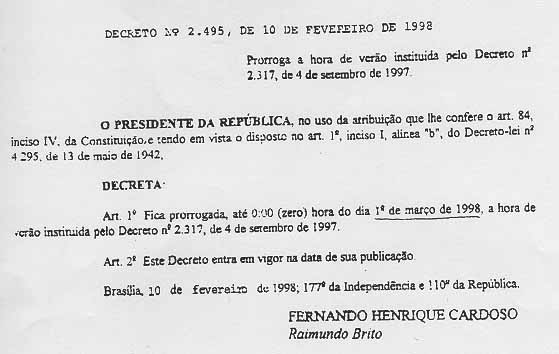

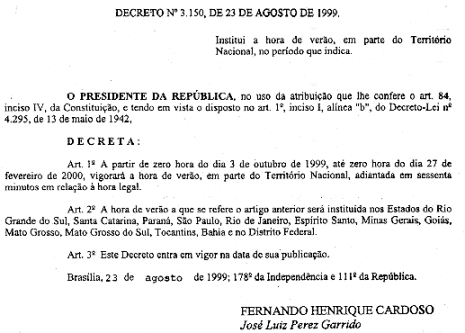
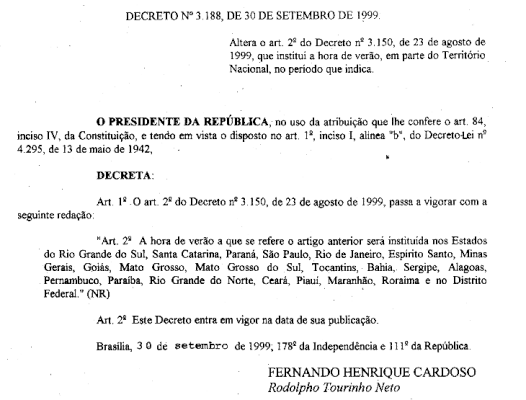
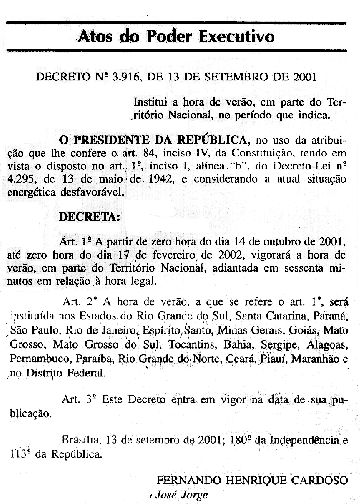
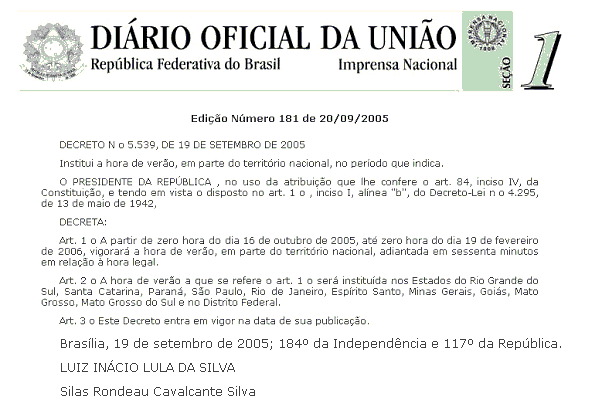
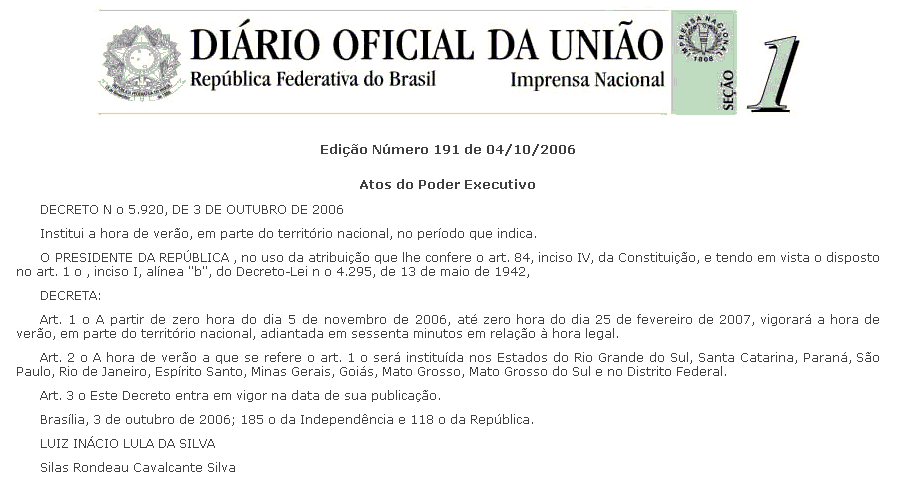
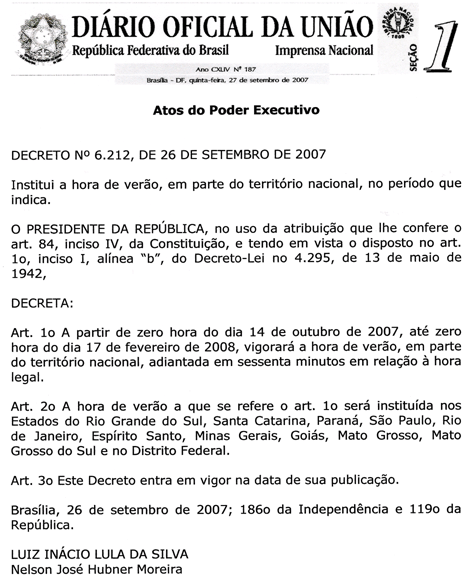
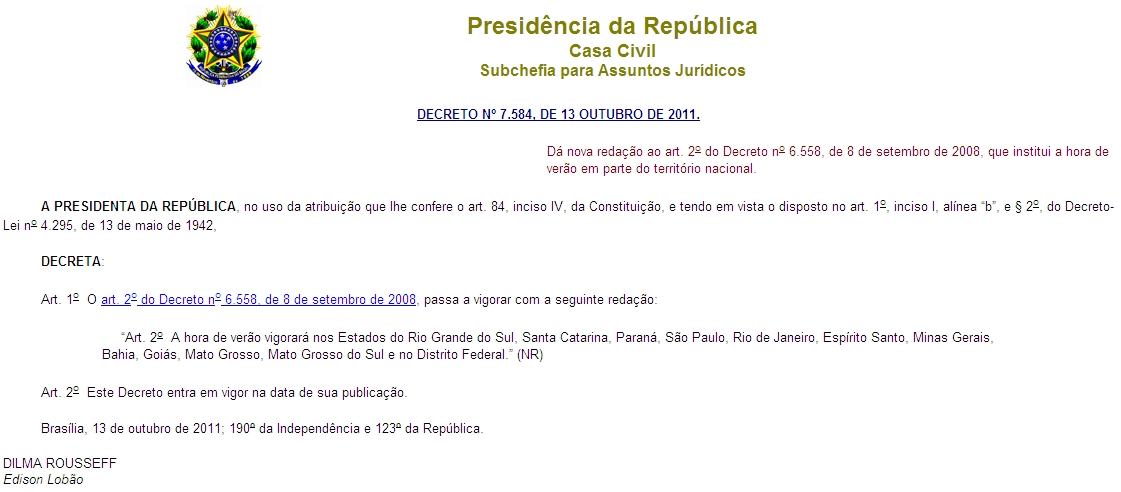
Hi,
Will a resolution/patch be available for this soon?
Thanks,
Patsy
1
0