Issue needs discussion and closure

Hello Friends, In UASG workshop today, we had a detailed recap and discussion on UA + EAI issues. During discussion, we agreed the following points to be discussed further and need resolution… 1. Sender ID as xn--anything in local part. If email server receives an email FROM xn--anything@validdomain , should email server at receiving end Do.. a. the conversion of xn--anything to UTF8 string. b. Leave it the way it was received i.e xn-anything 2. Is Mixing of scripts is allowed in mailbox local part While creating a mailbox like.. a. scripta@scriptbdomain - ajay <mailto:ajay@???????.????> @ਡਾਟਾਮੇਲ.ਭਾਰਤ b. scripta+scriptc@scriptbdomain ajayअजय@ਡਾਟਾਮੇਲ.ਭਾਰਤ <mailto:?????@???????.????> 3. Alias ID on MUA: We already agreed that Downgrading of Alias is good practice and to be followed by email servers while communicating with legacy systems , however we have not discussed how Alias will be made available on MUA and if there are many Alias, than which will be used for downgrading. Lets discuss. Thanks. Ajay.

inline From: UA-discuss [mailto:ua-discuss-bounces@icann.org] On Behalf Of Ajay Data Sent: Saturday, March 10, 2018 10:50 PM To: ua-discuss@icann.org Subject: [UA-discuss] Issue needs discussion and closure This sender failed our fraud detection checks and may not be who they appear to be. Learn about spoofing<http://aka.ms/LearnAboutSpoofing> Feedback<http://aka.ms/SafetyTipsFeedback> Hello Friends, In UASG workshop today, we had a detailed recap and discussion on UA + EAI issues. During discussion, we agreed the following points to be discussed further and need resolution… 1. Sender ID as xn--anything in local part. If email server receives an email FROM xn--anything@validdomain , should email server at receiving end Do.. 1. the conversion of xn--anything to UTF8 string. [Mark Svancarek] IF you host the mailbox and IF xn—anything maps to a UTF8 mailbox that you already administer, and IF you have no mailboxes with xn—anything as the local part: then you may transform. But this is not an officially recommended practice. 1. Leave it the way it was received i.e xn-anything [Mark Svancarek] In all other cases, this is forbidden. The official guidance is don’t ever do it. UASG should not be accountable to spell out the very specific exception case I define above. 1. Is Mixing of scripts is allowed in mailbox local part While creating a mailbox like.. 1. scripta@scriptbdomain - ajay@ਡਾਟਾਮੇਲਭਾਰਤ<mailto:ajay@ਡਾਟਾਮੇਲ.ਭਾਰਤ> [Mark Svancarek] I don’t think there is any specific existing rule or even guidance on this example, for or against. I vote that UASG support this example. 1. scripta+scriptc@scriptbdomain ajayअजय@ਡਾਟਾਮੇਲ.ਭਾਰਤ<mailto:ਸੰਪਰਕ@ਡਾਟਾਮੇਲ.ਭਾਰਤ> [Mark Svancarek] We should recognize that the local part rules are very permissive and therefore this should be an ALLOWED case per the spec. But I vote that UASG declare it as a NOT RECOMMENDED case EXCEPT for script combinations which are already allowed to be mixed in the root zone. 1. Alias ID on MUA: We already agreed that Downgrading of Alias is good practice and to be followed by email servers while communicating with legacy systems , however we have not discussed how Alias will be made available on MUA and if there are many Alias, than which will be used for downgrading. [Mark Svancarek] I don’t recall this topic, and I don’t understand the question – sorry! Please clarify. Lets discuss. Thanks. Ajay.
clarifying From: UA-EAI [mailto:ua-eai-bounces@icann.org] On Behalf Of Mark Svancarek via UA-EAI Sent: Sunday, March 11, 2018 8:34 AM To: Ajay Data <ajay@data.in>; ua-discuss@icann.org; ua-eai@icann.org Subject: Re: [UA-EAI] [UA-discuss] Issue needs discussion and closure inline From: UA-discuss [mailto:ua-discuss-bounces@icann.org] On Behalf Of Ajay Data Sent: Saturday, March 10, 2018 10:50 PM To: ua-discuss@icann.org<mailto:ua-discuss@icann.org> Subject: [UA-discuss] Issue needs discussion and closure This sender failed our fraud detection checks and may not be who they appear to be. Learn about spoofing<http://aka.ms/LearnAboutSpoofing> Feedback<http://aka.ms/SafetyTipsFeedback> Hello Friends, In UASG workshop today, we had a detailed recap and discussion on UA + EAI issues. During discussion, we agreed the following points to be discussed further and need resolution… 1. Sender ID as xn--anything in local part. If email server receives an email FROM xn--anything@validdomain , should email server at receiving end Do.. 1. the conversion of xn--anything to UTF8 string. [Mark Svancarek] IF you host the mailbox and IF xn—anything maps to a UTF8 mailbox that you already administer, and IF you have no mailboxes with xn—anything as the local part: then you may transform. But this is not an officially recommended practice. 1. Leave it the way it was received i.e xn-anything [Mark Svancarek] In all other cases, transformation is forbidden. The official guidance is don’t ever do it. UASG should not be accountable to spell out the very specific exception case I define above. 1. Is Mixing of scripts is allowed in mailbox local part While creating a mailbox like.. 1. scripta@scriptbdomain - ajay@ਡਾਟਾਮੇਲਭਾਰਤ<mailto:ajay@ਡਾਟਾਮੇਲ.ਭਾਰਤ> [Mark Svancarek] I don’t think there is any specific existing rule or even guidance on this example, for or against. I vote that UASG support this example. 1. scripta+scriptc@scriptbdomain ajayअजय@ਡਾਟਾਮੇਲ.ਭਾਰਤ<mailto:ਸੰਪਰਕ@ਡਾਟਾਮੇਲ.ਭਾਰਤ> [Mark Svancarek] We should recognize that the local part rules are very permissive and therefore this should be an ALLOWED case per the spec. But I vote that UASG declare it as a NOT RECOMMENDED case EXCEPT for script combinations which are already allowed to be mixed in the root zone. 1. Alias ID on MUA: We already agreed that Downgrading of Alias is good practice and to be followed by email servers while communicating with legacy systems , however we have not discussed how Alias will be made available on MUA and if there are many Alias, than which will be used for downgrading. [Mark Svancarek] I don’t recall this topic, and I don’t understand the question – sorry! Please clarify. Lets discuss. Thanks. Ajay.

On Mar 11, 2018, at 9:00 AM, Mark Svancarek via UA-discuss <ua-discuss@icann.org> wrote:
We should recognize that the local part rules are very permissive and therefore this should be an ALLOWED case per the spec. But I vote that UASG declare it as a NOT RECOMMENDED case EXCEPT for script combinations which are already allowed to be mixed in the root zone.
I would stop at the first part and add that each mail admin set its own rules as far as mailbox names. The second part is troublesome as it mixes mailbox names with the (dns) root zone. I don’t see the need for a connection. Am I missing something? -Dennis
Here is my reasoning: We forbid script mixing in the root for well-understood reasons. A few exceptions were carved out, though. The same thought process could be applied to second level and below. It's not an obligation, but the benefits to the user are the same and I think it is safe to say that it's a good practice to apply those same restrictions and exemptions to any label in a domain name. The local part is even less restricted than the 2LD. But again, I think the same benefits to the users apply. Given the perceived benefits, is there any concern about defining a good practice on creation of local parts by a mail service provider? (It would be written more clearly than below...) -----Original Message----- From: Tan Tanaka, Dennis [mailto:dtantanaka@verisign.com] Sent: Sunday, March 11, 2018 12:49 PM To: Mark Svancarek <marksv@microsoft.com> Cc: Ajay Data <ajay@data.in>; ua-discuss@icann.org Subject: Re: [UA-discuss] Issue needs discussion and closure
On Mar 11, 2018, at 9:00 AM, Mark Svancarek via UA-discuss <ua-discuss@icann.org> wrote:
We should recognize that the local part rules are very permissive and therefore this should be an ALLOWED case per the spec. But I vote that UASG declare it as a NOT RECOMMENDED case EXCEPT for script combinations which are already allowed to be mixed in the root zone.
I would stop at the first part and add that each mail admin set its own rules as far as mailbox names. The second part is troublesome as it mixes mailbox names with the (dns) root zone. I don't see the need for a connection. Am I missing something? -Dennis

On Sun, Mar 11, 2018 at 06:43:34PM +0000, Mark Svancarek via UA-discuss wrote:
Here is my reasoning:
We forbid script mixing in the root for well-understood reasons.
But we don't forbid script mixing in the root. The LGR effort is busily trying to set the correct rules for this, but the root already has more than one script, and there are defintiely potential labels corresponding to Japanese words that require script mixing. The rules are actually aimed at prohibiting mixing of _writing systems_, which in the last go round was approximated as "script".
The same thought process could be applied to second level and below.
But this gets harder the lower in the tree you go, because there is no authority to enforce it. Moreover, things that would be a very bad idea for the root, such as (say) Egyptian hieroglyphs, would be just fine at other layers of the DNS. And there's the problem of different scripts in different labels, which is a permanent and unresolvable problem because of the nature of the DNS.
It's not an obligation, but the benefits to the user are the same and I think it is safe to say that it's a good practice to apply those same restrictions and exemptions to any label in a domain name.
What is certainly safe to say is that you should not create identifiers where you don't understand what the implications are. Best regards, A -- Andrew Sullivan ajs@anvilwalrusden.com
Discussing with Dennis, we wonder if M3AAWG already has a recommendation on this topic. If so, we should adopt theirs. -----Original Message----- From: UA-discuss [mailto:ua-discuss-bounces@icann.org] On Behalf Of Andrew Sullivan Sent: Sunday, March 11, 2018 2:59 PM To: ua-discuss@icann.org; ua-eai@icann.org Subject: Re: [UA-discuss] Issue needs discussion and closure On Sun, Mar 11, 2018 at 06:43:34PM +0000, Mark Svancarek via UA-discuss wrote:
Here is my reasoning:
We forbid script mixing in the root for well-understood reasons.
But we don't forbid script mixing in the root. The LGR effort is busily trying to set the correct rules for this, but the root already has more than one script, and there are defintiely potential labels corresponding to Japanese words that require script mixing. The rules are actually aimed at prohibiting mixing of _writing systems_, which in the last go round was approximated as "script".
The same thought process could be applied to second level and below.
But this gets harder the lower in the tree you go, because there is no authority to enforce it. Moreover, things that would be a very bad idea for the root, such as (say) Egyptian hieroglyphs, would be just fine at other layers of the DNS. And there's the problem of different scripts in different labels, which is a permanent and unresolvable problem because of the nature of the DNS.
It's not an obligation, but the benefits to the user are the same and I think it is safe to say that it's a good practice to apply those same restrictions and exemptions to any label in a domain name.
What is certainly safe to say is that you should not create identifiers where you don't understand what the implications are. Best regards, A -- Andrew Sullivan ajs@anvilwalrusden.com

Mark Svancarek via UA-EAI writes:
Discussing with Dennis, we wonder if M3AAWG already has a recommendation on this topic. If so, we should adopt theirs.
Well, there already is a source of truth, you can see it if you look down: Your keyboard. I don't know where each of you are in the world, but the keyboard, whatever it is, provides strong guidance (even if not an absolute rule) on what sort of identifiers you and your correspondents can use. I know you (Mark/Dennis) thought about it more generally. Achoring the question to the keyboard can help segment the general question into usefully concrete ones, though. The rule (or each part-rule of there are several) can be stricter then the keyboard, can map the keyboarding ability exactly, or can be laxer. 1. Should there be any sort of general rule that restricts identifiers more than keyboards do? (Some such rules do exist, e.g. "can't have @ in a localpart" or "can't practically have space in a localpart".) IMO we cannot and should not expect anything on people's keyboards today to be useless or harmful, therefore we should not add rules to block anything. 2. Or that describes exactly, o so that email providers can enforce that people can enter only what their keyboards permit, and nothing else? Personally I don't see the point. A lot of tedious work and what will it achieve? Please don't answer "block confusing glyphs", because а@gamil.com and a@gmail.com may be confusable, but gamil and gmail aren't going to coordinate anyway. 3. Or be laxer? For example: "Software and sites SHOULD support all of the following code points in localparts: τυφχψωϊϋόύώϙϛϝϟϡϸ… Sites SHOULD allow users to include any code points from that list, if they permit user choice at all." I don't see the point either. It's the kind of rule people ignore. Arnt

Il 12 marzo 2018 alle 14.02 Arnt Gulbrandsen <arnt@gulbrandsen.priv mailto:arnt@gulbrandsen.priv .no> ha scritto:
Mark Svancarek via UA-EAI writes:
> > Discussing with Dennis, we wonder if M3AAWG already has a
recommendation on this topic. If so, we should adopt theirs.
> Well, there already is a source of truth, you can see it if you look down:
Your keyboard.
I don't know where each of you are in the world, but the keyboard, whatever it is, provides strong guidance (even if not an absolute rule) on what sort of identifiers you and your correspondents can use.
Unless I did not understand what you meant, I don't think this could work: - you, your keyboard and your mail system can receive email from someone who is using a completely different keyboard and script, and in no way the fact that your keyboard cannot type that email address is an issue that prevents you from just clicking "reply" and continuing the correspondence, as long as your mail system supports EAI; - in any case, nowadays you have key combinations and other instruments that allow you to type whatever character on whatever keyboard; it may be easier or harder, but you can do it if you need and know how; - also, people may use different devices with different keyboards, so the people <=> keyboard biunivocal mapping does not work; - even you just wanted to restrict which characters you can use when you connect to a free webmail platform and create a new email address, nothing would prevent the user from connecting again with a different keyboard; - all in all, it would be very weird for me to think that I can only exchange email with people who are using an Italian keyboard/email address; just in my company we have a couple dozen nationalities and different keyboards, we would have to shut down the company; - and finally, I'm not sure that a server has a way to know 100% securely and reliably which keyboard is the user typing on. Also, re your point 3, I would be wary of any central authority telling people in country X which characters from their script can or cannot be used in email addresses. If there is a need to prevent confusion, you may introduce specific technical rules (or maybe best practices) forbidding as few things as possible, but nothing more than that. Also, as you point out with your gmail/gamil example, most confusion/phishing in the West actually happens with Western-only characters in domains and addresses, and no one cares (or better, this is being addressed by other means, e.g. content scanning, blacklisting etc). I just received a "Paypal" email from "donot@repaly.com", but no one is asking to outlaw "repaly.com", so I'm not sure why there is all this desire to prevent people in non-Latin-script countries, or even those of them who live in Latin-script countries, from using all the characters they want. Regards, -- Vittorio Bertola | Head of Policy & Innovation, Open-Xchange vittorio.bertola@open-xchange.com mailto:vittorio.bertola@open-xchange.com Office @ Via Treviso 12, 10144 Torino, Italy
The thing you're forgetting is that EAI is for people who aren't friends with a, b and c. I have a runic address (just for fun). If we pretend that runes are the only alphabet I know well, then yes, I could receive email from you. that part is easy: My computer can display any alphabet you can type. But what about the rest? Even if you could enter my address without being able to type runes, what would you do? I could receive mail from you, but how can you send it and what can you send? There's roughly a hundred million internet users in West Bengal and Bangladesh who can read and type bangla, but don't know the latin alphabet very well. EAI is for letting them send email among themselves. The keyboard they have expresses what they can do, in a rather harsh manner. Any time you start thinking about how to let bangla people send email using runes, you've lost contact with reality and the problems you're solving aren't IMO interesting any more. Arnt
Agree that we must always remind folks that EAI is (mainly) not for ICANN people who travel the world and are multilingual and know other multilingual people. EAI is (mainly) for people who speak only one language, read one language in a single writing system, and communicate only with people who speak/read/communicate with similar people. -----Original Message----- From: UA-EAI [mailto:ua-eai-bounces@icann.org] On Behalf Of Arnt Gulbrandsen Sent: Monday, March 12, 2018 12:06 To: Vittorio Bertola <vittorio.bertola@open-xchange.com> Cc: ua-discuss@icann.org; ua-eai@icann.org Subject: Re: [UA-EAI] [UA-discuss] Issue needs discussion and closure The thing you're forgetting is that EAI is for people who aren't friends with a, b and c. I have a runic address (just for fun). If we pretend that runes are the only alphabet I know well, then yes, I could receive email from you. that part is easy: My computer can display any alphabet you can type. But what about the rest? Even if you could enter my address without being able to type runes, what would you do? I could receive mail from you, but how can you send it and what can you send? There's roughly a hundred million internet users in West Bengal and Bangladesh who can read and type bangla, but don't know the latin alphabet very well. EAI is for letting them send email among themselves. The keyboard they have expresses what they can do, in a rather harsh manner. Any time you start thinking about how to let bangla people send email using runes, you've lost contact with reality and the problems you're solving aren't IMO interesting any more. Arnt _______________________________________________ UA-EAI mailing list UA-EAI@icann.org https://na01.safelinks.protection.outlook.com/?url=https%3A%2F%2Fmm.icann.or...

On 3/12/2018 10:50 AM, Mark Svancarek via UA-discuss wrote:
Agree that we must always remind folks that EAI is (mainly) not for ICANN people who travel the world and are multilingual and know other multilingual people. EAI is (mainly) for people who speak only one language, read one language in a single writing system, and communicate only with people who speak/read/communicate with similar people.
I think the number of people who have professional or personal contacts with people that use different "keyboards" is more than people working at ICANN. In my own case, the social media posts in foreign scripts are not the ones by my professional, but by my personal contacts; they mainly still use ASCII only e-mail so I don't observe the effect there (yet). I can't think of any industry where there wouldn't be a need to contact suppliers across the globe - not all of which may fully operate in an "International English" environment (other than the transactional language). So, the multi-script / multi-alphabet case is also a real scenario - you don't have to invoke hobbyists and dead scripts. Anything that just allows disconnected 'islands' would only be half a solution. A./
-----Original Message----- From: UA-EAI [mailto:ua-eai-bounces@icann.org] On Behalf Of Arnt Gulbrandsen Sent: Monday, March 12, 2018 12:06 To: Vittorio Bertola <vittorio.bertola@open-xchange.com> Cc: ua-discuss@icann.org; ua-eai@icann.org Subject: Re: [UA-EAI] [UA-discuss] Issue needs discussion and closure
The thing you're forgetting is that EAI is for people who aren't friends with a, b and c.
I have a runic address (just for fun). If we pretend that runes are the only alphabet I know well, then yes, I could receive email from you. that part is easy: My computer can display any alphabet you can type. But what about the rest? Even if you could enter my address without being able to type runes, what would you do? I could receive mail from you, but how can you send it and what can you send?
There's roughly a hundred million internet users in West Bengal and Bangladesh who can read and type bangla, but don't know the latin alphabet very well. EAI is for letting them send email among themselves. The keyboard they have expresses what they can do, in a rather harsh manner.
Any time you start thinking about how to let bangla people send email using runes, you've lost contact with reality and the problems you're solving aren't IMO interesting any more.
Arnt _______________________________________________ UA-EAI mailing list UA-EAI@icann.org https://na01.safelinks.protection.outlook.com/?url=https%3A%2F%2Fmm.icann.or...
Il 12 marzo 2018 alle 18.50 Mark Svancarek <marksv@microsoft.com> ha scritto: Agree that we must always remind folks that EAI is (mainly) not for ICANN people who travel the world and are multilingual and know other multilingual people. EAI is (mainly) for people who speak only one language, read one language in a single writing system, and communicate only with people who speak/read/communicate with similar people.
Well, why? I mean, once EAI is widely supported, why should Indian or Japanese or Russian people still use ASCII email addresses at all? Of course people mostly email friends and local companies in their same script and language, which they'd do with an email address in their own script, but then, why would they need a separate ASCII email address for the rare cases when they have to email someone in a different part of the planet? In the end, the email address is a label and does not necessarily have semantic value (even today, there are people with addresses like j43@yrwx.com) - and if it has, it may even be false or misleading (paypal@example.com is not likely to be Paypal). You just use it and pass it on as it is - you may not even need to type it once, if you receive it by electronic means, including an incoming email. So what difference does it make if it is in a script that you can or cannot read? Regards, -- Vittorio Bertola | Head of Policy & Innovation, Open-Xchange vittorio.bertola@open-xchange.com Office @ Via Treviso 12, 10144 Torino, Italy
Vittorio Bertola writes:
Well, why? I mean, once EAI is widely supported, why should Indian or Japanese or Russian people still use ASCII email addresses at all?
You appear to take for given that EAI becomes widely supported. That's not exactly certain at the present. IMO, if does become widely supported, then we'll have learnt enough to answer that question, and the one below. But I'll offer an anecodotal comment which, perhaps, hints at an answer:
... So what difference does it make if it is in a script that you can or cannot read?
JFYI, I am supposed to have an Indian address, but it's broken right now, due to someone's cut and paste error. Such mistakes happen easily when you can't read or write the letters you're trying to use. Arnt
Cut and paste errors are a really annoying problem with RTL scripts. So easy to make. -----Original Message----- From: Arnt Gulbrandsen [mailto:arnt@gulbrandsen.priv.no] Sent: Tuesday, March 13, 2018 08:04 To: Vittorio Bertola <vittorio.bertola@open-xchange.com> Cc: Mark Svancarek <marksv@microsoft.com>; ua-eai@icann.org; ua-discuss@icann.org Subject: Re: [UA-EAI] [UA-discuss] Issue needs discussion and closure Vittorio Bertola writes:
Well, why? I mean, once EAI is widely supported, why should Indian or Japanese or Russian people still use ASCII email addresses at all?
You appear to take for given that EAI becomes widely supported. That's not exactly certain at the present. IMO, if does become widely supported, then we'll have learnt enough to answer that question, and the one below. But I'll offer an anecodotal comment which, perhaps, hints at an answer:
... So what difference does it make if it is in a script that you can or cannot read?
JFYI, I am supposed to have an Indian address, but it's broken right now, due to someone's cut and paste error. Such mistakes happen easily when you can't read or write the letters you're trying to use. Arnt
Please let me clarify - SMTPUTF8 mail is for everyone. All systems should use the up to date standards. But actually there will always be friction when attempting to use languages and scripts with someone who doesn't know that language or script. Today, that friction is felt by users of non-latinate languages, and they just have to endure it. In the future the friction will be limited to folks like you and me on those occasions when we share contact info with international people who we meet on business and at conferences. -----Original Message----- From: Vittorio Bertola [mailto:vittorio.bertola@open-xchange.com] Sent: Tuesday, March 13, 2018 07:17 To: Mark Svancarek <marksv@microsoft.com>; Arnt Gulbrandsen <arnt@gulbrandsen.priv.no> Cc: ua-eai@icann.org; ua-discuss@icann.org Subject: RE: [UA-EAI] [UA-discuss] Issue needs discussion and closure
Il 12 marzo 2018 alle 18.50 Mark Svancarek <marksv@microsoft.com> ha scritto: Agree that we must always remind folks that EAI is (mainly) not for ICANN people who travel the world and are multilingual and know other multilingual people. EAI is (mainly) for people who speak only one language, read one language in a single writing system, and communicate only with people who speak/read/communicate with similar people.
Well, why? I mean, once EAI is widely supported, why should Indian or Japanese or Russian people still use ASCII email addresses at all? Of course people mostly email friends and local companies in their same script and language, which they'd do with an email address in their own script, but then, why would they need a separate ASCII email address for the rare cases when they have to email someone in a different part of the planet? In the end, the email address is a label and does not necessarily have semantic value (even today, there are people with addresses like j43@yrwx.com) - and if it has, it may even be false or misleading (paypal@example.com is not likely to be Paypal). You just use it and pass it on as it is - you may not even need to type it once, if you receive it by electronic means, including an incoming email. So what difference does it make if it is in a script that you can or cannot read? Regards, -- Vittorio Bertola | Head of Policy & Innovation, Open-Xchange vittorio.bertola@open-xchange.com Office @ Via Treviso 12, 10144 Torino, Italy
Actually, my “keyboard” is pretty flexible. To your other point about mainly-ASCII phishing, I am happy to consider I may be overthinking things by looking for recommended good practices for this topic. [cid:image001.jpg@01D3BA08.B8323840] From: UA-discuss [mailto:ua-discuss-bounces@icann.org] On Behalf Of Vittorio Bertola Sent: Monday, March 12, 2018 09:59 To: ua-eai@icann.org; Arnt Gulbrandsen <arnt@gulbrandsen.priv.no>; ua-discuss@icann.org Subject: Re: [UA-discuss] [UA-EAI] Issue needs discussion and closure Il 12 marzo 2018 alle 14.02 Arnt Gulbrandsen <arnt@gulbrandsen.priv<mailto:arnt@gulbrandsen.priv>.no> ha scritto: Mark Svancarek via UA-EAI writes: Discussing with Dennis, we wonder if M3AAWG already has a recommendation on this topic. If so, we should adopt theirs. Well, there already is a source of truth, you can see it if you look down: Your keyboard. I don't know where each of you are in the world, but the keyboard, whatever it is, provides strong guidance (even if not an absolute rule) on what sort of identifiers you and your correspondents can use. Unless I did not understand what you meant, I don't think this could work: - you, your keyboard and your mail system can receive email from someone who is using a completely different keyboard and script, and in no way the fact that your keyboard cannot type that email address is an issue that prevents you from just clicking "reply" and continuing the correspondence, as long as your mail system supports EAI; - in any case, nowadays you have key combinations and other instruments that allow you to type whatever character on whatever keyboard; it may be easier or harder, but you can do it if you need and know how; - also, people may use different devices with different keyboards, so the people <=> keyboard biunivocal mapping does not work; - even you just wanted to restrict which characters you can use when you connect to a free webmail platform and create a new email address, nothing would prevent the user from connecting again with a different keyboard; - all in all, it would be very weird for me to think that I can only exchange email with people who are using an Italian keyboard/email address; just in my company we have a couple dozen nationalities and different keyboards, we would have to shut down the company; - and finally, I'm not sure that a server has a way to know 100% securely and reliably which keyboard is the user typing on. Also, re your point 3, I would be wary of any central authority telling people in country X which characters from their script can or cannot be used in email addresses. If there is a need to prevent confusion, you may introduce specific technical rules (or maybe best practices) forbidding as few things as possible, but nothing more than that. Also, as you point out with your gmail/gamil example, most confusion/phishing in the West actually happens with Western-only characters in domains and addresses, and no one cares (or better, this is being addressed by other means, e.g. content scanning, blacklisting etc). I just received a "Paypal" email from "donot@repaly.com<mailto:donot@repaly.com>", but no one is asking to outlaw "repaly.com", so I'm not sure why there is all this desire to prevent people in non-Latin-script countries, or even those of them who live in Latin-script countries, from using all the characters they want. Regards, -- Vittorio Bertola | Head of Policy & Innovation, Open-Xchange vittorio.bertola@open-xchange.com<mailto:vittorio.bertola@open-xchange.com> Office @ Via Treviso 12, 10144 Torino, Italy
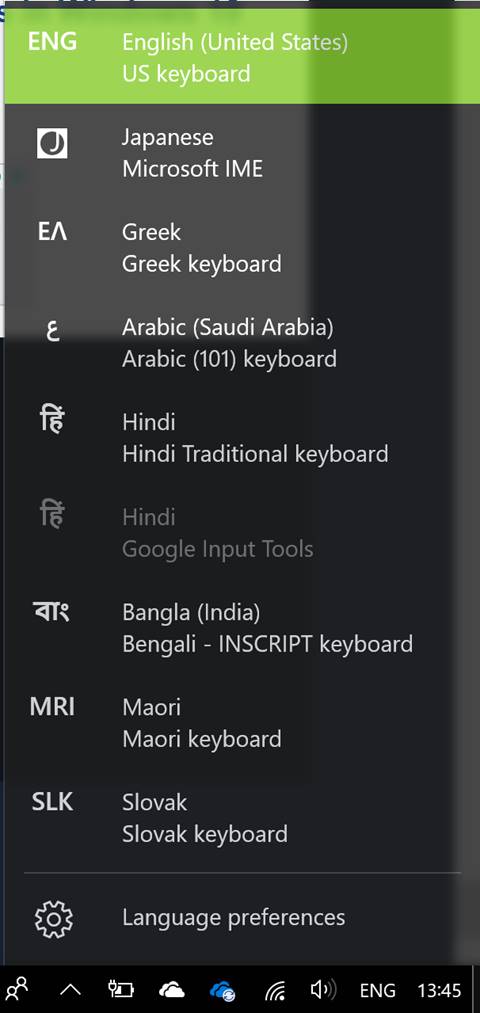
Mark Svancarek writes:
Actually, my “keyboard” is pretty flexible.
That's your excellent OS support, not the keyoard you use. Your keycaps say "A", "S", "D" and so on, right? I see Hindi traditional on your list, is there a keycap that says आ? EAI is for the people whose knowledge of A-Z is too shaky to be comfortable emailing using A-Z, but who can read and write some other writing system, and who have a computer so they want to email. For these people, the keyboard they have is a decent proxy. They chose that keyboard because it reflects their knowledge. It isn't necessarily a hard and fast border of their skill, but it's a pretty good working description.
To your other point about mainly-ASCII phishing, I am happy to consider I may be overthinking things by looking for recommended good practices for this topic.
Phishing's a big threat nowadays. It's worth keeping in mind that exploiting similar-looking glyphs isn't a big part of that evil industry. It was a clever, novel attack once, but hasn't grown to much more in the decade that's passed since it was invented. Phishers don't need cyrillic a to impersonate Chase, they just register chase-account-security-team.com and fool enough people. So I don't think that warrants much attention. More than anything else, that issue is an attention magnet for nerds like us. We do like clever toys and hacks like that, don't we ;) Arnt
Yeah, I am prone to overthinking stuff like this 😝 -- More than anything else, that issue is an attention magnet for nerds like us. We do like clever toys and hacks like that, don't we ;) -----Original Message----- From: Arnt Gulbrandsen [mailto:arnt@gulbrandsen.priv.no] Sent: Monday, March 12, 2018 14:24 To: Mark Svancarek <marksv@microsoft.com> Cc: Vittorio Bertola <vittorio.bertola@open-xchange.com>; ua-eai@icann.org; ua-discuss@icann.org Subject: Re: [UA-discuss] [UA-EAI] Issue needs discussion and closure Mark Svancarek writes:
Actually, my “keyboard” is pretty flexible.
That's your excellent OS support, not the keyoard you use. Your keycaps say "A", "S", "D" and so on, right? I see Hindi traditional on your list, is there a keycap that says आ? EAI is for the people whose knowledge of A-Z is too shaky to be comfortable emailing using A-Z, but who can read and write some other writing system, and who have a computer so they want to email. For these people, the keyboard they have is a decent proxy. They chose that keyboard because it reflects their knowledge. It isn't necessarily a hard and fast border of their skill, but it's a pretty good working description.
To your other point about mainly-ASCII phishing, I am happy to consider I may be overthinking things by looking for recommended good practices for this topic.
Phishing's a big threat nowadays. It's worth keeping in mind that exploiting similar-looking glyphs isn't a big part of that evil industry. It was a clever, novel attack once, but hasn't grown to much more in the decade that's passed since it was invented. Phishers don't need cyrillic a to impersonate Chase, they just register chase-account-security-team.com and fool enough people. So I don't think that warrants much attention. More than anything else, that issue is an attention magnet for nerds like us. We do like clever toys and hacks like that, don't we ;) Arnt
On 3/11/2018 11:59 AM, Andrew Sullivan wrote:
On Sun, Mar 11, 2018 at 06:43:34PM +0000, Mark Svancarek via UA-discuss wrote:
Here is my reasoning:
We forbid script mixing in the root for well-understood reasons. But we don't forbid script mixing in the root. The LGR effort is busily trying to set the correct rules for this, but the root already has more than one script, and there are defintiely potential labels corresponding to Japanese words that require script mixing. The rules are actually aimed at prohibiting mixing of _writing systems_, which in the last go round was approximated as "script".
There are some writing systems where use of the occasional ASCII character is common; this is not supported in the Root. There are some writing systems where mixing ASCII (or Latin) characters would be of more concern than in others. Generally, when the script looks much like Latin, as is the case for Cyrillic, such ASCII mixtures are problematic, while for Japanese or Hindi they might not be.
The same thought process could be applied to second level and below. But this gets harder the lower in the tree you go, because there is no authority to enforce it.
There's the question of authority and there's the question of what makes sense, or constitutes "best practice" in some general sense. For the latter the intended audience for a zone would matter. If it is general, public, world-wide or at least comprises users of more than one writing system, some of the things developed for the Root would make sense whether as "starting point" or as "recommendation".
Moreover, things that would be a very bad idea for the root, such as (say) Egyptian hieroglyphs, would be just fine at other layers of the DNS. And there's the problem of different scripts in different labels, which is a permanent and unresolvable problem because of the nature of the DNS. You mean having different labels in the same FQDN.
It's not an obligation, but the benefits to the user are the same and I think it is safe to say that it's a good practice to apply those same restrictions and exemptions to any label in a domain name. What is certainly safe to say is that you should not create identifiers where you don't understand what the implications are. Nobody simply understands the implications. The Root Zone LGRs that have come online and the ones still in the pipeline do embody such "understanding" for the set of code points required for modern use in widely used scripts.
As documents they are reasonably detailed in documenting the issues and resulting design decisions. They also link back to general references so that it is possible for readers to follow up those details, if inclined. Most (by number) modern-use scripts need restrictions beyond defining a simple repertoire. Developing these restrictions from scratch is a moderately complex under- taking. Understanding and copying the ones developed for the Root Zone LGr is much easier. Not doing anything, is easier yet, but leads to very insecure IDNs... A./
Best regards,
A

Hello Mark, others, On 2018/03/12 03:43, Mark Svancarek via UA-EAI wrote:
Here is my reasoning:
We forbid script mixing in the root for well-understood reasons. A few exceptions were carved out, though. The same thought process could be applied to second level and below. It's not an obligation, but the benefits to the user are the same and I think it is safe to say that it's a good practice to apply those same restrictions and exemptions to any label in a domain name. The local part is even less restricted than the 2LD. But again, I think the same benefits to the users apply.
For local parts, I think it depends a lot on the size of the 'operation'. The problem is easy to handle on a case-by-case base for e.g. an University lab that's handling out email addresses to its members. Script mixtures may not be a problem at all, because it's easy to avoid conflicts and confusions. On the other end of the spectrum (big web mail providers and such), strict rules will have the benefit that they eliminate a lot of problems while keeping almost everything automatic.
Given the perceived benefits, is there any concern about defining a good practice on creation of local parts by a mail service provider? (It would be written more clearly than below...)
With regards to script mixing, the Japanese case has already been mentioned. Also, the main arguments against script mixing are visual confusion across scripts and bidirectionality issues. Latin/Greek/Cyrillic is the main case; there may be some well-known cases across Indic scripts, too, but for any two scripts taken at random, the chance of confusability is pretty low. Bidirectionality considerations essentially split the scripts into two, but will still allow e.g. mixing Arabic and Hebrew. Mixing arbitrary scripts in LHS probably doesn't have too much of a need anyway in the first place, but that doesn't mean it should be totally discouraged when it's not harmful. Regards, Martin.
-----Original Message----- From: Tan Tanaka, Dennis [mailto:dtantanaka@verisign.com] Sent: Sunday, March 11, 2018 12:49 PM To: Mark Svancarek <marksv@microsoft.com> Cc: Ajay Data <ajay@data.in>; ua-discuss@icann.org Subject: Re: [UA-discuss] Issue needs discussion and closure
On Mar 11, 2018, at 9:00 AM, Mark Svancarek via UA-discuss <ua-discuss@icann.org> wrote:
We should recognize that the local part rules are very permissive and therefore this should be an ALLOWED case per the spec. But I vote that UASG declare it as a NOT RECOMMENDED case EXCEPT for script combinations which are already allowed to be mixed in the root zone.
I would stop at the first part and add that each mail admin set its own rules as far as mailbox names. The second part is troublesome as it mixes mailbox names with the (dns) root zone. I don't see the need for a connection. Am I missing something?
-Dennis _______________________________________________ UA-EAI mailing list UA-EAI@icann.org https://mm.icann.org/mailman/listinfo/ua-eai .
Hi, I am now even more regretful that I couldn't make yesterday's session, since it clearly was interesting. Some comments below. On Sun, Mar 11, 2018 at 08:19:39AM +0530, Ajay Data wrote:
1. Sender ID as xn--anything in local part.
If email server receives an email FROM xn--anything@validdomain , should email server at receiving end Do..
a. the conversion of xn--anything to UTF8 string. b. Leave it the way it was received i.e xn-anything
I don't know what 1.a means. As far as I know, there is no protocol of any kind specified anywhere that that talks about algorithmic transformations of local-parts from an ASCII-compatible-encoding (ACE) to UTF-8. The prefix 'xn--' is not a magic universal transformation indicator: it works for individual labels in domain names when IDNA is in use, and that's it. If we want a reliable protocol mechanism that can do this transformation, I think it probably needs some protocol engineers to work on it. I will observe that the IETF's EAI working group twice declined to do this kind of mapping, and it might behoove those who are interested in seeing such a mapping to go and review the prior discussions about why it was not taken up before. But I will suggest that people consider the differences between RFCs 821 and 822, and RFC 952, as a short cut to understanding why "punycode for local-parts" was not really a good idea. I think you should expect that a local-part-prefix for this kind of transformation indicator would be just about anything other than xn--, since that is in use for domain name labels and overloading this for email local-parts would be quite a bad idea. (Please remember that "xn--" is added to the A-label after the Punycode algorithm is run over the candidate U-label.) I'm also pretty nervous about your use of "mail server" there, since it suggests that intermediate mail servers should be doing transformations. This is definitely a bad idea: section 2.3.11 of RFC 5321 prohibits it. All of that said, of course, it's the Internet: your network, your rules, and you can do what you want with local-parts in your mail system. Just don't expect it to work predictably with others.
2. Is Mixing of scripts is allowed in mailbox local part While creating a mailbox like..
a. scripta@scriptbdomain - ajay@ਡਾਟਾਮੇਲਭਾਰਤ b. scripta+scriptc@scriptbdomain ajayअजय@ਡਾਟਾਮੇਲ.ਭਾਰਤ
I don't know what "allowed" means in this context, since practically anything can go in a local-part. It has always been possible to mix scripts in the domain-part, because the DNS is a distributed hierarchy so there can only be rules zone by zone (which might be label by label, and might not be), and those rules are set by the zone operator (ICANN makes rules for the root zone, and through contractual mechanisms makes them for gTLDs, but that's the extent of ICANN's control). I can imagine proposing good pratices for restricting the scope of scripts to be used in local-part identifiers based in part on what server-part identifiers are in use.
3. Alias ID on MUA:
We already agreed that Downgrading of Alias is good practice
I literally don't know what that means, but I will observe that "downgrade" was a failed experiment in the EAI protocol and was deprecated. Moreover,
and to be followed by email servers while communicating with legacy systems
…how do you know when you're communicating with "legacy systems"? Your only knowledge is of the next mail hop, which might not be the MTA that does the final delivery. We do not have a mechanism to specify the mail path (mercifully, bang addresses went out a long time ago), and therefore we don't have a mechanism to make sure that the mail path the whole way through can do ESMTP, never mind EAI.
, however we have not discussed how Alias will be made available on MUA and if there are many Alias, than which will be used for downgrading.
I also don't understand what that means. I'm also not sure what it would mean to make rules about what MUAs can do. Best regards, A -- Andrew Sullivan ajs@anvilwalrusden.com
Andrew, We all know the answers as discussed in meeting also yesterday which you missed.. however to be clear.. my email is asking question and members views , I am not suggesting anything here. If we know the concurrent views, it will form the part or document for EAI . We already buried that discussion of companies doing whatever they want..None of our and UASG concern. Thanks. Email Powered by XgenPlus - Worlds Most advanced email. -------- Original message --------From: Andrew Sullivan <ajs@anvilwalrusden.com> Date: 11/03/2018 09:22 (GMT-05:00) To: ua-discuss@icann.org Subject: Re: [UA-discuss] Issue needs discussion and closure Hi, I am now even more regretful that I couldn't make yesterday's session, since it clearly was interesting. Some comments below. On Sun, Mar 11, 2018 at 08:19:39AM +0530, Ajay Data wrote:
1. Sender ID as xn--anything in local part.
If email server receives an email FROM xn--anything@validdomain , should email server at receiving end Do..
a. the conversion of xn--anything to UTF8 string. b. Leave it the way it was received i.e xn-anything
I don't know what 1.a means. As far as I know, there is no protocol of any kind specified anywhere that that talks about algorithmic transformations of local-parts from an ASCII-compatible-encoding (ACE) to UTF-8. The prefix 'xn--' is not a magic universal transformation indicator: it works for individual labels in domain names when IDNA is in use, and that's it. If we want a reliable protocol mechanism that can do this transformation, I think it probably needs some protocol engineers to work on it. I will observe that the IETF's EAI working group twice declined to do this kind of mapping, and it might behoove those who are interested in seeing such a mapping to go and review the prior discussions about why it was not taken up before. But I will suggest that people consider the differences between RFCs 821 and 822, and RFC 952, as a short cut to understanding why "punycode for local-parts" was not really a good idea. I think you should expect that a local-part-prefix for this kind of transformation indicator would be just about anything other than xn--, since that is in use for domain name labels and overloading this for email local-parts would be quite a bad idea. (Please remember that "xn--" is added to the A-label after the Punycode algorithm is run over the candidate U-label.) I'm also pretty nervous about your use of "mail server" there, since it suggests that intermediate mail servers should be doing transformations. This is definitely a bad idea: section 2.3.11 of RFC 5321 prohibits it. All of that said, of course, it's the Internet: your network, your rules, and you can do what you want with local-parts in your mail system. Just don't expect it to work predictably with others.
2. Is Mixing of scripts is allowed in mailbox local part While creating a mailbox like..
a. scripta@scriptbdomain - ajay@ਡਾਟਾਮੇਲਭਾਰਤ b. scripta+scriptc@scriptbdomain ajayअजय@ਡਾਟਾਮੇਲ.ਭਾਰਤ
I don't know what "allowed" means in this context, since practically anything can go in a local-part. It has always been possible to mix scripts in the domain-part, because the DNS is a distributed hierarchy so there can only be rules zone by zone (which might be label by label, and might not be), and those rules are set by the zone operator (ICANN makes rules for the root zone, and through contractual mechanisms makes them for gTLDs, but that's the extent of ICANN's control). I can imagine proposing good pratices for restricting the scope of scripts to be used in local-part identifiers based in part on what server-part identifiers are in use.
3. Alias ID on MUA:
We already agreed that Downgrading of Alias is good practice
I literally don't know what that means, but I will observe that "downgrade" was a failed experiment in the EAI protocol and was deprecated. Moreover,
and to be followed by email servers while communicating with legacy systems
…how do you know when you're communicating with "legacy systems"? Your only knowledge is of the next mail hop, which might not be the MTA that does the final delivery. We do not have a mechanism to specify the mail path (mercifully, bang addresses went out a long time ago), and therefore we don't have a mechanism to make sure that the mail path the whole way through can do ESMTP, never mind EAI.
, however we have not discussed how Alias will be made available on MUA and if there are many Alias, than which will be used for downgrading.
I also don't understand what that means. I'm also not sure what it would mean to make rules about what MUAs can do. Best regards, A -- Andrew Sullivan ajs@anvilwalrusden.com .

My thoughts on EAI issues includes:- Mail Service Providers (MSPs) should make their long term goal the provision and support of Unicode for the local part of an email address. Each MSP should publicly publish the permitted characters for the local part, in a manner similar to iana.org/domains/idn-tables<http://iana.org/domains/idn-tables> So, for example, If I was a Korean MSP, I may well allow hangeul and ASCII in the local part. In the meantime MSPs will need to interchange with other MSPs which are not yet onboard with EAI. So interim measures will include supporting xn--anything and alias downgrading ie downgrading to an ASCII alias. DataMail leads the way on this. André Schappo On 11 Mar 2018, at 02:49, Ajay Data <ajay@data.in<mailto:ajay@data.in>> wrote: Hello Friends, In UASG workshop today, we had a detailed recap and discussion on UA + EAI issues. During discussion, we agreed the following points to be discussed further and need resolution… 1. Sender ID as xn--anything in local part. If email server receives an email FROM xn--anything@validdomain , should email server at receiving end Do.. 1. the conversion of xn--anything to UTF8 string. 2. Leave it the way it was received i.e xn-anything 1. Is Mixing of scripts is allowed in mailbox local part While creating a mailbox like.. 1. scripta@scriptbdomain - ajay@ਡਾਟਾਮੇਲਭਾਰਤ<mailto:ajay@%E0%A8%A1%E0%A8%BE%E0%A8%9F%E0%A8%BE%E0%A8%AE%E0%A9%87%E0%A8%B2.%E0%A8%AD%E0%A8%BE%E0%A8%B0%E0%A8%A4> 2. scripta+scriptc@scriptbdomain ajayअजय@ਡਾਟਾਮੇਲ.ਭਾਰਤ<mailto:%E0%A8%B8%E0%A9%B0%E0%A8%AA%E0%A8%B0%E0%A8%95@%E0%A8%A1%E0%A8%BE%E0%A8%9F%E0%A8%BE%E0%A8%AE%E0%A9%87%E0%A8%B2.%E0%A8%AD%E0%A8%BE%E0%A8%B0%E0%A8%A4> 1. Alias ID on MUA: We already agreed that Downgrading of Alias is good practice and to be followed by email servers while communicating with legacy systems , however we have not discussed how Alias will be made available on MUA and if there are many Alias, than which will be used for downgrading. Lets discuss. Thanks. Ajay.

On Sun, 11 Mar 2018 03:49:39 +0100, Ajay Data <ajay@data.in> wrote:
In UASG workshop today, we had a detailed recap and discussion on UA + EAI issues.
I am sorry I could not be there. I am in Hangzhou, and the ccommute would be tricky.
1. Sender ID as xn--anything in local part.
If email server receives an email FROM xn--anything@validdomain , should email server at receiving end Do..
a. the conversion of xn--anything to UTF8 string. b. Leave it the way it was received i.e xn-anything
What Mark said. There is only one justifiable case for conversion, and it is very much an edge case. However, anyone who is giving out multiscript addresses should probably consider mapping the punycode conversion of an address to the same account, just like some providers will map chaals.nevile@ and chaals_nevile@
2. Is Mixing of scripts is allowed in mailbox local part While creating a mailbox like..
a. scripta@scriptbdomain - ajay <mailto:ajay@???????.????> @ਡਾਟਾਮੇਲ.ਭਾਰਤ
This seems reasonable to me. I have had chaals@яндекс.рф as a working address for some years, and I would be upset if you tried to take it away :)
b. scripta+scriptc@scriptbdomain ajayअजय@ਡਾਟਾਮੇਲ.ਭਾਰਤ <mailto:?????@???????.????>
This seems reasonable in general. It might be worth suggesting that mail providers look into mapping confusable script combinations - chaals and сhаа1s - and blocking the registration, or insist on a clear non-alphabetic divider character à la epoc(ерос) - even in the common legitimate case I see things like chaals(茶人生). As noted, there are few problems in most script combinations, but there are some combinations that have both potential confusability issues and legitimate uses like chaals-чаалз@ cheers Chaals -- Chaals: Charles (McCathie) Nevile find more at https://yandex.com Using Opera's long-abandoned mail client: http://www.opera.com/mail/ Is there really still nothing better?
-----Original Message----- From: UA-discuss [mailto:ua-discuss-bounces@icann.org] On Behalf Of Chaals Nevile Sent: Monday, March 12, 2018 19:04 To: ua-discuss@icann.org Subject: [UA-discuss] script mxing Re: Issue needs discussion and closure [This sender failed our fraud detection checks and may not be who they appear to be. Learn about spoofing at http://aka.ms/LearnAboutSpoofing] On Sun, 11 Mar 2018 03:49:39 +0100, Ajay Data <ajay@data.in> wrote:
In UASG workshop today, we had a detailed recap and discussion on UA + EAI issues.
I am sorry I could not be there. I am in Hangzhou, and the ccommute would be tricky.
1. Sender ID as xn--anything in local part.
If email server receives an email FROM xn--anything@validdomain , should email server at receiving end Do..
a. the conversion of xn--anything to UTF8 string. b. Leave it the way it was received i.e xn-anything
What Mark said. There is only one justifiable case for conversion, and it is very much an edge case. However, anyone who is giving out multiscript addresses should probably consider mapping the punycode conversion of an address to the same account, just like some providers will map chaals.nevile@ and chaals_nevile@ [Mark Svancarek] We did have language for this in the EAI quickguide, but it started to seem like a justification for punycode in the local part ( in general), rather than a nice-to-have thing, (applicable to a specific use case).
2. Is Mixing of scripts is allowed in mailbox local part While creating a mailbox like..
a. scripta@scriptbdomain - ajay <mailto:ajay@???????.????> @ਡਾਟਾਮੇਲ.ਭਾਰਤ
This seems reasonable to me. I have had chaals@яндекс.рф as a working address for some years, and I would be upset if you tried to take it away :)
b. scripta+scriptc@scriptbdomain ajayअजय@ਡਾਟਾਮੇਲ.ਭਾਰਤ <mailto:?????@???????.????>
This seems reasonable in general. It might be worth suggesting that mail providers look into mapping confusable script combinations - chaals and сhаа1s - and blocking the registration, or insist on a clear non-alphabetic divider character à la epoc(ерос) - even in the common legitimate case I see things like chaals(茶人生). As noted, there are few problems in most script combinations, but there are some combinations that have both potential confusability issues and legitimate uses like chaals-чаалз@ cheers Chaals -- Chaals: Charles (McCathie) Nevile find more at https://na01.safelinks.protection.outlook.com/?url=https%3A%2F%2Fyandex.com&... Using Opera's long-abandoned mail client: https://na01.safelinks.protection.outlook.com/?url=http%3A%2F%2Fwww.opera.co... Is there really still nothing better?
It seems few addressed this bit: On Sun, 11 Mar 2018 03:49:39 +0100, Ajay Data <ajay@data.in> wrote:
3. Alias ID on MUA:
We already agreed that Downgrading of Alias is good practice and to be followed by email servers while communicating with legacy systems , however we have not discussed how Alias will be made available on MUA and if there are many Alias, than which will be used for downgrading.
I think it is a bad practice to offer a downgrade to something other than an old-style ASCII address - and this should be under the hood, with the user getting some simple extra tag in the interface to note they are writing to a downgraded address - for example "大口茶人生" <茶人生@大口。中国> might be downgraded to some ASCII server, and mapped to "大口茶人生 !!chaals@yandex.ru" <chaals@yandex.ru>. A more interesting question is whether it would be useful to help "upgrade" by being able to carry the original address metadata, so a conversation that had to go through a non-EAI-capable system could be shifted to a primary address when the system in question is upgraded. I'm not sure if anyone is going to take that on in practice though. It is still something of an edge case. There is some other obvious use of the same metadata, for example in managing contacts search in mail systems. cheers Chaals -- Chaals: Charles (McCathie) Nevile find more at https://yandex.com Using Opera's long-abandoned mail client: http://www.opera.com/mail/ Is there really still nothing better?
participants (10)
-
 Ajay Data
 -
 Andre Schappo
 -
 Andrew Sullivan
 -
 Arnt Gulbrandsen
 -
 Asmus Freytag
 -
 Chaals Nevile
 -
 Mark Svancarek
 -
 Martin J. Dürst
 -
 Tan Tanaka, Dennis
 -
 Vittorio Bertola