RE: Microsoft exec says Namibia and Iran have recently changed DSTrules

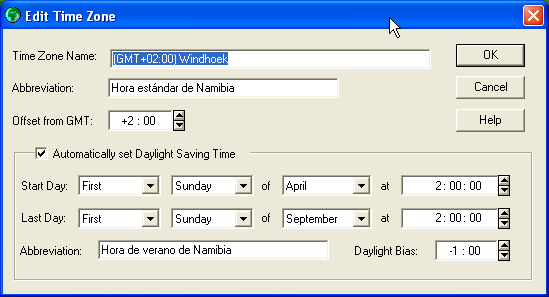
John Gray, thanks for the quick feedback. Concerning problems in 2009 I think that many people loading the timezone updates in 2007 will not do so in 2009 if there were no actual rule changes since - so I recommend getting it right now. Namibia: I must admit I had not seen the -1.00 in Daylight Bias: My first comment is: this will work technically, as you claim! But is it the best way to do it? Actually "hora de verano de Namibia" means "summertime of Namibia", which will apply between April and September. Note that this use of summertime/wintertime is opposite to all other countries (I think) and also to the web links you sent. However, when you look it up in the list, all other countries are also listed for their wintertime, the GMT offset when not applying DST. Putting Windhoek as (GMT+02:00) is therefore a bit like reporting the revenue of 250 companies before tax, and 1 company after tax - it is just impractical for most purposes. Therefore if you want to call the period something different, for instance calling it summertime between April and September, better do the change only in the Abbreviations, so that Time Zone Name is (GMT+01:00) Windhoek, Abbreviation(1) is "Namibia summertime", Offset from GMT is +1:00, Start Day and Last Day are inversed, Daylight Bias is +1:00 and Abbreviation(2) is "Namibia wintertime". This will confuse less people, I think. Regards, - Jesper Nørgaard Welen
-----Original Message----- From: John Gray [mailto:johngray@winse.microsoft.com] Sent: Domingo, 04 de Marzo de 2007 20:23 To: Jesper Norgaard Welen Subject: RE: Microsoft exec says Namibia and Iran have recently changed DSTrules
Jesper, thanks for the info. Yes, we have been working very hard to get this all in place and still have a long way to go for some issues.
It looks like we may have a minor issue for 2009 but we should be able to address it with a custom set for that year. I've forwarded your observations to the people that own the >detailed specifics of our DST data for Windows.
For Namibia, oddly enough we have an internal email on file confirming this is the official preference of the government - note that we have a "-1 hour" offset for the DST period so the clocks and offsets will be correct, it is just the name that is in dispute (e.g. which period of the year to call "daylight saving"). From some of their websites, it looks like they simply use "summer time" and "winter time" without referring to either one as a "saving" time per-se. It is also entirely possible different organizations within their government may have different preferences here.
http://www.grnnet.gov.na/News/Archive/2001/March2001/Week4/release_winter_t ime.htm http://www.grnnet.gov.na/News/Archive/2001/August/Week4/summer.htm
For Chile, yes I am aware we worked hard to get it right. Apparently their official documents defined the change to happen at "24:00" hours, which never actually occurs (I'm not sure if they ever fixed this). A classic case of we know what they meant, but causes us to do strange things in the digital world.
For the rest I'll have to wait for the experts to investigate.
Thanks again,
John Gray Director, Windows Sustainability Engineering Services
participants (1)
-
 Jesper Norgaard Welen